


 SaintTreyW
Dec 9 2025
3 mins read
SaintTreyW
Dec 9 2025
3 mins read

Jeremy O. Harris, the avant-garde dramatist who has made a career of troubling the waters of American theater, has been released from custody in Japan after three long weeks in detention. Japanese officials confirmed the release Monday but would not clarify whether formal charges had been filed, a silence as precise and intentional as any line in Harris’ own work.
Harris, 36, was detained Nov. 16 at Naha Airport in Okinawa after arriving from Taiwan. Customs officials alleged that 780 milligrams of MDMA better known as ecstasy or “Molly,” just under a gram, were found in his carry-on. Under Japan’s notoriously severe drug laws, even this amount can summon years behind steel bars. Officials noted that no other substances were found and investigators currently believe the MDMA was for personal use.
Still, the playwright was held under a system often described by human rights advocates as hostage justice, a process that can permit up to 23 days of detention before indictment, longer if the accused stays silent, denies allegations, or simply refuses to fold beneath the weight of the interrogation room.
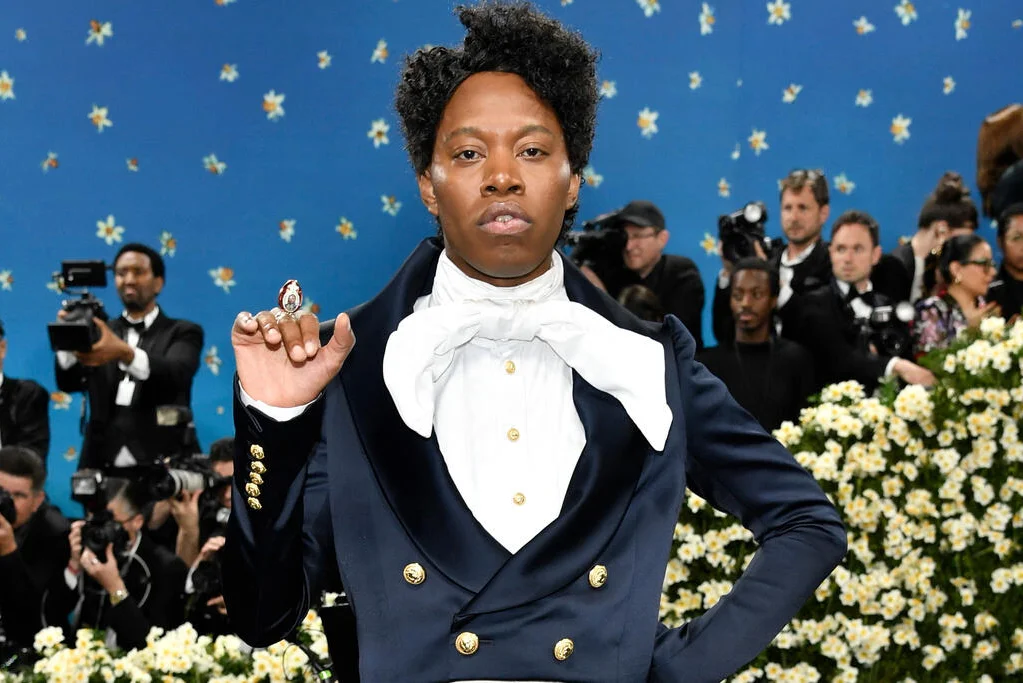
He was taken into custody by the Tomishiro police, transferred through the bowels of the prefectural system, and left to the country’s slow-turning legal gears. When the story broke publicly on Dec. 4, Harris had already spent nearly three weeks in confinement.
And yet, now free, he remains in Japan, reportedly continuing research for an upcoming project. That choice alone feels like a line from Slave Play, the record-breaking, nerve-exposing Broadway phenomenon he wrote as a graduate student at Yale School of Drama, sometimes the stage is not a stage, but the world; sometimes the audience is the law.
For many, Harris’ detention collided with the public’s understanding of him, a creative mind whose work courts the dangerous, the uncomfortable, the unspoken. From Slave Play, which dissected race, desire, trauma, and power with a brazenness that ignited both outrage and awe, to his producing work on HBO’s Euphoria and his co-writing of the film Zola, Harris has always been a student of rupture. His work, at its core, asks what happens when America’s myths are stripped bare.
But this time, the rupture found him.
Authorities maintain they are still investigating the case. But no charges have been announced, and Harris’ representatives told The New York Times he has not been accused of any offense.
Harris himself has not publicly commented.
Japan holds some of the strictest drug enforcement policies in the developed world, prosecuting even small-scale cases with an intensity unfamiliar to many Western artists who move freely between global cultural centers. Past high-profile arrests — from DJ David Morales to Paul McCartney, remind us that celebrity does not soften the hand of the legal system there.
But place is never just place.
A Black queer American artist in Japan is not simply navigating geography; he is carrying the long inheritance of how Black bodies are read, misread, and policed across borders. The gaze, presumption, and danger travels.
To witness Harris’ detainment is to confront yet another reminder of how Black lives, no matter how brilliant, can be seized by the machinery of a system with no allegiance to their freedom, whether that system is domestic or foreign.
There is a particular ache in knowing an artist whose entire life’s work is about liberation and disruption found himself trapped in a process designed to quiet both.
The facts are clear, even while the future is unclear. But Harris stands free in Japan, continuing his work.

SaintTreyW
Sep 17
5 mins read

SaintTreyW
Sep 16
7 mins read

 Anders Hare
Sep 1
3 mins read
Anders Hare
Sep 1
3 mins read

Anders Hare
Aug 31
3 mins read

Gaye Magazine® is part of Gaye Media, Inc.© 2026 Gaye Media, Inc. All Rights Reserved.