


 SaintTreyW
Jan 14
7 mins read
SaintTreyW
Jan 14
7 mins read

Oral arguments have concluded at the U.S. Supreme Court in a closely watched legal fight over state bans on transgender girls in school sports, a case that civil rights advocates say could have consequences reaching far beyond athletics and into the core of LGBTQ+ constitutional protections.
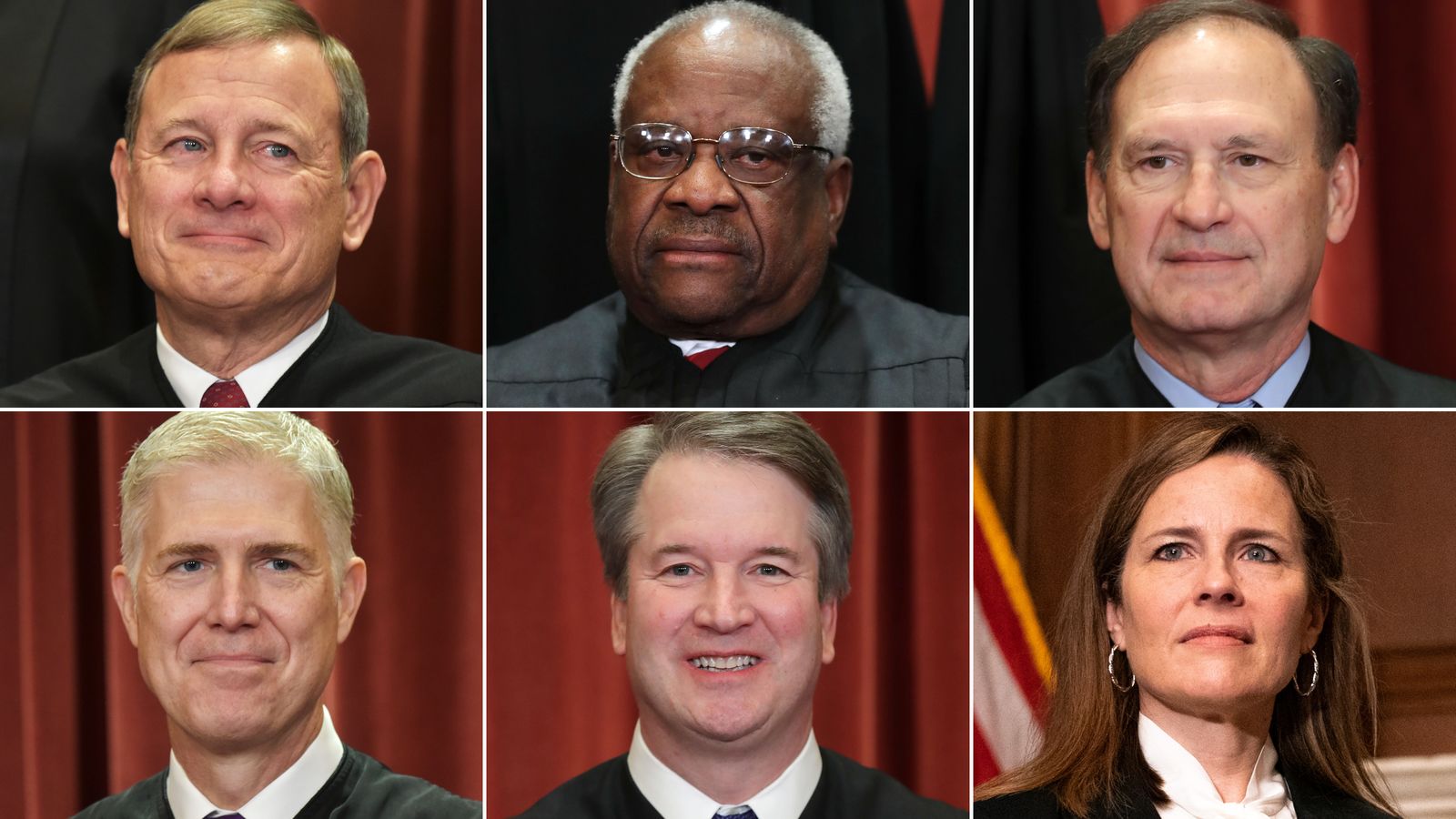
The justices are considering challenges to Republican-backed laws in Idaho and West Virginia that bar transgender girls from participating in girls’ athletic programs. Federal courts previously blocked both laws, finding they likely violated constitutional and civil rights protections. The states appealed, giving the Supreme Court its first opportunity to weigh in directly on transgender athletes.
If the court’s conservative supermajority upholds the bans broadly, advocates warn the decision could embolden lawmakers to advance a sweeping range of policies limiting transgender people’s access to bathrooms and facilities, restricting the use of chosen names and pronouns, enforcing rigid dress codes, weakening protections against harassment and discrimination, and denying access to accurate identity documents.
“It’s really scary,” said Cathryn Oakley, senior director of legal policy at the Human Rights Campaign. “The Supreme Court is poised to tell us whether dislike and moral disapproval of a specific group can be a legitimate basis for making law.”
The first case, Little v. Hecox, centers on Idaho’s 2020 law: The Fairness in Women’s Sports Act, the first statewide ban in the nation, categorically prohibiting transgender women and girls from competing on women’s sports teams. Lindsay Hecox, a transgender college student, sued after the law blocked her from competing in track.

Hecox has since asked that the case be dismissed, saying she is no longer pursuing collegiate sports and wants to avoid further harassment. Despite that request, the Supreme Court agreed to hear the case, a move that underscores the justices’ interest in the broader legal principles at stake.
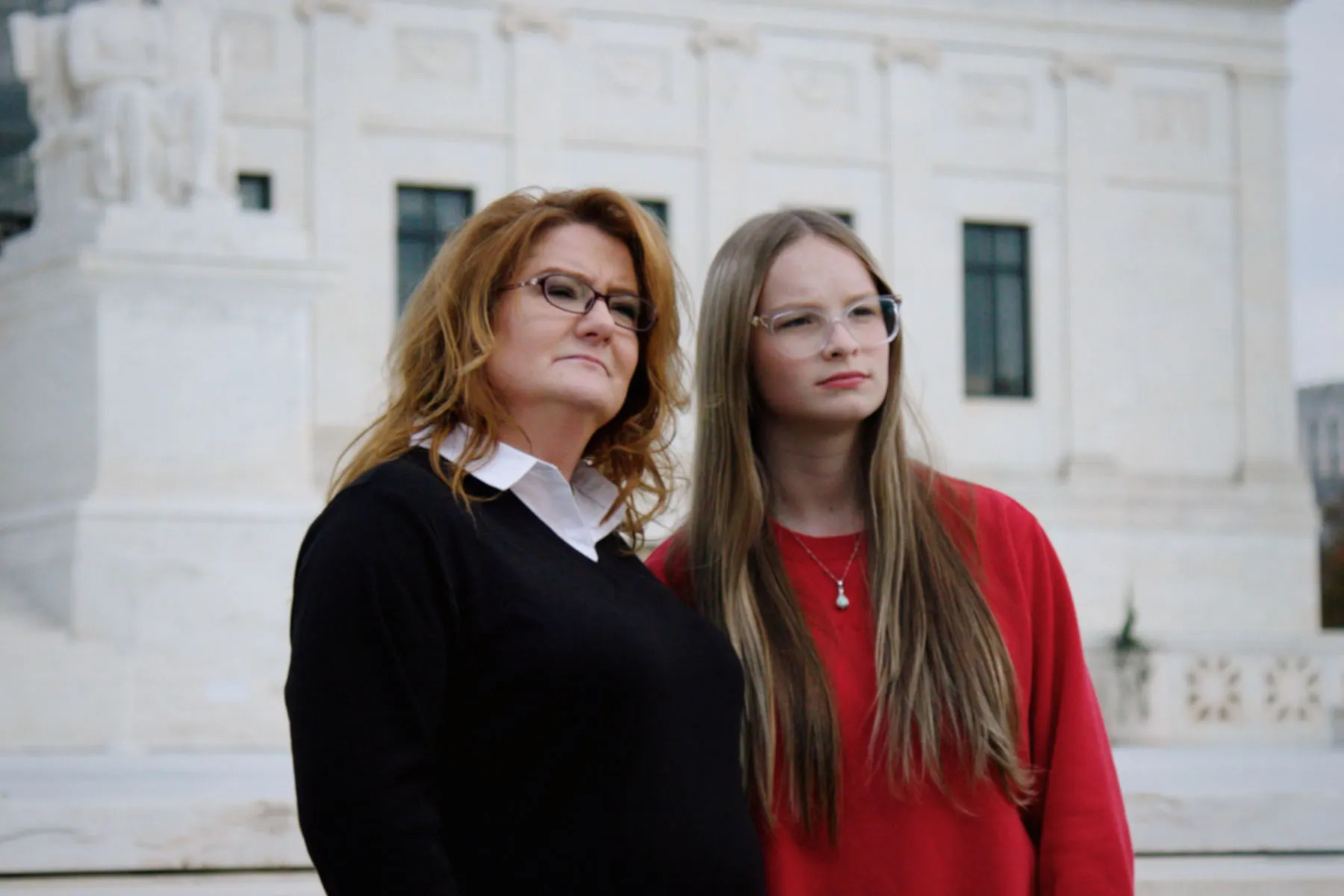
The second case, West Virginia v. BPJ, involves Becky Pepper-Jackson, a 15-year-old transgender girl who challenged her state’s 2021 law, the Save Women’s Sports Act, which bans her from participating in track. A federal court blocked the law, but West Virginia appealed.
“This case isn’t just about me, or even just about sports,” Pepper-Jackson said in a statement last week. “It’s just one part of a plan to push transgender people like me out of public life entirely.”
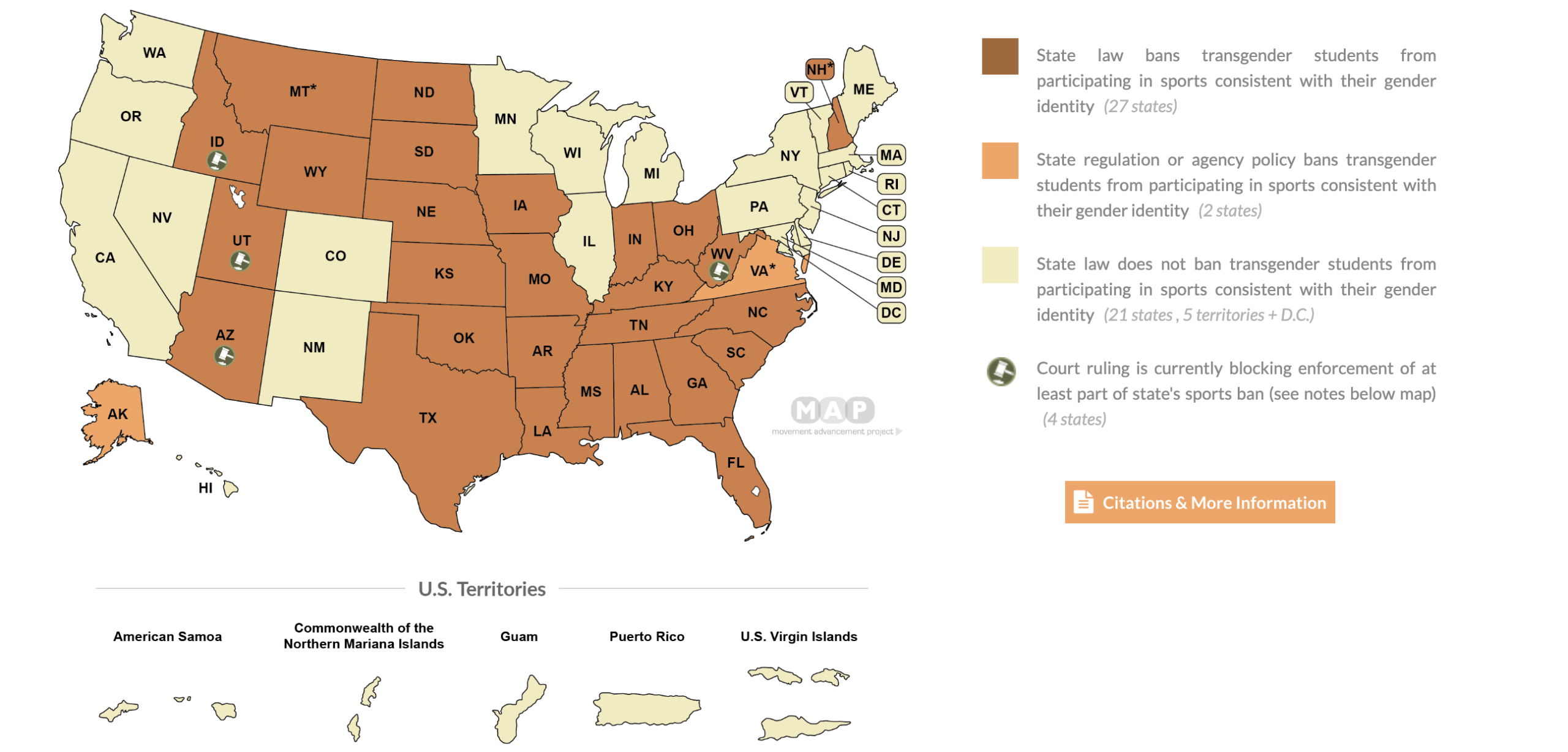
Together, the cases arrive amid an aggressive national campaign targeting transgender youth. Over the past five years, 27 states have enacted laws restricting trans children and teenagers from school sports, most focused specifically on trans girls, though some apply to all transgender students.
Oral arguments began with Idaho, where the state defended its law as a matter of biology and fairness. Idaho Solicitor General Alan Hurst argued that sex classifications are central to athletic competition and that differences in size, muscle mass, bone density, and cardiovascular capacity justify excluding transgender girls from girls’ teams.
“Sex is what matters in sports,” Hurst told the justices, saying those differences correlate with athletic advantages.
West Virginia made similar arguments, asserting that its law protects opportunities for cisgender girls. A spokesperson for the state’s attorney general said the ban advances Title IX’s core mission of ensuring equal athletic opportunities for women and girls and does not discriminate on the basis of gender identity.
The states are backed by the Alliance Defending Freedom, a conservative Christian legal group that has played a major role in high-profile cases involving abortion and LGBTQ+ rights. An ADF spokesperson said allowing transgender girls to compete in girls’ sports harms women’s dignity, privacy, and equal opportunities, calling the harm “undeniable.”
LGBTQ+ advocates and medical organizations strongly dispute those claims, saying there is no credible evidence that inclusive sports policies harm cisgender girls or women. They note that states such as California have allowed transgender students to compete according to their gender identity for years, with little controversy until the issue became a national political flashpoint.
A Tiny Population, An Outsized Focus
The focus on transgender athletes has drawn criticism because it targets an extremely small group. In 2024 testimony, the president of the National Collegiate Athletic Association, former Massachusetts Governor Charlie Baker, said he was aware of fewer than 10 transgender athletes competing at the college level nationwide. Republican lawmakers have at times struggled to identify any transgender girls playing sports in their own states.
Despite the small numbers, advocates say the bans have had devastating effects on the students directly affected and on LGBTQ+ youth more broadly, many of whom avoid sports altogether because of hostility and fear.
The legal movement targeting transgender athletes gained momentum after the Supreme Court legalized same-sex marriage in the 2015 Obergefell v. Hodges decision. With marriage equality settled law, opponents of LGBTQ+ rights shifted their focus, and internal documents and polling from conservative groups later showed that fears about transgender girls in sports were seen as politically persuasive.
Lawyers for Hecox and Pepper-Jackson argue the bans violate the Constitution’s equal protection clause by singling out transgender students for exclusion. In the West Virginia case, attorneys also argue the law violates Title IX, the federal statute barring sex discrimination in schools that receive federal funding.
A critical issue before the court is whether discrimination against transgender people warrants “heightened scrutiny,” a more rigorous legal standard that requires the government to show a substantial justification for its actions. The Supreme Court has never explicitly ruled on whether transgender people constitute a protected class under this framework.
If the court determines that laws targeting transgender people do not deserve heightened scrutiny, the implications could be far-reaching.
“Any type of law discriminating against trans people would be presumptively constitutional,” said Joshua Block, senior counsel for the American Civil Liberties Union’s LGBTQ and HIV Project, which represents both students. “That would make it much easier for lawmakers to keep passing laws that exclude transgender people from public life.”
Block, who is presenting oral arguments, said the sports bans were designed to establish a legal principle that transgender girls and women should not be treated like other girls and women, a principle that could then be used to justify rolling back protections in education, healthcare, housing, and beyond.
At least one prominent advocate for trans sports bans has acknowledged that strategy, saying last year that the sports issue could be the “card that makes all of it crumble” for what opponents call “gender ideology.”
Advocates warn that the most serious consequences of an adverse ruling may have little to do with athletics. A decision narrowing Title IX protections could allow schools to deny admission to or expel students simply for being transgender without violating federal law, Block said.
Scott Skinner-Thompson, a law professor at the University of Colorado, said such a ruling could leave transgender people with “minimal constitutional protections,” emboldening legislators to enact increasingly exclusionary laws.
“That would further encourage efforts to ban trans people from bathrooms, limit healthcare access for incarcerated trans people, and restrict basic participation in public life,” Skinner-Thompson said.
Advocates also point to the impact of sports bans on cisgender girls. To enforce restrictions, some laws allow invasive forms of sex verification, inviting parents, coaches, or officials to scrutinize girls’ bodies and identities based on appearance.
“We’ve seen cisgender girls with short hair accused of being trans and asked to provide medical records,” said Shayna Medley, senior staff attorney at Advocates for Trans Equality. “These bans endanger all girls by empowering adults to police bodies and gender expression.”
Medley said the cases are part of a broader effort to erode bodily autonomy, a principle advocates argue should be embedded in constitutional protections.
LGBTQ+ advocates are bracing for the possibility that the court will uphold the bans but hope the justices will issue a narrow ruling. Last year, the court upheld Tennessee’s ban on gender-affirming care for transgender minors, a decision that was devastating for affected families but limited to healthcare and did not explicitly endorse broader anti-trans legislation.
“BPJ is about a 15-year-old kid that the entire state of West Virginia has brought to the Supreme Court to continue fighting to exclude her from a track team,” said Karen Loewy, interim deputy legal director at Lambda Legal, which represents Pepper-Jackson. “The question before the court is narrow, and there are ways to answer it narrowly.”
A decision is expected by the end of the court’s term this summer in June. For transgender youth and LGBTQ+ communities nationwide, the ruling could determine not only who gets to play sports, but how securely their civil rights are protected under the law.

SaintTreyW
Oct 15
4 mins read
SaintTreyW
Oct 9
3 mins read

 Zuri Pryor-Graves
Oct 2
5 mins read
Zuri Pryor-Graves
Oct 2
5 mins read

SaintTreyW
Sep 30
7 mins read

Gaye Magazine® is part of Gaye Media, Inc.© 2026 Gaye Media, Inc. All Rights Reserved.