


 William Dolliole-Thompson II
Jun 19
5 mins read
William Dolliole-Thompson II
Jun 19
5 mins read
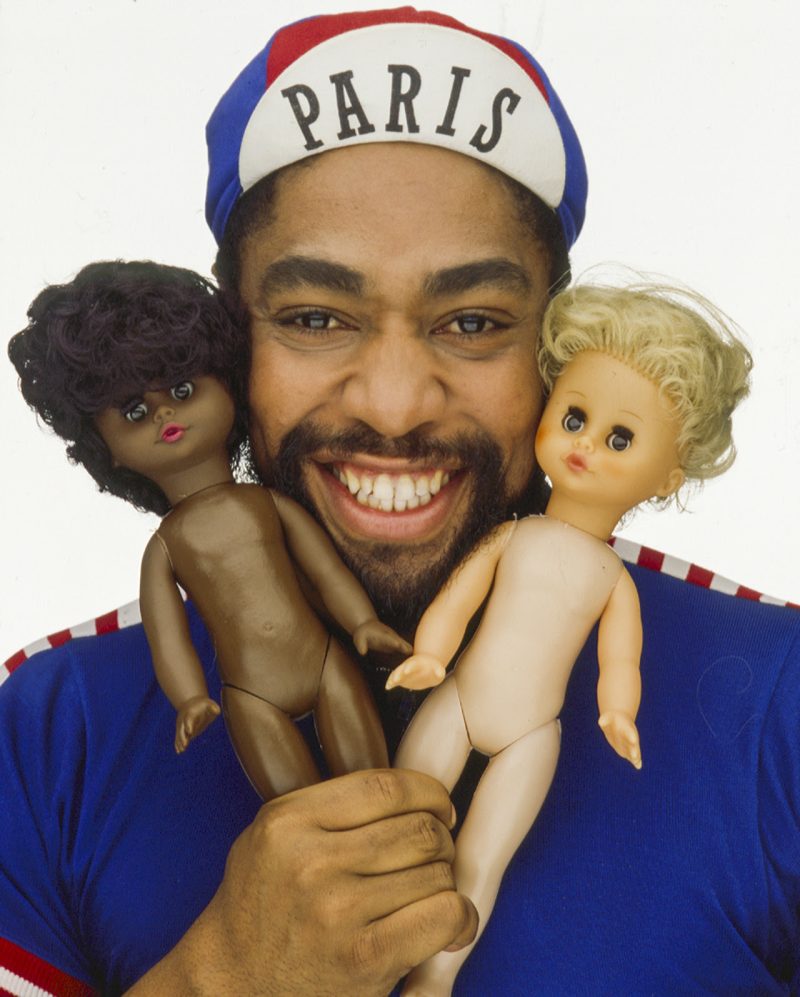
You know LaQuan Smith. You know Christopher John Rogers. You know Edvin Thompson, Sergio Hudson, Telfar Clemens and Brandon Blackwood. But before any of them, there was Patrick Kelly — the Black, gay boy from Vicksburg, Miss., who went to Paris and changed fashion forever. And if you don’t know his name, this is your introduction.
Fashion and queer culture have always had a symbiotic relationship. Every June, we drape ourselves in rainbows. Brands update their logos. Windows get decorated. And somewhere in the middle of all of it, the real stories — the ones that actually built the bridge to queer expression — get lost in the noise. This Pride Month, we want to talk about one of those stories. We want to talk about Patrick Kelly.
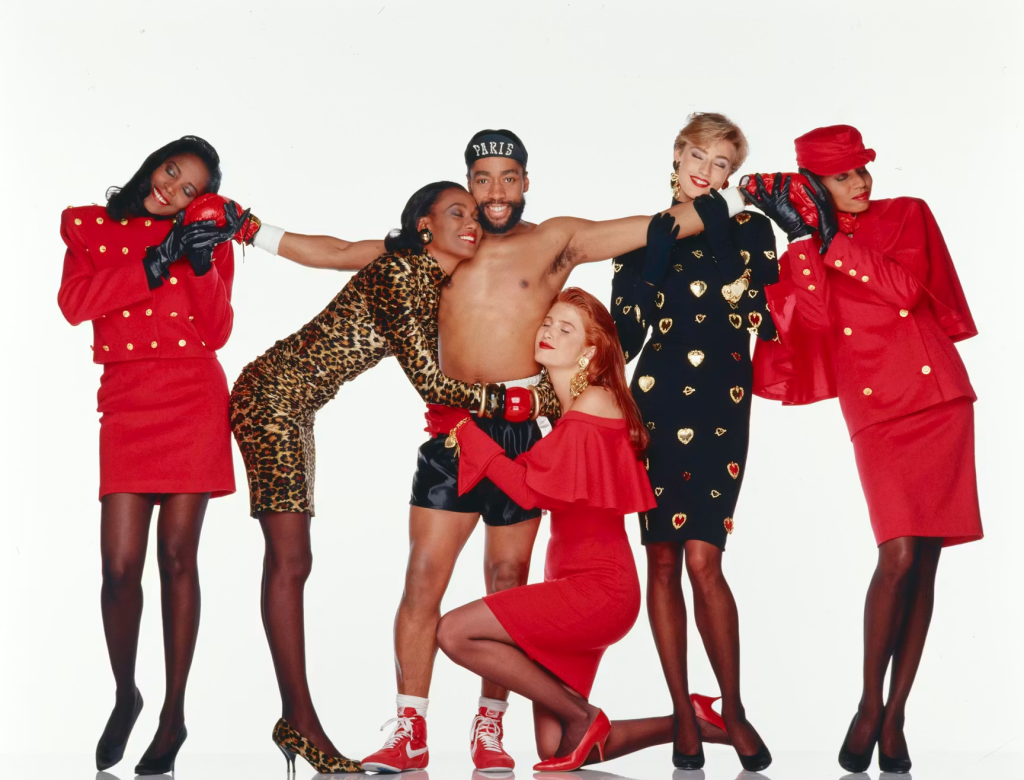
“I want my clothes to make you smile” — a mantra that defined the spirit and ethos of a Black, gay boy from Vicksburg, Miss., who took his grandmother’s mismatched buttons, his love of Josephine Baker, and a joy so unapologetic it could fill a room, all the way to Paris and changed fashion forever. Kelly was not just a designer. He was a trailblazer who broke barriers.
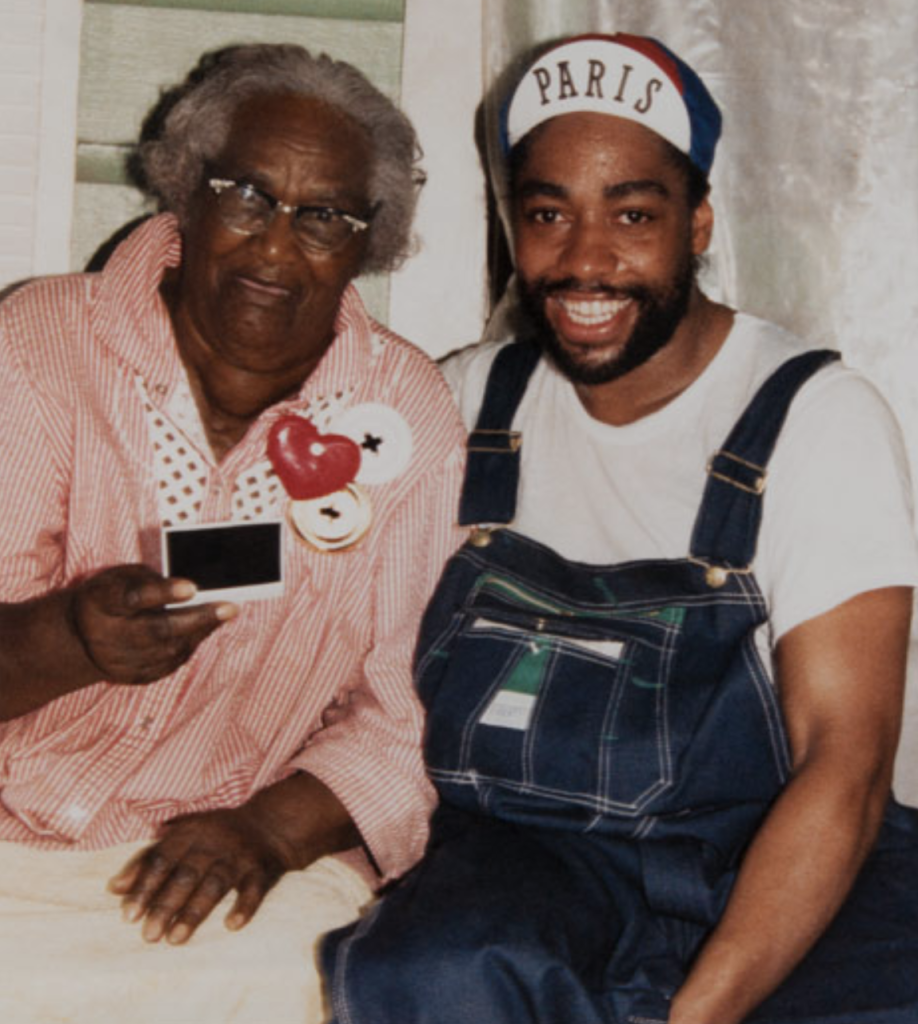
Kelly’s story, like so many of the best ones, begins at home. A native of Vicksburg, Miss., Kelly grew up during the Jim Crow era, watching the women in his life transform simple store-bought garments with embellishments and personal flair, turning necessity into art the way Black women have always known how to do. His grandmother, Ethel Rainey, was his greatest muse and inspiration, bringing home fashion magazines from the white household where she worked as a domestic servant.
Those pages opened a world to a boy from Mississippi who would one day have his designs worn by the likes of Pat Cleveland, Grace Jones, Naomi Campbell, Zendaya and Beyoncé. His signature playful buttons were a love letter to her — a reference to the mismatched buttons she used to mend his family’s clothing, elevating each piece into something the whole world would soon begin to recognize.
Kelly is noted as the first American and first Black designer admitted into the Chambre Syndicale du Prêt-à-Porter, the French governing body that regulates the prestigious ready-to-wear industry and protects the integrity of haute couture — a milestone that not only cemented his legacy but opened a door that had never been opened before. And doors opened by people like Kelly do not close.
Nearly half a century later, in 2021, Kerby Jean-Raymond of Pyer Moss became the first Black American designer invited by the Chambre Syndicale de la Haute Couture to present during Paris Couture Week, doing so at Villa Lewaro, the former estate of Madam C.J. Walker, making him the second Black American designer to show a collection in the event’s 48-year history, following in the footsteps of the late Patrick Kelly.
After studying art and African American history at Jackson State University, Kelly moved to Atlanta in 1974, set up his own vintage store, and worked without pay as a window dresser at the Yves Saint Laurent Rive Gauche Boutique. He later relocated to New York, attended Parsons School of Design, and when the industry failed to embrace him, he did what so many Black creatives and queer people before and after him have done — he found a community that would.
At the request of his dear friend Pat Cleveland, Kelly relocated to Paris, where a new world of opportunity was waiting. In 1985, his first “Patrick Kelly Paris” commercial collection was featured in a six-page spread in Elle, giving him not only notoriety but visibility to an entirely new audience. By 1987, fashion conglomerate Warnaco invested in his business and his runway collections began. Each show opened with a prayer and ended in joyous celebration, and in every room he entered, Kelly made sure joy was always the headliner.
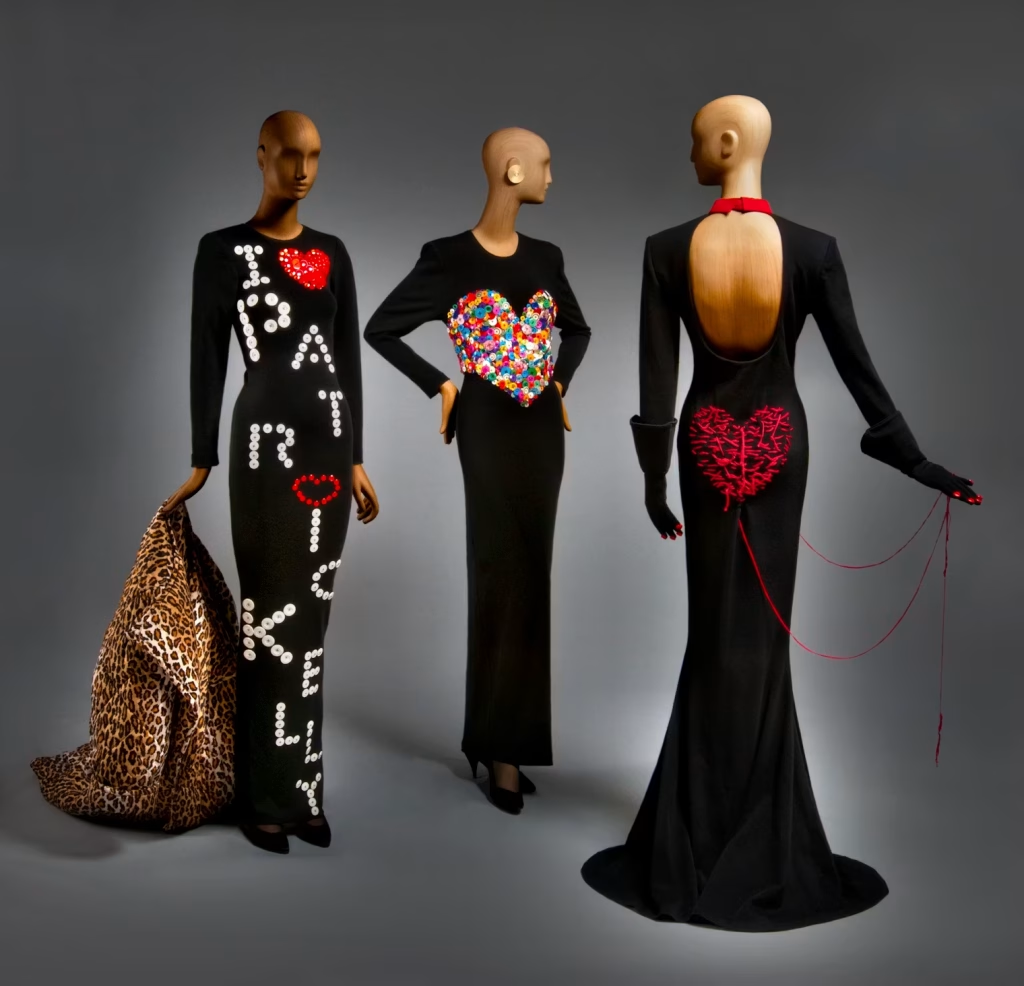
Queer people have always used clothing as armor, as declaration, as the clearest form of self-definition available when the world offered few others. Kelly understood this not as a concept but as a lived truth. His aesthetic drew from his African American and Southern roots, his deep knowledge of fashion and art history, and the club and gay cultural scenes of New York and Paris — spaces where Black queer creativity was not a footnote but the main event.
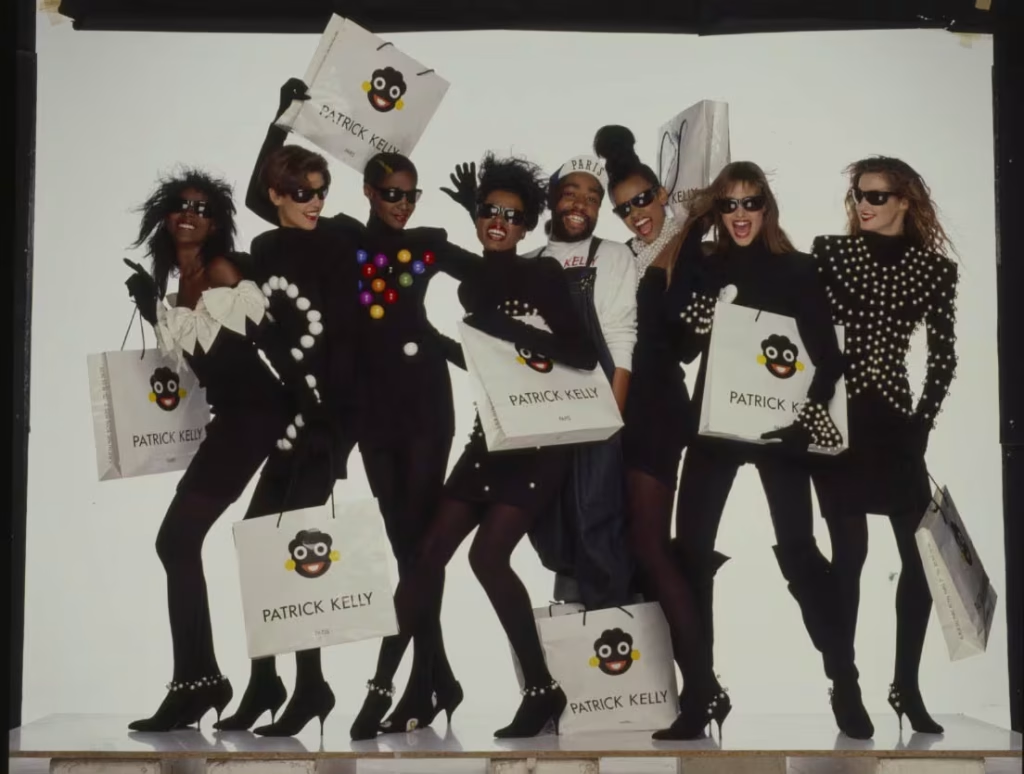
He pushed racial and cultural boundaries with golliwog logos, Aunt Jemima bandana dresses, and his signature Black baby-doll brooches — provocations wrapped in joy, which was always his point. Style as commentary. Laughter as resistance. Identity as art. In a world that told Black queer men to be smaller, Kelly showed up larger than life and dared the room to look away.
Kelly died Jan. 1, 1990. His vision and career were cut short by AIDS — a disease that stole too many of the most creative, most vital, most necessary voices of his generation. As André Leon Talley once said: “Patrick Kelly, in his short 35 years, lived to be the only Black fashion designer to turn Paris upside down, inside out, on its venerable fashion shoulders.
His meteoric rise in the world of ready-to-wear fashion, and his couture collections, have earned him a significant place in fashion history.” He is buried at Père Lachaise Cemetery in Paris, where his epitaph reads: “Nothing Is Impossible.” But the clothes still smile. The legacy still stands. So, the next time you celebrate LaQuan Smith, Christopher John Rogers, Edvin Thompson or Brandon Blackwood — and you should — remember the name that made space for all of them. Remember the Black, gay boy from Vicksburg, Miss., who took his grandmother’s buttons to Paris and changed the industry forever. Remember Patrick Kelly.
 Mykel Hilliard
Jun 8
3 mins read
Mykel Hilliard
Jun 8
3 mins read
 Gaye Magazine
Apr 3
2 mins read
Gaye Magazine
Apr 3
2 mins read
 SaintTreyW
Nov 8 2025
4 mins read
SaintTreyW
Nov 8 2025
4 mins read
 Brandon
Sep 30 2025
3 mins read
Brandon
Sep 30 2025
3 mins read

Gaye Magazine® is part of Gaye Media, Inc.© 2026 Gaye Media, Inc. All Rights Reserved.