


 SaintTreyW
Sep 17
5 mins read
SaintTreyW
Sep 17
5 mins read
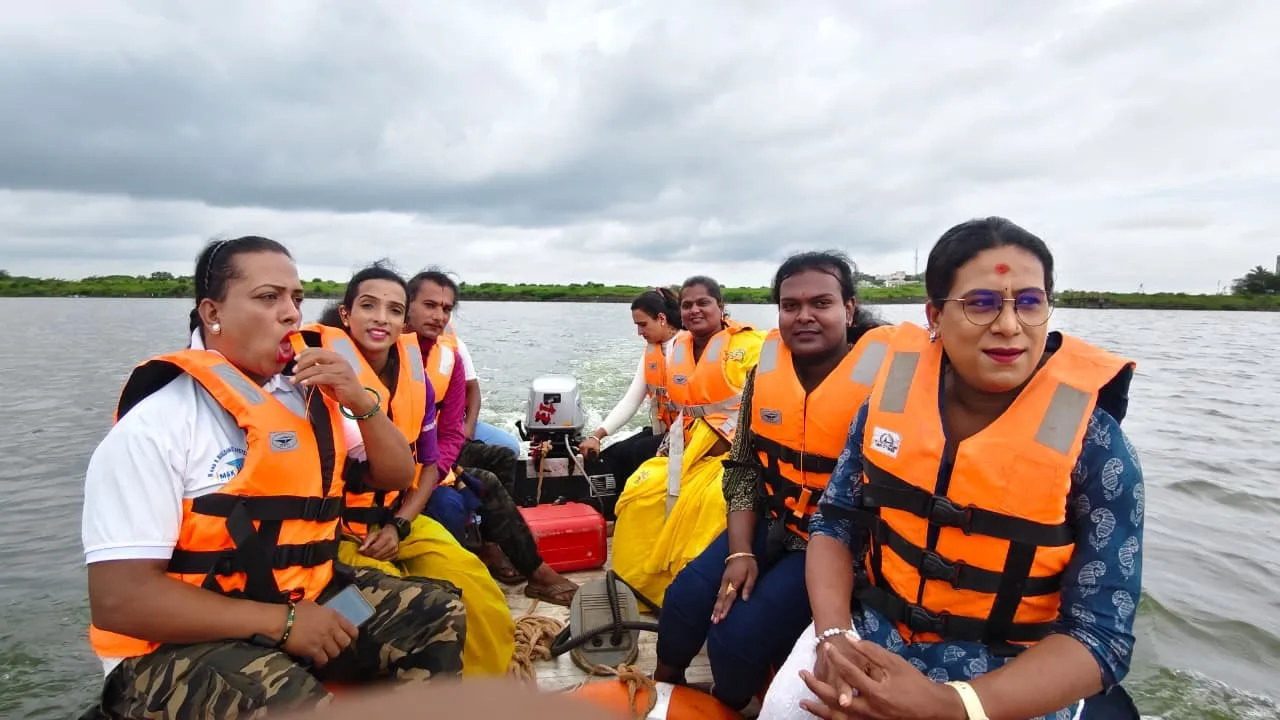
At Rajaram Lake in late August, a team in orange life jackets checked ropes, maneuvered boats, and practiced water-rescue drills for 10 days.
They trained like any disaster-response unit, learning how to locate people in distress, use lifesaving equipment, and respond with urgency when seconds can mean the difference between rescue and loss.
But this group represents a historic shift in who is seen as capable of protecting the public.
Kolhapur’s transgender disaster management and rescue team, believed to be India’s first, is made up of trans women trained to respond to floods, drowning incidents, road accidents and other emergencies. For its members, the work is not simply about developing rescue skills. It is about claiming public space, professional dignity and an identity beyond the narrow stereotypes often imposed on transgender people.
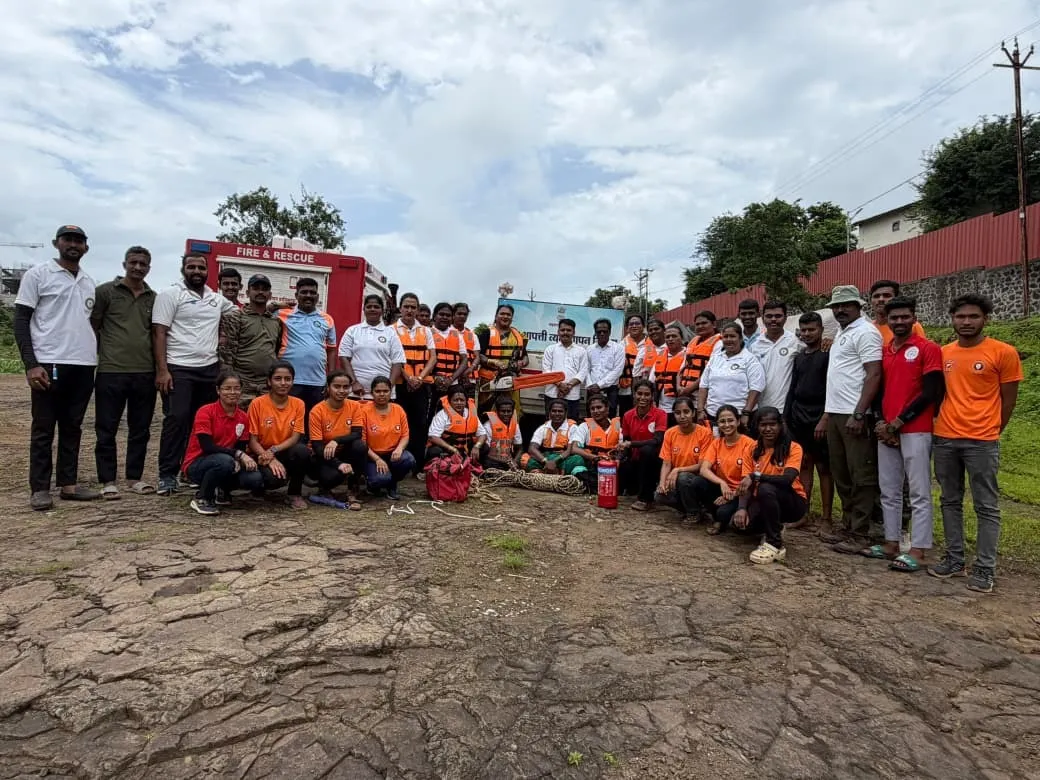
The initiative began before this year’s monsoon season through the Kolhapur District Disaster Management Authority. The first group of 10 trans women, all connected to the Kolhapur-based Maitri NGO, completed an initial three-day training program from May 26 through May 28. Since then, officials have trained 15 trans women, with continuing practice sessions held every three months, according to The Indian Express.
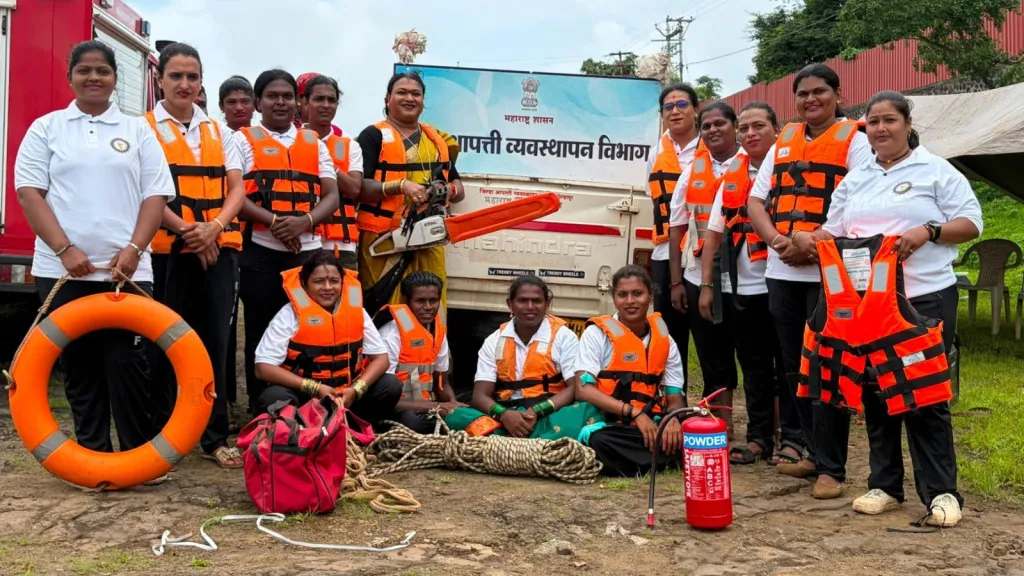
The volunteers have been trained in rescue swimming, dry and wet lifesaving methods, inflatable rescue boat operations, motorboat handling and maintenance, First Aid and CPR.
“Why not train a trans women team?” Prasad Sankpal, Kolhapur’s district disaster management officer, told The Indian Express. “So a first-of-its-kind transgender disaster management and rescue team initiative was begun in the country.”
For Mayuri Alvekar, founder of Maitri NGO, the rescue squad carries a meaning no technical manual can fully capture.
“Even today, people see us as sex workers or beggars,” Alvekar told The Indian Express. “I believe that such opportunities of working with the administration would help promote inclusivity and give us space in mainstream society, while changing the perspective towards us.”
The statement lands at the center of the initiative’s broader significance. In a society where trans people routinely confront employment discrimination, family rejection and public harassment, the sight of trans women in uniforms and life jackets, trained to pull neighbors to safety, disrupts the social scripts that have too often defined them.
Alvekar said trans women have long helped people during disasters and other emergencies, often without recognition and while facing discrimination. The partnership with district authorities, she said, offers something crucial, public acknowledgment of their service and humanity.
The program follows an earlier inclusion effort in Kolhapur. In 2019, the district established the state’s first all-women rescue unit, known as Aapda Sakhi. That group now includes more than 500 trained volunteers. Over the past decade, the Kolhapur District Disaster Management Authority has trained more than 2,500 volunteers, according to The Indian Express. The Hindu reported that the trans women’s squad was organized under the government’s “Friends in Disaster” program.
Kolhapur’s geography makes that preparation urgent. The district sits in western Maharashtra’s Krishna River basin and has experienced repeated flooding, including major floods in 2005, 2006, 2019, 2021 and 2024. Rivers including the Panchaganga, Bhogavati, Dudhganga, Warna and Hiranyakeshi contribute to flood risks in parts of the district.
For Suhasini Devmane, a rescue-team member and Maharashtra’s first transgender tourist guide, the training represents a chance to live openly in a role rooted in public service.
Devmane previously worked for eight years as an ayurvedic panchakarma expert while hiding her gender identity, fearing that disclosure would cost her employment and financial security.
“Despite a desire to contribute to society, many of us had previously been unable to participate in social initiatives due to a lack of opportunities,” Devmane told The Indian Express. “I believe this training will not only change society’s perspective towards transgender people but also boost the self-confidence of individuals within the community.”
That confidence is not abstract. It is built in practice: learning how to operate an inflatable boat, administer CPR, clear fallen trees and assess flood risk. Earlier reporting described the team as prepared to support search, relief and rescue efforts during monsoon-related emergencies in Kolhapur
For Shivani Gajabar, a Master of Social Work student at Shivaji University in Kolhapur, the rescue team also highlights the distance that remains between symbolic inclusion and full acceptance.
“Even today, transgender community members feel alienated from mainstream society,” Gajabar told The Indian Express. “Though giving us a platform in the disaster management rescue team is a welcome step and would help bring inclusivity, and we all would give our best while saving lives, I feel there is a long way ahead to fill the gap.”
Gajabar said that even in her regular university classes, classmates do not sit beside her. The isolation is a reminder that visibility alone cannot erase prejudice.
Still, her place on the rescue team has changed something personal. After her family cut off contact when she left home in seventh grade, she said relatives began communicating with her again after she joined the disaster-management unit.
Their renewed contact does not erase the years of rejection. But it shows how quickly society’s judgment can shift when trans people are given opportunities to be recognized not as problems to be managed, but as leaders, workers, students, and lifesavers.
Kolhapur officials plan to broaden the team’s training beyond flood and drowning rescues. Sankpal said trans women volunteers could eventually receive training for roughly 30 categories of natural and human-caused disasters, including wildlife rescues involving snakes and crocodiles.
Officials also plan to use the volunteers for crowd management during major religious and cultural gatherings, including Navaratri, Anant Chaturdashi and the Jyotiba Yatra. The district is exploring whether the volunteers can receive home guard status, which would provide an honorarium for work that is currently unpaid.
Alvekar has already started organizing similar volunteer teams in the Maharashtra districts of Dhule and Parbhani, suggesting that Kolhapur’s model may travel beyond one city.
That expansion matters because inclusion cannot remain ceremonial. A photo opportunity, a proclamation or a one-time training session cannot substitute for sustained access to jobs, wages, safety and civic leadership.
Kolhapur’s trans women rescue squad offers a more substantive vision, trans people equipped with skills, trusted with responsibility, and compensated for the labor that protects their communities.
In the water at Rajaram Lake, the women are training for disaster. On land, they are making a different kind of rescue possible, one in which transgender people no longer have to wait for society to recognize their worth before they are allowed to save it.

SaintTreyW
Sep 16
7 mins read
 Anders Hare
Sep 1
3 mins read
Anders Hare
Sep 1
3 mins read

Anders Hare
Aug 31
3 mins read

Ronnie L. Taylor
Aug 27
4 mins read

Gaye Magazine® is part of Gaye Media, Inc.© 2026 Gaye Media, Inc. All Rights Reserved.