 SaintTreyW
Apr 23
4 mins read
SaintTreyW
Apr 23
4 mins read
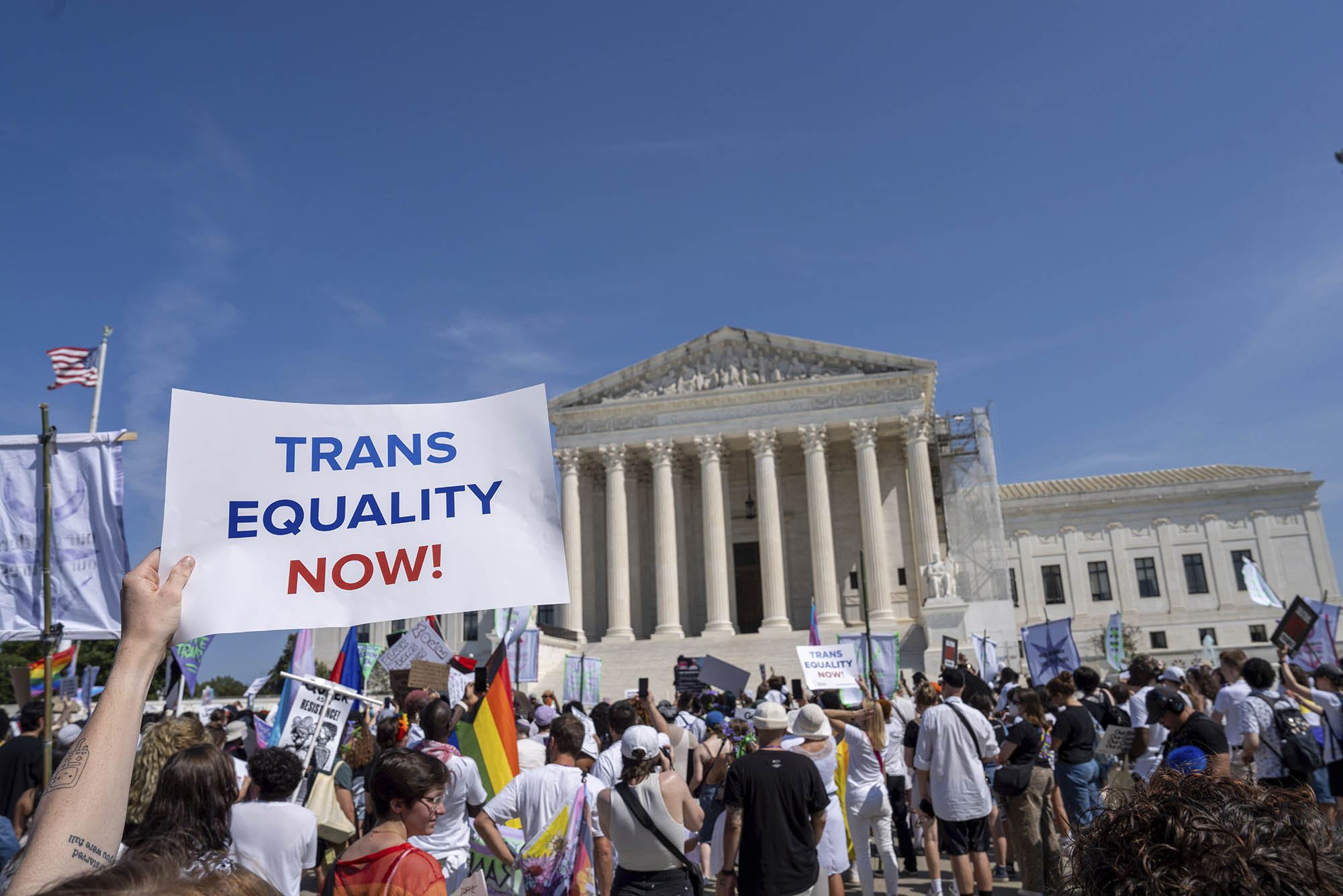
The U.S. Supreme Court will take up a closely watched case that could reshape the boundaries between religious liberty and LGBTQ+ protections in education, agreeing Monday to hear a challenge to Colorado’s universal preschool program and its nondiscrimination requirements.
At the center of the case is whether private, faith-based preschools that receive public funding can refuse to enroll children of same-sex couples without violating state law.
The case, St. Mary Catholic Parish v. Roy, stems from Colorado’s universal pre-K program, which offers families up to 15 hours of free preschool per week, a benefit valued at roughly $6,000 per child. The program allows both public and private providers to participate, but requires those receiving state funds to offer equal access to all eligible children, regardless of race, religion, sexual orientation, gender identity, or other characteristics.
Plaintiffs, including Catholic parishes affiliated with the Archdiocese of Denver and families with children enrolled in those schools, argue that the nondiscrimination provision infringes on their First Amendment rights. Represented by the Becket Fund for Religious Liberty, they contend that being required to accept children of same-sex couples conflicts with their religious teachings on marriage and gender.
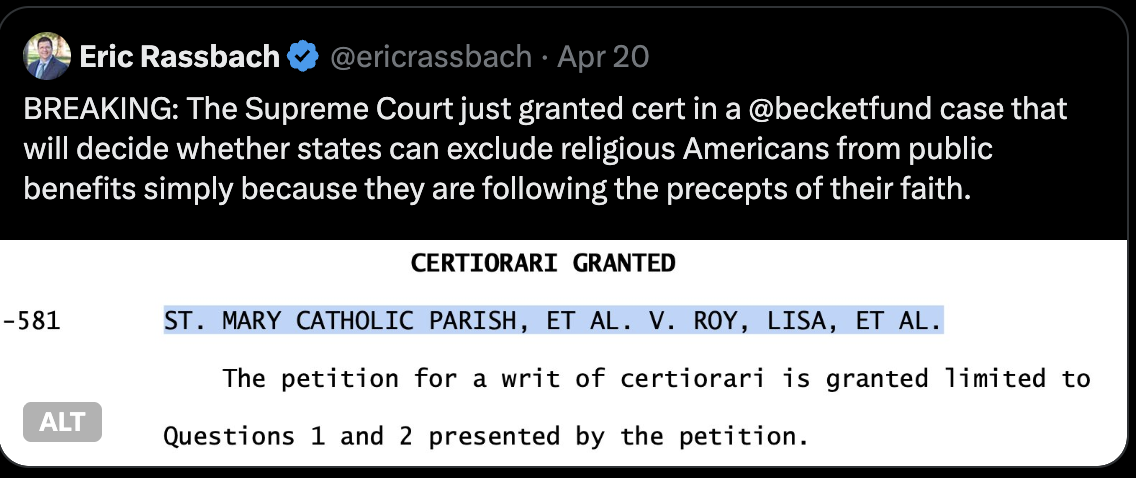
“Colorado created a universal preschool program that funds families to send children to the public or private preschool of their choice, but not the Archdiocese of Denver’s Catholic preschools,” the group said in its petition to the court. “Because, Colorado says, these preschools’ religious practice…is ‘discrimination.’”
The legal challenge follows a 2023 lawsuit filed after the state denied the Archdiocese’s request for a religious exemption from the program’s nondiscrimination rule. Lower courts, including the 10th U.S. Circuit Court of Appeals, ruled against the plaintiffs, finding that the policy applies broadly and does not unlawfully target religious practice.
The Supreme Court’s decision to hear the case signals its willingness to revisit ongoing tensions between public funding conditions and religious exercise, particularly as they intersect with protections for LGBTQ+ individuals and families.
A central question before the justices will be whether Colorado’s policy is a neutral, generally applicable law, or whether exceptions within the program, such as prioritizing seats for low-income children or those with disabilities, undermine that neutrality and trigger heightened constitutional scrutiny.
The case builds on a series of recent Supreme Court decisions that have expanded protections for religious institutions seeking access to public funds. In cases such as Espinoza v. Montana Department of Revenue and Carson v. Makin, the court ruled that states cannot exclude religious schools from funding programs solely because of their religious status or activities.
However, the Colorado case presents a different question: whether participation in public funding programs can be conditioned on compliance with nondiscrimination laws, even when those laws conflict with a school’s religious beliefs.
The U.S. Department of Justice weighed in earlier this year, filing a friend-of-the-court brief that underscored competing interests at stake.
“The United States has a substantial interest in the preservation of the free exercise of religion,” the department said. “It also has a substantial interest in the enforcement of rules prohibiting discrimination by government funding recipients.”
Advocates on both sides say the case could have far-reaching implications, not only for early childhood education but for broader questions about how public dollars interact with private religious institutions.
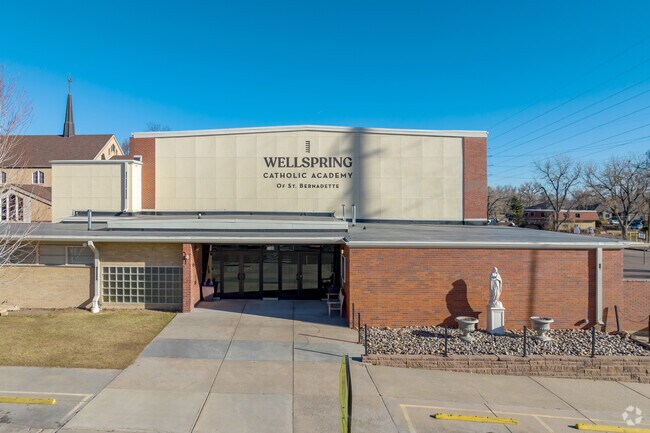
At least one of the schools involved, Wellspring Catholic Academy, previously declined to admit a student because the child had same-sex parents, according to court records. That decision has become a focal point in arguments about whether allowing exemptions would effectively permit taxpayer-funded discrimination against LGBTQ+ families.
The court’s current 6-3 conservative majority has frequently sided with religious claimants in First Amendment disputes, leading some legal observers to view the case as a potential extension of that trend. At the same time, the outcome could hinge on how the justices interpret the balance between religious freedom and equal access to publicly funded programs.
The justices are expected to hear arguments in the fall, with a ruling likely by next year.
The Colorado case arrives amid a broader slate of legal battles involving LGBTQ+ rights in education. On the same day it agreed to hear St. Mary Catholic Parish v. Roy, the Supreme Court declined to take up a separate case from Massachusetts involving parental-notification policies for students exploring their gender identity at school.
In that case, the parents argued that school officials violated their rights by failing to inform them when their child requested a different name or pronouns. The court’s decision not to hear the appeal leaves in place lower court rulings that upheld the school district’s policy, which supporters say is designed to protect students who may face unsafe or unsupportive home environments.
Meanwhile, the court is expected to issue decisions soon in two other high-profile cases involving transgender youth and school policies: Little v. Hecox and West Virginia v. B.P.J. Those rulings could address whether federal civil rights law, including Title IX, extends protections to LGBTQ+ students in education settings.
Together, these cases reflect a rapidly evolving legal landscape in which questions of identity, access, and constitutional rights are increasingly intersecting in classrooms and courtrooms alike.
For families, educators, and religious institutions, the Supreme Court’s upcoming decision in the Colorado preschool case may offer new clarity or deepen existing divisions over who is included in publicly funded spaces and on what terms.
At stake is not only the scope of religious freedom, but also the meaning of equal access in programs designed to serve all children, regardless of who their parents are.
 Kenneth Williams
Jun 20
2 mins read
Kenneth Williams
Jun 20
2 mins read
SaintTreyW
Jun 9
4 mins read
SaintTreyW
Jun 3
4 mins read

Gaye Magazine® is part of Gaye Media, Inc.© 2026 Gaye Media, Inc. All Rights Reserved.