


 SaintTreyW
Aug 21
5 mins read
SaintTreyW
Aug 21
5 mins read

In the shadow of extraordinary advances in HIV prevention and treatment, a more familiar danger is regaining ground: stigma.
GLAAD on Aug. 20 released its sixth annual State of HIV Stigma Report, finding that public understanding of HIV has not kept pace with the science that has transformed the lives of people living with the virus.
The report, produced with Gilead Sciences, arrives as advocates in Atlanta and across the South confront persistent misinformation, uneven access to care and the human cost of treating HIV as a source of shame rather than a manageable health condition.
The release followed an Aug. 17 intergenerational conversation at ArtsXchange in Atlanta, where Gen Z and Generation Alpha participants joined older generations, including those who lived through the deadliest years of the AIDS crisis, to discuss HIV, PrEP, stigma and the legacy of those who fought for survival and treatment.
According to HIV.gov, an estimated 1.2 million people in the United States are living with HIV, and about 13% do not know their status. The South continues to carry the nation’s heaviest burden of new HIV diagnoses, while Black and Latino communities remain disproportionately affected by the epidemic.
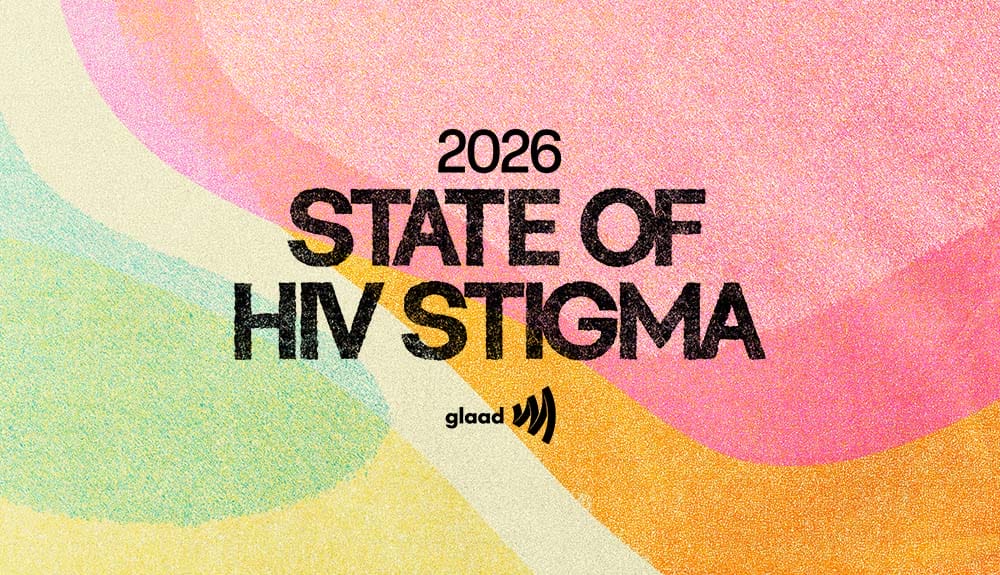
GLAAD’s 2026 findings expose the distance between what medicine now makes possible and what too many Americans still believe. Seventy-nine percent of respondents said people living with HIV experience stigma and discrimination. Seventy-seven percent said stigma can discourage HIV testing, while 73% said it can deter people from seeking treatment.
That stigma is not merely social. It can become a barrier between someone and a test, a prescription, a health care provider or a life-saving conversation.
“Americans need accurate information, authentic stories, and policies that reflect today’s realities about living with HIV and the huge advancements in prevention and treatment,” GLAAD President and CEO Sarah Kate Ellis said in a statement. “This report should be a call to action for media, public health leaders, policymakers, and advocates to ensure that the way we talk about HIV catches up with what science has already made possible.”
The report’s most sobering finding may be its portrait of young people. Only 31% of Gen Z adults said they feel knowledgeable about HIV, a six-point decline from 2024. By comparison, 60% of Gen X respondents, a generation shaped by the terror and activism of the AIDS crisis, said they feel knowledgeable about the virus.
That gap matters especially because Gen Z is the most openly LGBTQ generation in U.S. history. Yet visibility without reliable education can leave young people vulnerable to a different kind of danger, a digital ecosystem where misinformation travels faster than public health guidance.
A recent false claim that “one million people in Atlanta are living with HIV” circulated widely on TikTok, illustrating how quickly an unverified statistic can turn into a weapon of fear.
Atlanta’s population is far smaller than that figure, and credible HIV surveillance data do not support the claim. But its spread speaks to a larger failure, when trustworthy HIV information is absent from classrooms, newsrooms, and social media feeds, misinformation fills the silence.
The report also found a troubling lack of confidence in one of the most consequential scientific breakthroughs in HIV care. Forty-four percent of Americans said they disagree with the fact that a person living with HIV who takes effective treatment and maintains an undetectable viral load cannot sexually transmit HIV.
Known as Undetectable = Untransmittable, or U=U, the message reflects decades of medical evidence. The Prevention Access Campaign notes that people living with HIV who are on treatment and have an undetectable viral load do not sexually transmit the virus. U=U is not a slogan of false reassurance; it is a scientific reality with the power to reduce fear, encourage treatment and dismantle the idea that people living with HIV are dangerous.
Still, the report suggests that facts have not reached enough people. Fewer Americans said they would feel comfortable around a family member living with HIV, 61%, down from 66% in 2024, or a medical professional living with HIV, 45%, down from 50% in 2024.
The consequences of that discomfort are personal and political. HIV stigma is shaped by racism, anti-LGBTQ bias, economic inequality and the uneven geography of health care access, particularly across the South.
For Black queer and transgender communities, Black women, Latino communities and people living in rural areas, the fight against HIV has never been only about medication.
It has also been about whether a person can access a clinic without judgment, afford treatment without interruption and live openly without being reduced to a diagnosis.
GLAAD’s report also points to an “invisibility paradox” in the media. Seventy-two percent of Americans said they had not seen stories featuring people living with HIV in the media during the past year, up from 66% in 2024. Seventy percent said they had not seen a depiction of someone living with HIV in television or film over the past year.
That absence carries consequences. When people living with HIV are missing from news coverage, scripted television, film, and social media, the public is left with outdated images of crisis and death rather than the fuller reality, people living long, healthy, and loving lives while managing a chronic condition.
The report found that only 0.09% of analyzed podcast episodes mentioned HIV during the past year. Just 15% of Americans said they had seen a social media story about someone living with HIV. Those numbers are striking in an era when social platforms are among the primary places young people seek news, health information and community.
The Atlanta gathering, held days before the report’s release, sought to interrupt that silence. Its intergenerational format recognized that HIV knowledge is not inherited automatically. It must be spoken, taught, remembered and updated.
For younger people, that means learning that HIV is preventable through tools including PrEP, or pre-exposure prophylaxis (PEP), which helps protect people who do not have HIV from acquiring it.
It means understanding the life-changing importance of testing and treatment. And it means hearing directly from people who lived through the early years of the epidemic, when political abandonment and public indifference made grief a daily language in queer communities.
For older generations to share history without trapping young people in its trauma; to make room for honest questions; and to insist that the gains won through decades of organizing are not erased by misinformation, funding instability, or a cultural retreat into silence.
The report was based on a January 2025 online survey of 2,500 U.S. adults, followed by virtual focus groups conducted by Ipsos in September 2025 with Gen Z adults, men who have sex with men of color, cisgender and transgender women of color, and Spanish-speaking Latine communities, including people living with and without HIV.
The fight to end HIV will require more than medical innovation. It will require media institutions that tell the truth, public health systems that reach people before a crisis, and communities willing to trade fear for knowledge.

 Zuri Pryor-Graves
Oct 2
5 mins read
Zuri Pryor-Graves
Oct 2
5 mins read
SaintTreyW
Sep 30
7 mins read
SaintTreyW
Sep 30
3 mins read

SaintTreyW
Sep 25
6 mins read

Gaye Magazine® is part of Gaye Media, Inc.© 2026 Gaye Media, Inc. All Rights Reserved.