


 SaintTreyW
Sep 30
7 mins read
SaintTreyW
Sep 30
7 mins read
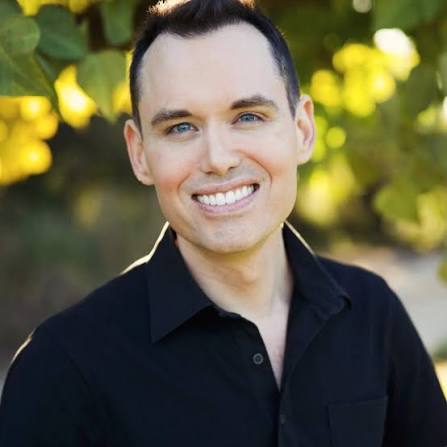
I was an anxious ninth grader in honors history class at Hempstead High School on Tuesday, Sept. 11, 2001, when both towers of the World Trade Center fell. I remember trying to make sense of something too devastating for the words I had then. About 23 miles southwest of my classroom, students at Stuyvesant High School were living through the attacks just blocks from the towers.
For teenagers across the country, Sept. 11 arrived as a shock, television images that did not feel real, teachers searching for answers, parents trying to offer calm when there was little certainty to offer. And, for students at Stuyvesant High School in Lower Manhattan, located just blocks from the World Trade Center, the catastrophe was not only transmitted through a screen. It was outside their windows and in the lives they would carry forward.
Joseph Fenity was one of the young people watching from far away. Then, a 16-year-old high school junior in central Texas, nearly 2,000 miles from Ground Zero, Fenity watched the attacks unfold on television with the rest of the country. He looked to his teachers and other adults for explanation and reassurance, but found neither.
The moment that stayed with him was not only the sight of the towers burning. It was the attack on the Pentagon.
As American Airlines Flight 77 crashed into the building at 9:37 a.m., Fenity understood the attack as a breach of the nation’s sense of safety. If the Pentagon, the headquarters of the U.S. military, could be attacked, he thought, nowhere was beyond reach.
Amid the nonstop coverage of elected officials, military figures, first responders, and adult experts, Fenity noticed something else missing.
“Where were the kids?”
The question became the central premise of a reporting project that would shape his work decades later. Fenity saw adults on television speaking to other adults, while young people who had watched the country change in real time were rarely invited into the national conversation. He believed the youth perspective was not a sidebar to history but part of how the country would understand its future.
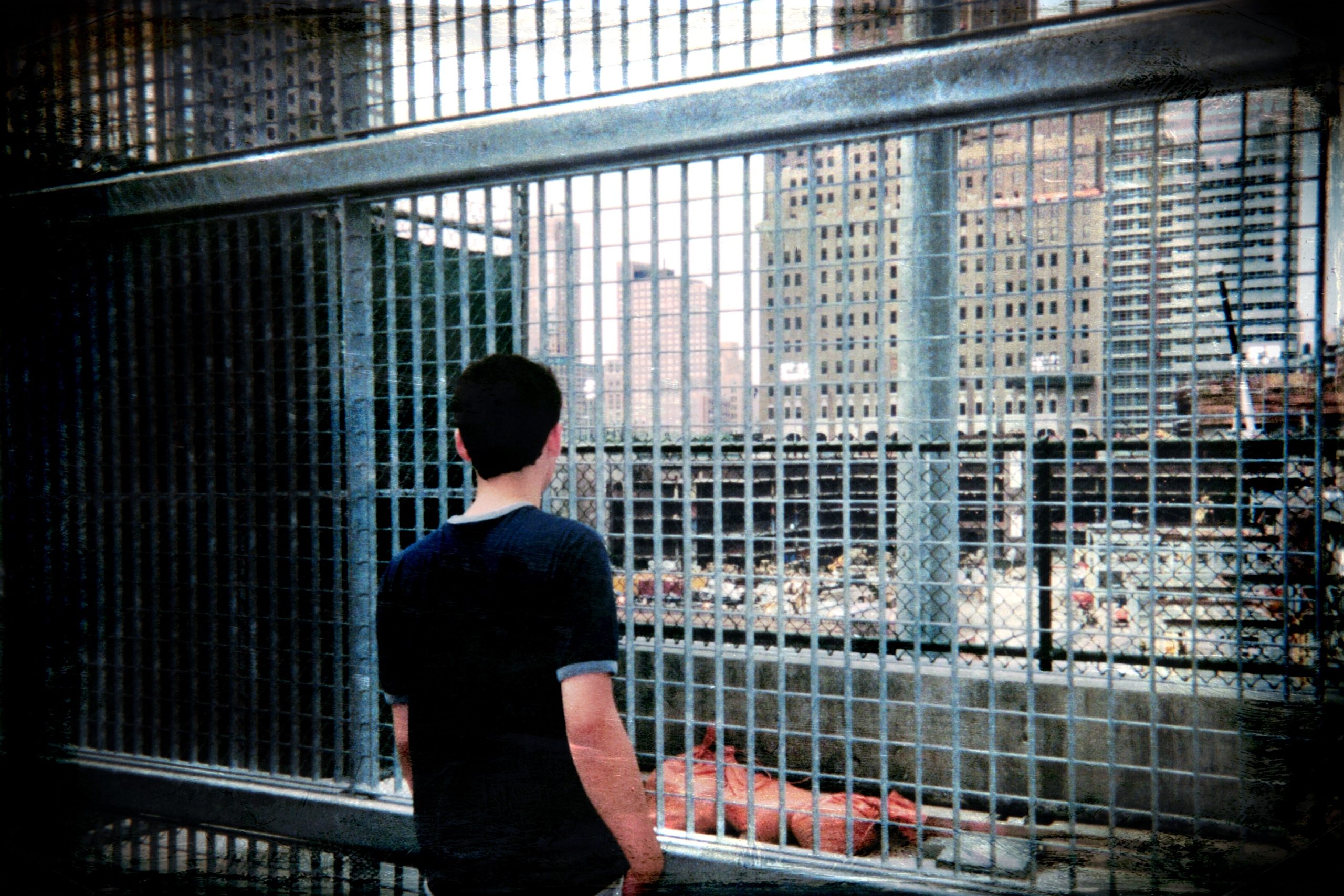
Fenity petitioned his Texas high school leaders to allow him to pursue an independent study in journalism. He wanted to travel to Stuyvesant High School and report on the aftermath of Sept. 11 through the students who lived closest to it.
The result was “Project NYC,” a short documentary released in 2002. At the time, it was a grade A school project. In retrospect, it was an act of archival journalism: a young reporter creating a space for peers whose testimony was absent from much of the immediate coverage
“Although I was only 16 at the time and couldn’t fully grasp every aspect of what was happening, the magnitude of that day was overwhelming,” Fenity told Gaye Magazine. “I was aware that the world I knew was turning upside down in real time.”
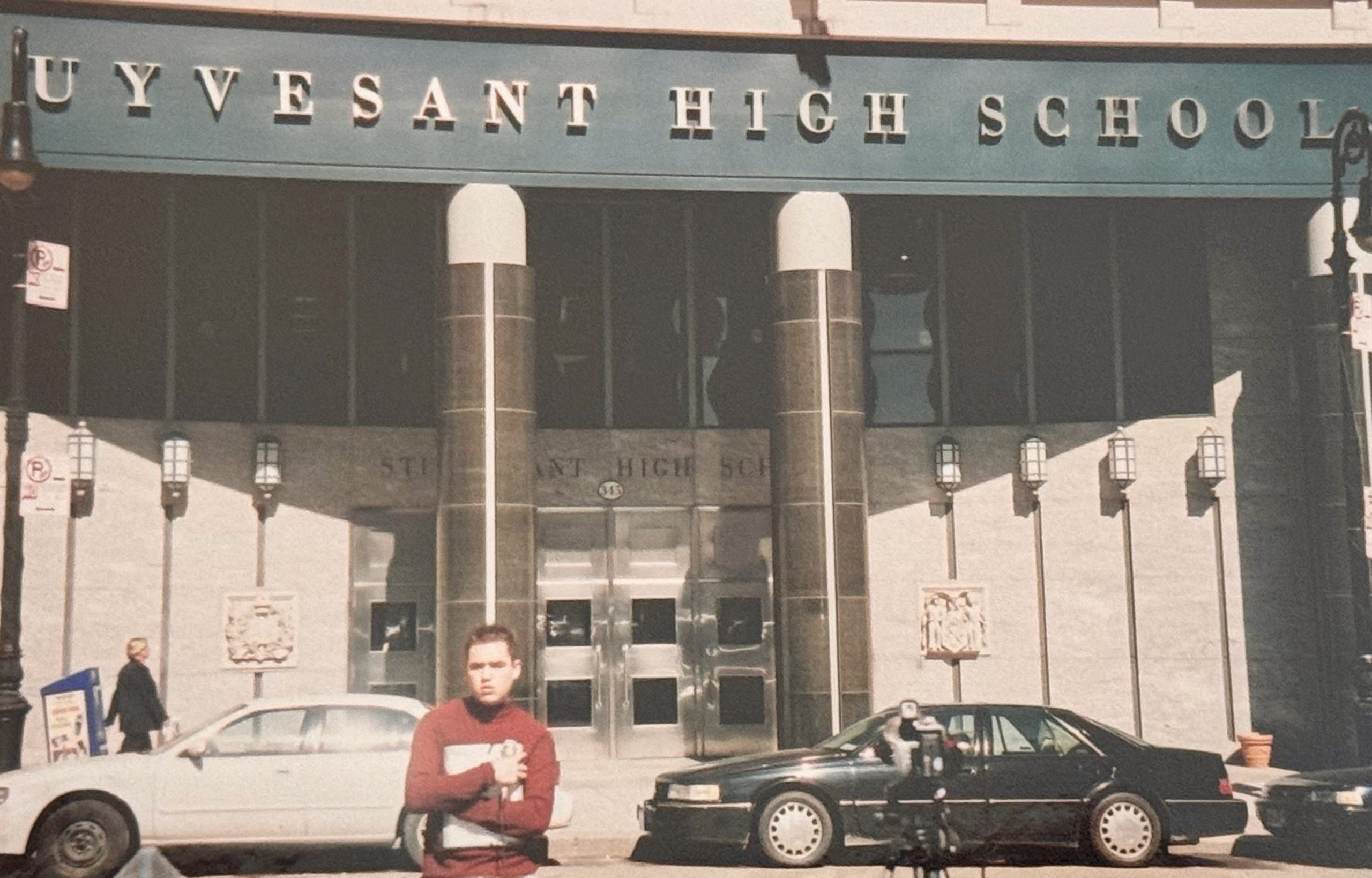
When Fenity arrived in New York, he encountered a city living inside grief, fear, and mutual care. He remembered a palpable sense of unity among strangers, but also a raw vulnerability that made the city feel transformed.
“What you felt in the streets and what you saw in people’s eyes was an unforgettable combination of strength and sadness,” he said.
Inside Stuyvesant, Fenity interviewed students who had experienced the attacks from a place that was both ordinary and unimaginably close to disaster, their school. The recordings preserve the uncertainty, shock, and confusion of young people trying to narrate an event before history hardened it into familiar images and official language.
In interviews featured by KXAN, students recall hearing a loud noise, looking outside and seeing smoke and debris. They remember people running in the streets, the school evacuation, and injured people being brought into the building.
Fenity believes his age gave him access an older reporter might not have had.
“I felt there was an immediate sense of trust and comfort,” he said. “I think that was really helpful as I conducted the Stuyvesant interviews.”
The power of the tapes is partly in that shared language. Fenity did not arrive as a distant authority figure asking young people to translate their grief for adult consumption. He came as another teenager who had watched the country become unrecognizable and who needed to understand what happened to students his own age.
The documentary was released in 2002, but not every interview made the final cut. For nearly two decades, much of the original footage remained packed away.
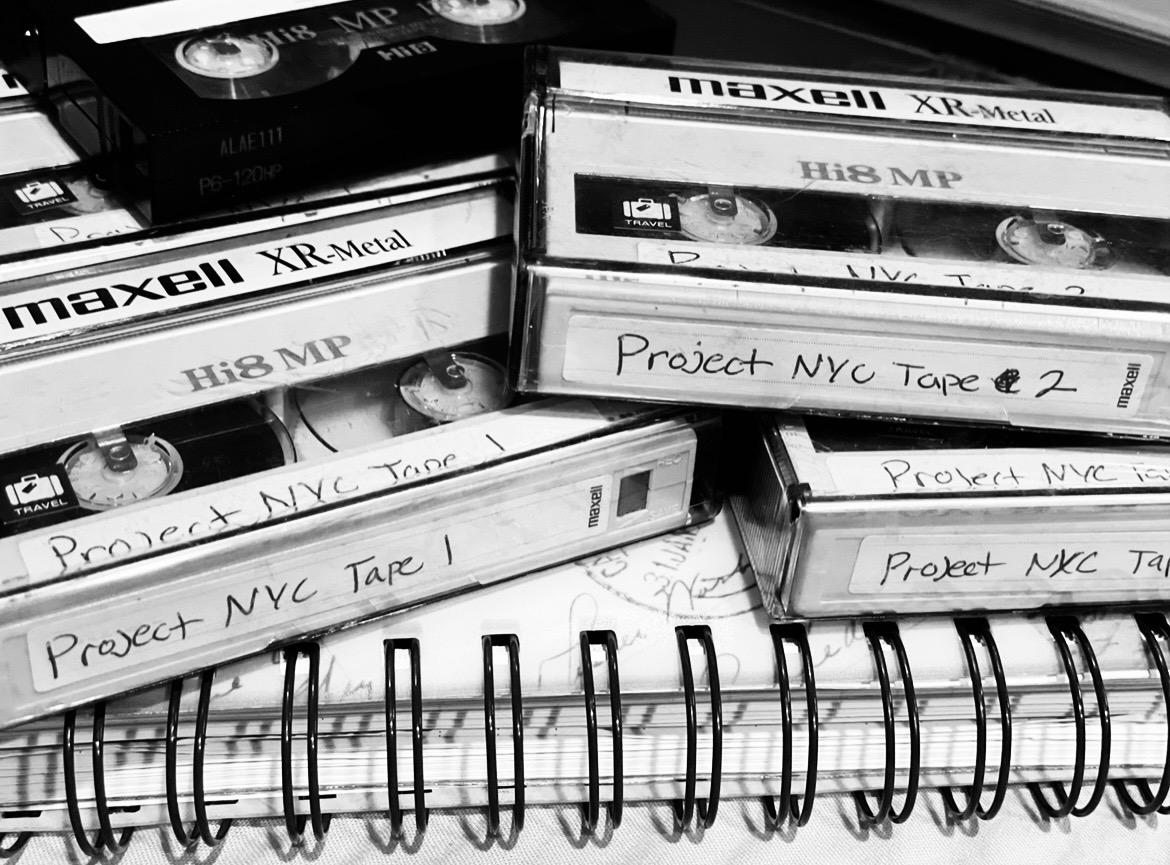
Then, in 2021, Fenity returned to Texas to clear out an overfilled storage unit. Inside one box, he found the original unedited Stuyvesant interview tapes. The discovery included footage left out of the 2002 documentary, and voices that had not been publicly heard in 20 years.
Fenity digitized the material that year, making several firsthand accounts available online for the first time. The recovery reframed the project. What began as a teenager’s journalism assignment became a fuller historical record of young people documenting their experience of one of the most consequential days in contemporary U.S. history.
The rediscovery also deepens the meaning of preservation. The American Folklife Center began gathering testimonies immediately after the attacks, asking folklorists and ethnographers around the country to document the thoughts and feelings of ordinary people. The September 11, 2001, Documentary Project now includes more than 400 sound and video recordings containing approximately 800 interviews.
Fenity’s Stuyvesant interviews are expected to be preserved by the center in 2026, as the country observed the 25th anniversary of the attacks. A quarter-century is often understood as a generation, which is enough time for a teenager’s voice to become an artifact, and for that artifact to return with new urgency.
For Fenity, now a Los Angeles-based independent journalist and documentarian whose work has appeared in The Hollywood Reporter, Los Angeles Magazine, and Rolling Stone, preserving “The Stuyvesant Tapes” reflects a lifelong commitment to reporting stories that powerful institutions and mainstream coverage may initially overlook.
“It’s always been important to me to tell the story of any community or group that is underrepresented,” Fenity said. “I take seriously the job of helping to spotlight the stories of those people that our world may have overlooked the first time around.”
That commitment resonates personally for Fenity as an LGBTQ journalist and former president of NLGJA’s Los Angeles chapter. His body of work has consistently returned to an essential reporting question of who is missing from the story, and what becomes possible when their perspective is treated as central rather than supplemental?
Fenity hopes young journalists and storytellers will not wait for someone else to declare their questions important. “My advice to other writers and storytellers everywhere is to keep doing your job: keep telling the story,” he said. “Regardless of what’s trending, what’s popular, what’s en vogue, what’s out. If you follow your heart and share the stories that you feel called to share, that’s really what it’s all about.”
For him, that encouragement comes with an awareness of what the tapes record, and what they cannot. “While I’m honored to bring out of the shadows voices and stories people have never heard, I don’t want us to forget that we lost many voices on 9/11/01 — voices that will never be heard.”
As someone who sat in a classroom in New York watching that Tuesday morning become history, I understand why Fenity’s interviews matter. Teenagers in 2001 were old enough to recognize danger and grief, but often too young to be granted the authority to explain either. The Stuyvesant students were not simply witnesses to history. They were young people living through it, trying to make sense of what was happening while the country tried to make sense of itself.
Fenity gave them a microphone.
Now, as their voices enter a national archive, the interviews offer something more enduring than remembrance. They preserve young people’s language before the memory of Sept. 11 became filtered through commemoration, political rhetoric, and decades of retelling.
“Having my work preserved for future generations is really meaningful,” Fenity said. “It’s a privilege to know that I am able to carry one generation’s message to another.”
He added, “It’s beautiful to know that the words of these brave young people will carry over into another era.”
Readers can preview “The Stuyvesant Tapes” at JosephFenity.com before the American Folklife Center at the Library of Congress preserves the interviews.
 Anders Hare
Sep 23
2 mins read
Anders Hare
Sep 23
2 mins read

 Mykel Hilliard
Sep 15
3 mins read
Mykel Hilliard
Sep 15
3 mins read
 Juhi Page
Sep 14
4 mins read
Juhi Page
Sep 14
4 mins read

 Gaye Magazine
Aug 25
5 mins read
Gaye Magazine
Aug 25
5 mins read

Gaye Magazine® is part of Gaye Media, Inc.© 2026 Gaye Media, Inc. All Rights Reserved.