


 SaintTreyW
Nov 12
7 mins read

The 2026 midterm elections delivered victories for marriage equality and constitutional civil rights protections, but also new restrictions on transgender young people, underscoring the distance between support for some LGBTQ rights and acceptance of transgender people’s everyday lives.
Virginia voters removed their state’s constitutional ban on same-sex marriage. Vermont voters approved explicit equal protection guarantees that include sexual orientation, gender identity and gender expression. Meanwhile, voters in Washington, Arizona, Nebraska and Colorado approved restrictions on transgender students’ participation in sports. Colorado also approved a prohibition on certain gender-affirming surgeries for minors.
In Missouri, voters rejected a constitutional amendment combining abortion restrictions with a ban on gender-affirming medical care for transgender minors, a defeat advocates credited to organizing that connected reproductive freedom with transgender rights.
For the organizations working on these campaigns, the results were not simply a collection of wins and losses. They represented decisions about whose marriages receive protection, whose medical choices remain private, and which children can participate fully in school life.
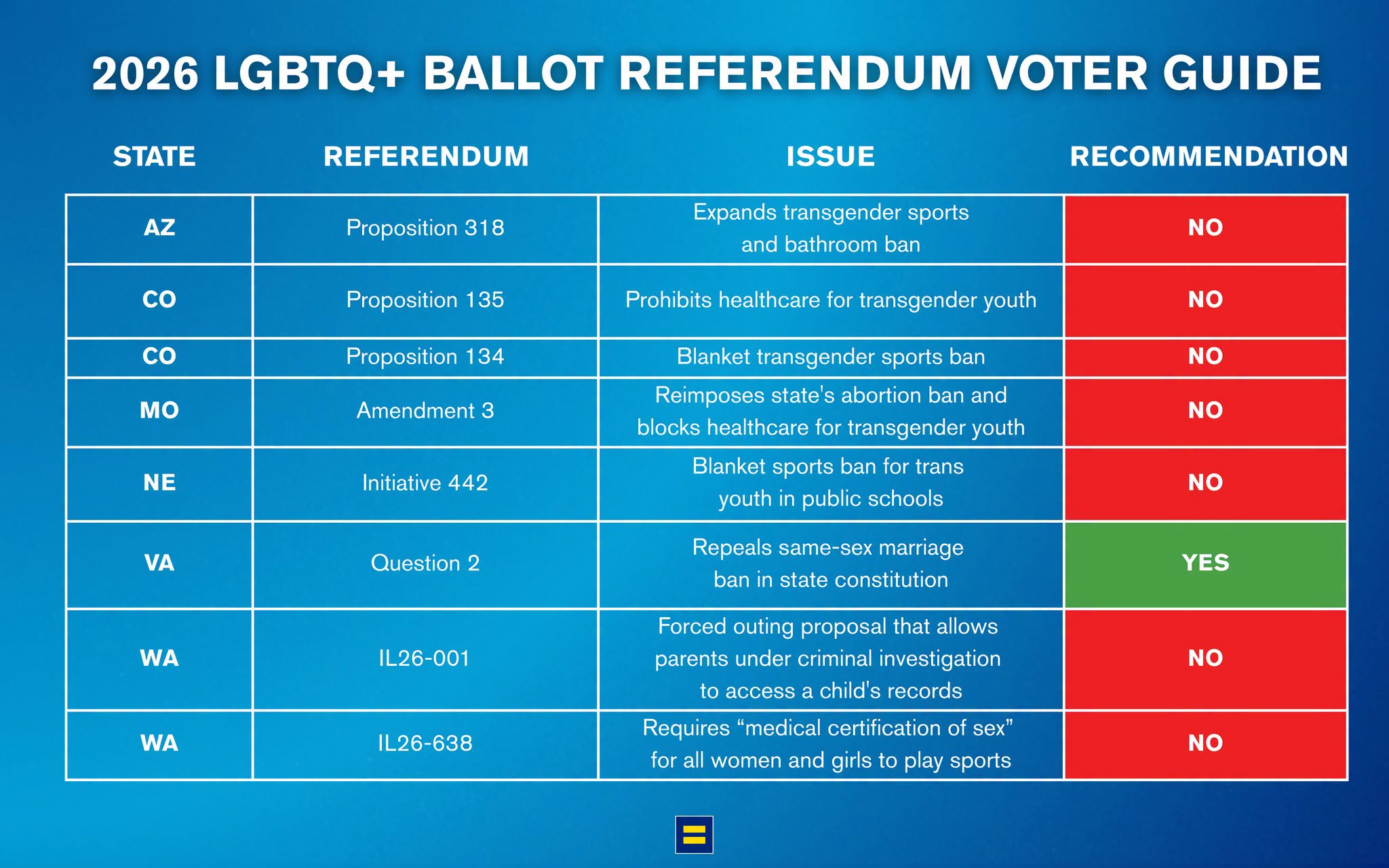
Virginia voters approved Question 2, replacing the state constitution’s unenforceable same-sex marriage ban with protections for lawful marriages between two adults, regardless of sex, gender, or race. The amendment also requires equal treatment of those marriages under state law.
The vote reverses a restriction adopted in 2006. Same-sex marriage was already legal under the U.S. Supreme Court’s 2015 ruling in Obergefell v. Hodges; Question 2 adds protection in Virginia’s own constitution.
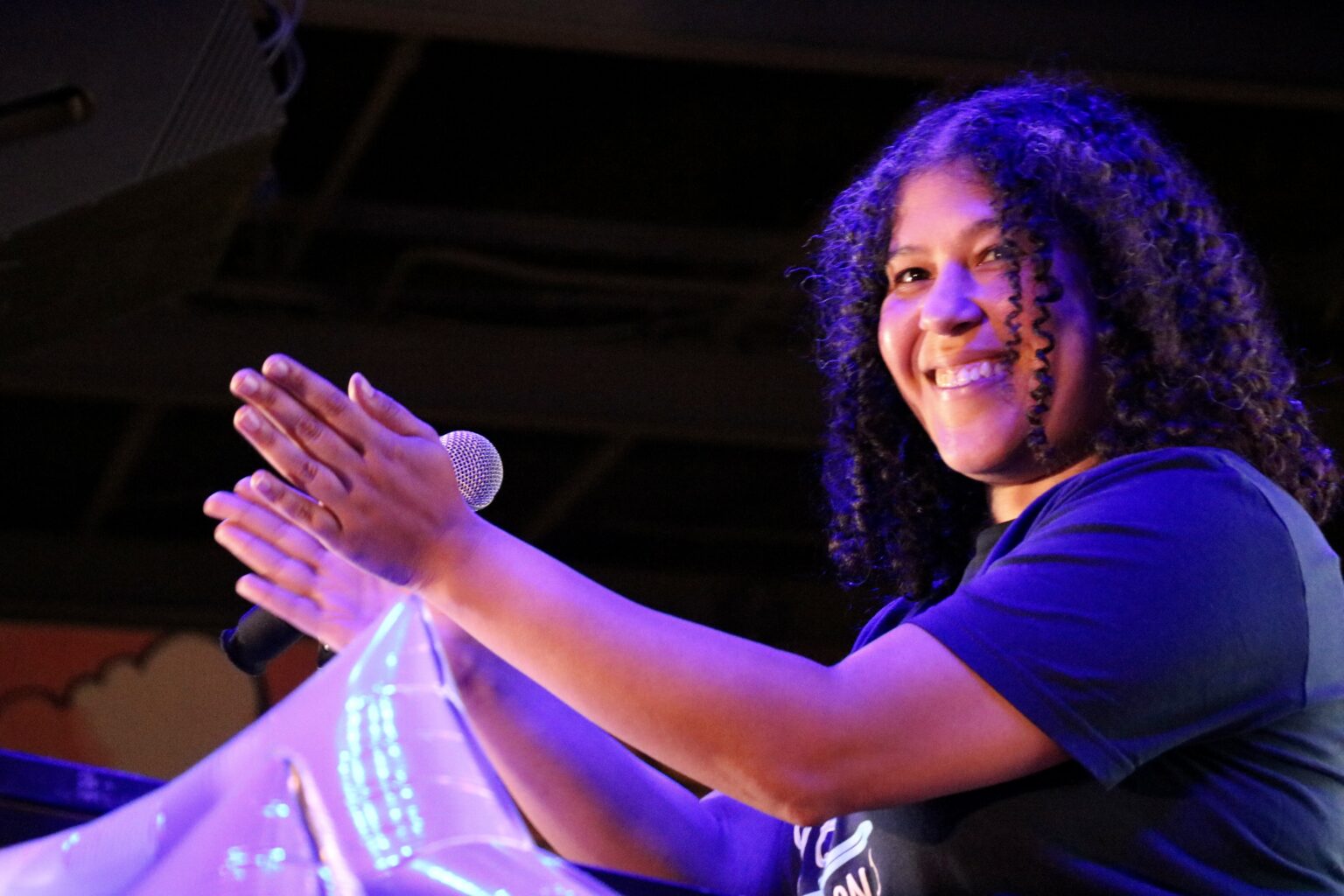
“Twenty years ago, Virginia wrote a ban on same-sex marriage into our constitution. Tonight, Virginia voters chose to repeal it,” Narissa Rahaman, executive director of Equality Virginia, said in a statement published by Equality Federation.
“This moment belongs to the generations of LGBTQ+ leaders who kept showing up, to the people who bravely shared their personal stories with their neighbors, and voters who showed up and voted,” Rahaman said.
Vermont voters approved Proposal 4, adding constitutional equal protection guarantees covering race, ethnicity, sex, religion, disability, sexual orientation, gender identity, gender expression, and national origin. The amendment also preserves the state’s ability to adopt measures intended to provide equal treatment and opportunity for historically disadvantaged groups.
The measure connects LGBTQ protections with a broader civil rights framework, explicitly identifying groups whose equal treatment is protected under the state constitution.
“Proposal 4 is about constitutional clarity,” the Rev. Mark Hughes, executive director of the Vermont Racial Justice Alliance, told Vermont Public in May, according to The Advocate’s reporting. “It’s about ensuring that equal protection under the law is explicit and also that it’s enforceable.”
Hughes’ comments preceded the election, but they explain the distinction at the heart of the proposal: Supporters sought an enforceable constitutional guarantee, not simply a statement of inclusion.
Washington voters approved Initiative 638, prohibiting transgender girls from participating in girls’ school sports and requiring students seeking to compete in female athletic categories to provide medical documentation verifying their sex.
Verification can involve reproductive anatomy, genetic makeup, or naturally produced testosterone levels. Advocates opposing the measure say those requirements raise privacy concerns for all girls seeking to participate, not only transgender students.kuow+1
“I-638 was sold as a rule about a handful of Trans youth, when in reality, it’s a medical sex check for every girl playing school sports in this state, whether Trans or not,” Gender Justice League said in a statement reported by Capitol Hill Seattle.
The organization has also said it is examining potential legal challenges.
“We are having active conversations with our partners and also evaluating what legal options are available to us,” Danni Askini, Gender Justice League’s executive director, told KUOW. “If there is an avenue, we will challenge this ballot measure in court on behalf of our members and our community and trans youth.”
Those comments described potential litigation, not a lawsuit already filed.
Arizona voters approved Proposition 318, expanding sex-based restrictions on athletic participation and access to restrooms, locker rooms, showers, and other designated private spaces in schools and athletic organizations. The measure uses sex recorded on an original birth certificate and allows lawsuits over violations.
It also extends existing restrictions on transgender girls’ sports participation to additional private schools and athletic organizations.
Before the election, Equality Arizona urged voters to reject the proposal, arguing that its consequences reached well beyond the sports debate.
“Prop. 318 doesn’t change that; what it adds is a restroom and locker room restriction on transgender students in every school in the state, plus an extension of the sports ban to private organizations like club teams and youth leagues,” the organization wrote in its October ballot guide.
That statement was a campaign argument issued before the vote, not a concession or post-election response. It identified the facilities restrictions and expansion into private athletic organizations as central reasons for the group’s opposition.
Nebraska voters approved Initiative Measure 442, requiring schools to designate athletic teams by sex and prohibiting students assigned male at birth from participating on teams designated for girls and women.apnews+1
Nebraska already had restrictions on transgender athletes. The amendment places those restrictions in the state constitution rather than leaving them solely in statute. The state’s official ballot measures pamphlet contains the proposal’s text and arguments submitted by supporters and opponents.
National LGBTQ advocates described the broader slate of transgender-related ballot results as a painful setback.
“Our hearts are heavy as we acknowledge difficult losses around the country that will deny transgender youth and their families the rights they deserve,” Deirdre Schifeling, chief political and advocacy officer at the American Civil Liberties Union, said in a statement reported by The Advocate.
Schifeling’s statement addressed losses nationally, rather than Nebraska’s amendment alone.
Colorado voters approved two measures affecting transgender young people: Proposition 134, concerning school and college sports, and Proposition 135, concerning certain surgeries for minors.
Proposition 134 requires school athletic teams from elementary school through college to be designated male, female, or coeducational, with eligibility generally determined by sex rather than gender identity. It includes an exception allowing female students to join male teams when no female team is available.
Nadine Bridges, executive director of One Colorado, warned that enforcement could subject students to scrutiny based on their appearance.
“If a young girl is too tall or too strong or looks older, then any parent could just make a decision, or any official can make a decision to say that a girl is — or assume that a girl — is trans,” Bridges told Colorado Public Radio. “That’s unfair.”
Proposition 135 prohibits certain surgeries intended to alter a minor’s sex characteristics in connection with the minor’s gender identity. It also restricts insurance coverage and public funding for the covered procedures. It does not establish a blanket prohibition on nonsurgical gender-related treatment.
In a statement released while the Colorado results remained uncalled, Bridges addressed both measures as an intrusion into decisions involving families and medical professionals.
“Politicians have no business interfering with decisions that belong with young people, their families, and their doctors,” Bridges said in the Equality Federation release.
Bridges also directed a message to transgender young people: “You deserve care, friendship, joy, and a state that supports you. One Colorado will not give up.”
Missouri voters rejected Amendment 3, which would have rolled back constitutional abortion protections and added a constitutional ban on gender-affirming medical care for transgender minors.
Katy Erker-Lynch, executive director of PROMO Missouri, credited a campaign that treated abortion access and transgender health care as connected questions of bodily autonomy.
“To defeat Amendment 3, we knew we had to talk with Missourians about reproductive freedom through the lens of both abortion and healthcare for trans youth,” Erker-Lynch said in the Equality Federation statement.
“Our largely trans canvassing team and volunteers had just over 10,000 conversations with voters — they confronted misinformation and transphobia face to face, and shared their stories,” Erker-Lynch said.
The amendment’s defeat kept those proposed restrictions out of the constitution. It did not repeal Missouri’s existing statutory restrictions on gender-affirming care for transgender minors.
“Trans and queer Missourians are not a political liability,” Erker-Lynch said. “We are a powerful force; we are your neighbors, we’re not going anywhere.”
The results leave LGBTQ rights on different legal footing across the states: stronger constitutional guarantees in Virginia and Vermont, new restrictions affecting transgender students elsewhere, and a defeated constitutional amendment in Missouri.
For advocates, the work now includes supporting affected young people, educating communities and examining possible legal challenges. In Washington, that includes evaluating privacy arguments against the medical verification requirements. In Colorado, One Colorado has pledged to continue organizing despite the measures’ passage.
“No matter what scare tactics are on TV, the truth is that there is much more that unites us than divides us,” Fran “Hutch” Hutchins, executive director of Equality Federation, said in the organization’s post-election statement. “We all want our kids to be safe. We all want health care to be accessible and affordable. We all want to be treated fairly.”
 Mykel Hilliard
Nov 11
7 mins read
 Anders Hare
Nov 11
2 mins read
SaintTreyW
Nov 10
3 mins read

SaintTreyW
Nov 7
5 mins read

Gaye Magazine® is part of Gaye Media, Inc.© 2026 Gaye Media, Inc. All Rights Reserved.