


 Zuri Pryor-Graves
Aug 14
9 mins read
Zuri Pryor-Graves
Aug 14
9 mins read
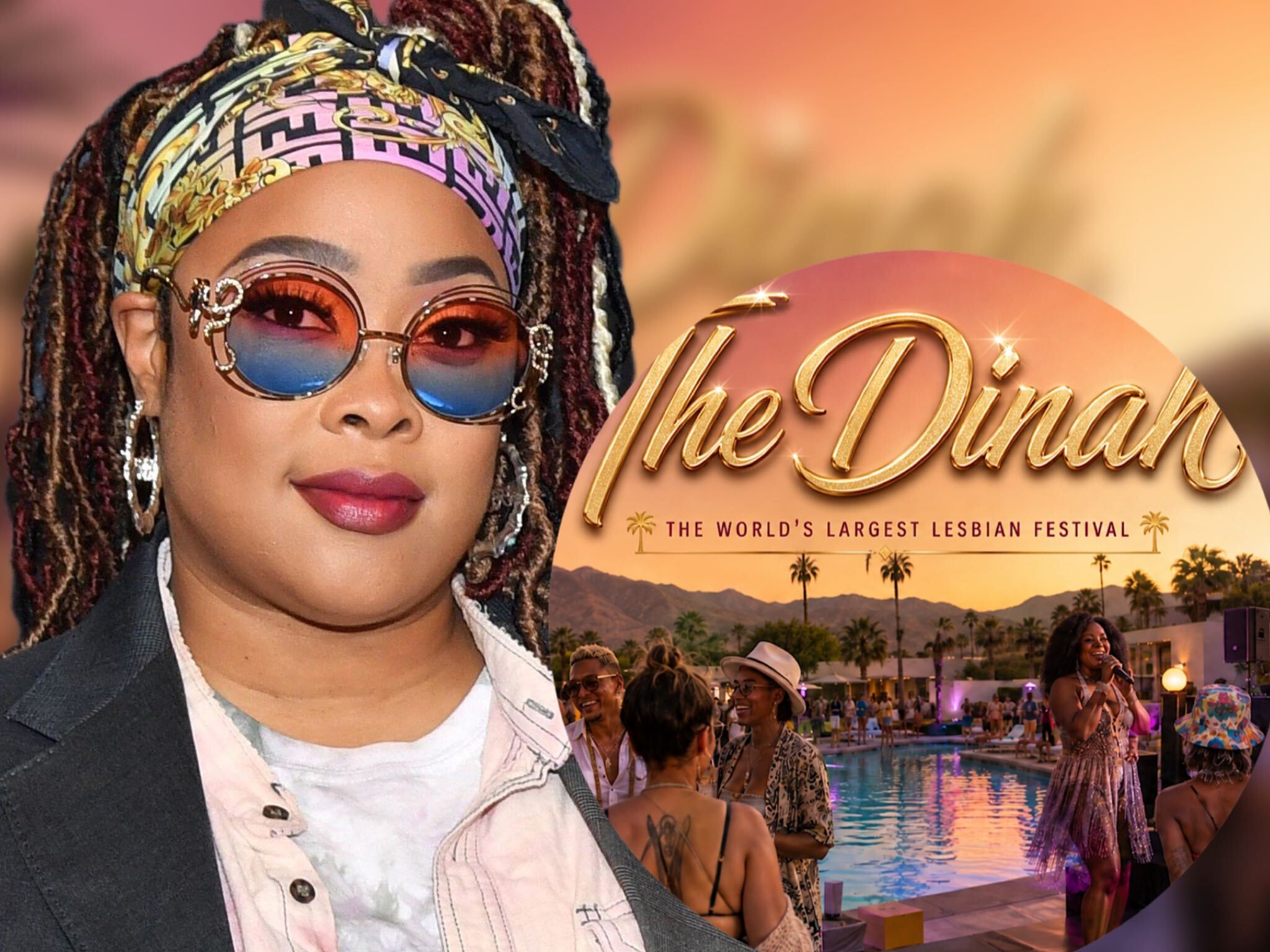
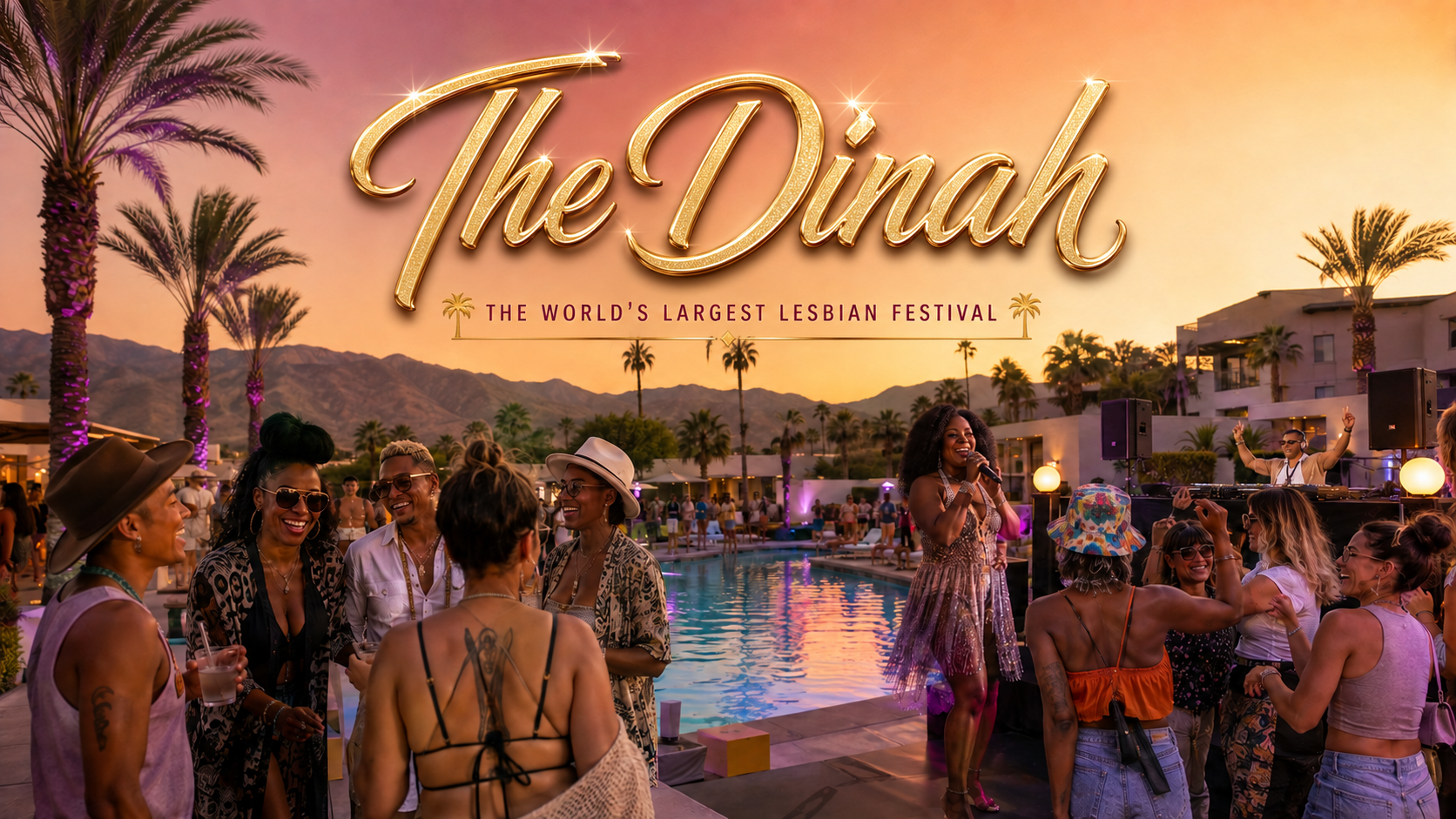
Thirty-five years and 10,000-plus annual attendees later, the world’s largest lesbian festival is entering a new era. Bella Barkow and Rose Garcia take the reins from Mariah Hanson with the history intact, the lesbian debauchery fully booked and the 2026 invitation to Black and brown lezzies looking beautifully bigger and more intentional.
There are lesbian parties, lesbian prides, lesbian festivals, and then there is The Dinah.
If you have somehow managed to spend your entire sapphic life without hearing the legends, imagine thousands of queer women descending on Palm Springs for five days of pool parties, DJs, live music, flirting, dancing, very optimistic swimwear choices, old friends and new crushes. Queerness is the default setting. You are simply one of thousands deciding which pool party, DJ set, old friend or new possibility gets your attention first.
The Dinah has been creating that world since 1991, when a one-night party for roughly 1,500 people at the Palm Springs Art Museum began growing into what is widely regarded as the largest and longest-running festival centered on queer women in the world.
In October 2025, plenty of sapphics arrived in Palm Springs prepared for a finale. Hanson had announced her final Dinah; a successor had yet to be named, and 2026 could have become a transition year without the festival. Cue the lesbian mourning in bikinis. Then February 2026 brought the plot twist: The Dinah had new owners, and the party was back on the calendar.
The story begins before The Dinah was technically The Dinah.
And yes, Dinah Shore was a person before she was a weekend. Shore was a singer, actress, and television star who became a major supporter of women’s professional golf and helped launch the Colgate-Dinah Shore tournament in 1972 near Palm Springs.
By the late 1980s, queer women traveling to the area around the tournament had begun creating their own informal gatherings and parties. A whole lot of lesbians were already going to be in the same desert at the same time. The social possibilities practically wrote themselves.
Mariah Hanson saw what was happening and understood the assignment.
In 1991, she produced a one-night Club Skirts party at the Palm Springs Art Museum. About 1,500 people came. One night became another year, another year became a tradition, and the tradition became an international sapphic pilgrimage. At its height, estimates placed annual attendance around 15,000.
Then came The L Word — first as a mysterious booth in 2003, when Kate Moennig and Erin Daniels showed up at The Dinah to promote a Showtime series still operating under the working title Earthlings, then as television history. The L Word premiered on Showtime on Jan. 18, 2004, and sent its characters to The Dinah during its first season. By the following year, the festival had entered another stratosphere. Hanson has said the show helped drive the largest Dinah the event had ever seen.
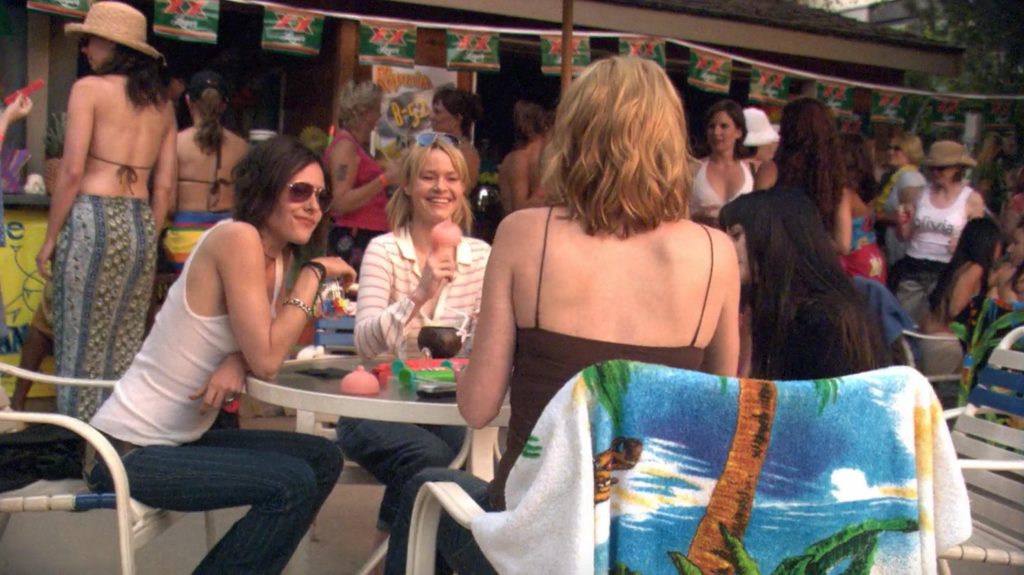
For the closest thing to a 2004 lesbian time machine, cue up Season 1’s “Looking Back” — listed as Episode 12 on Paramount+ — and watch the crew head to Palm Springs for Dinah Shore Weekend. Thank me later.
Yes, girl. It was not just a show. It was real.
For generations of queer women who came of age with far fewer lesbian bars, queer characters, social media communities, and visible versions of sapphic life, The Dinah offered something bigger than a party.
It was proof of life, safety, and opportunity for out-loud freedom.
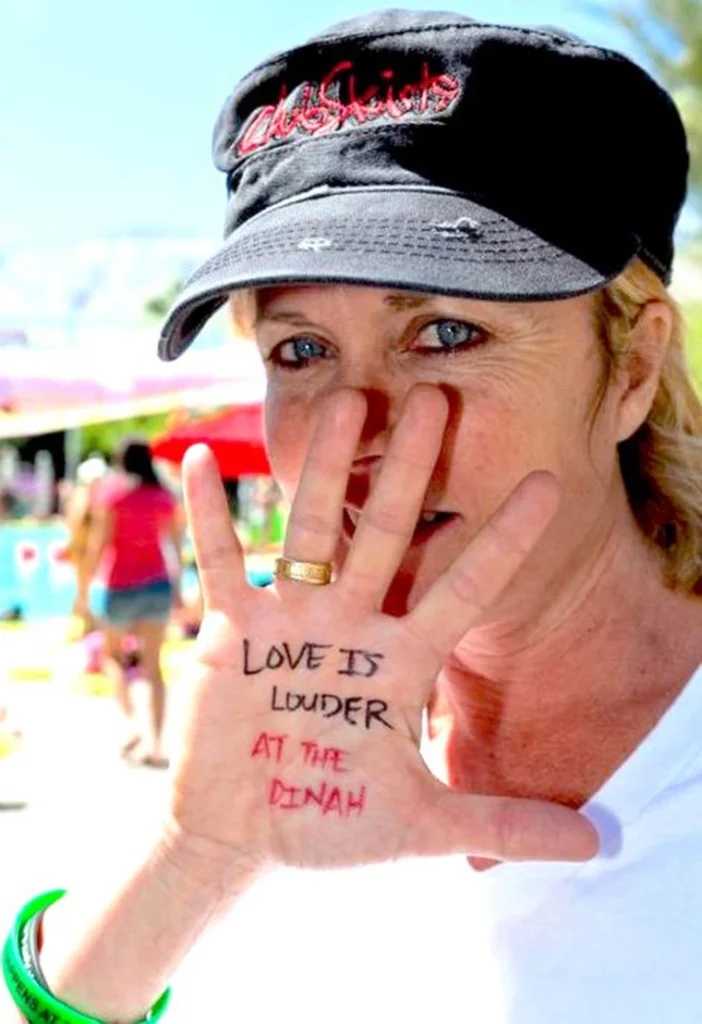
Mariah Hanson deserves the full bouquet.
For more than three decades, she created a place where queer women could occupy enormous amounts of physical and cultural space. The Dinah supported LGBTQ+ organizations, built a global reputation and became known for booking talent including Lady Gaga, Katy Perry, Lizzo and Doechii before or during major career ascents.
Hanson also spoke openly about inclusion as part of The Dinah’s mission. In a 2024 interview about diversity, she emphasized the importance of people being able to “see themselves” in the event and its advertising.
That vision has continued to evolve along with the community itself.
Black and brown lesbians have long been part of The Dinah’s story, while the event’s larger audience and public face have historically skewed white. One important parallel chapter was Dinah in Color, created by Black lesbian organizers Lucy DeBardelaben and Gail Christian after they moved to Palm Springs in 2003 and were struck by how few women of color they saw in the desert.
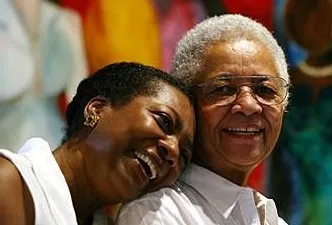
What began as a free backyard party during Dinah weekend outgrew the backyard by 2006. DeBardelaben and Christian hosted Dinah in Color for 10 years, creating space for thousands of Black lesbians and other women of color to party, network, and hear live music. Their community-building work later expanded into cultural programming and helped lead to the Palm Springs Women’s Jazz Festival.
That lineage helps explain why visible representation carries so much weight. Race, gender expression, bisexuality, trans identity, nonbinary identity, disability, sobriety, age and class all shape how people experience community and whether they recognize themselves in its public face.
The Dinah’s own evolution was already visible in recent years. The 2025 farewell lineup featured Puerto Rican rapper Princess Nokia and Black dance music icon Crystal Waters among its performers. In 2026, that visibility is becoming even more pronounced across ownership, talent and programming.
The question is beautifully simple: Can you see yourself here?
This year, more of that answer is visible before anybody has even packed a swimsuit.
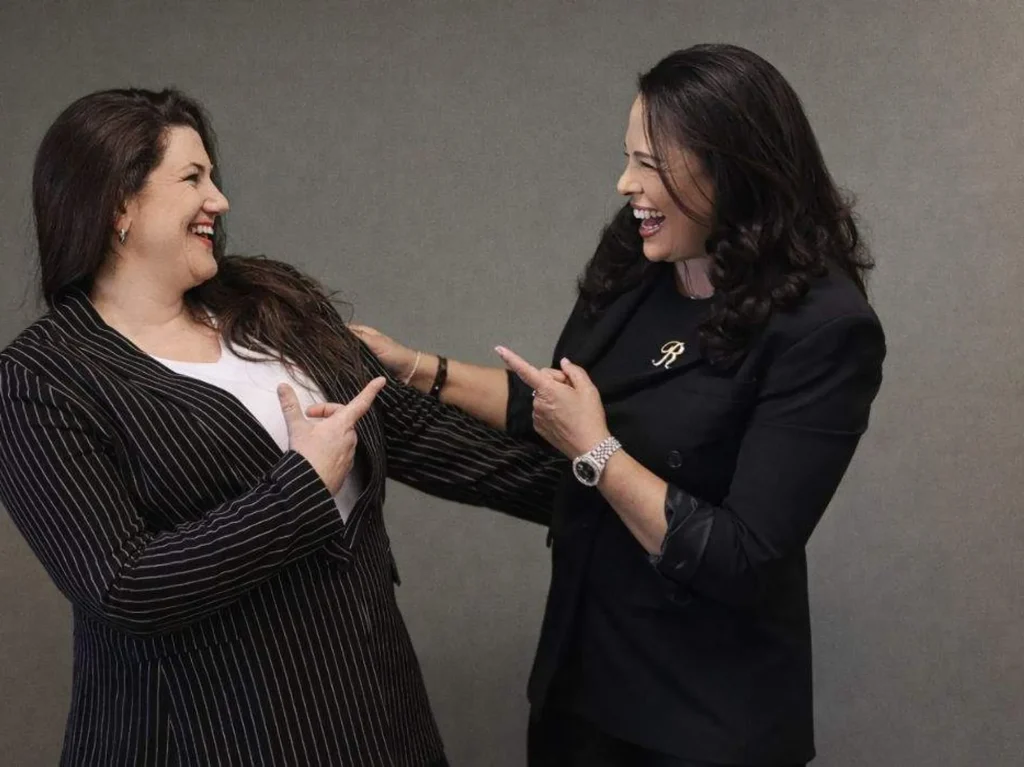
In February, when Hanson officially sold The Dinah to Bella Barkow and Rose Garcia, the handoff placed the festival in the hands of two women who already had years of Dinah history and now operate it through BellaRose Productions.
Barkow joined the team in 2018, moving from pool-party stage manager to operations manager while also producing major LGBTQ+ events including LA Pride and Outloud Festival. Garcia has been connected to The Dinah for close to 25 years, first as an attendee and later as one of its longtime emcees.
Garcia also brings a particularly delicious piece of L Word history into the handoff. Her Dinah years reach back to the same early-2000s era when Showtime was first promoting The L Word at the festival. She has long been identified as the real-life inspiration for Papi, the legendary Latina heartbreaker who entered the scripted series in Season 4, and Garcia later became a cast member of The Real L Word when the reality series premiered in 2010.
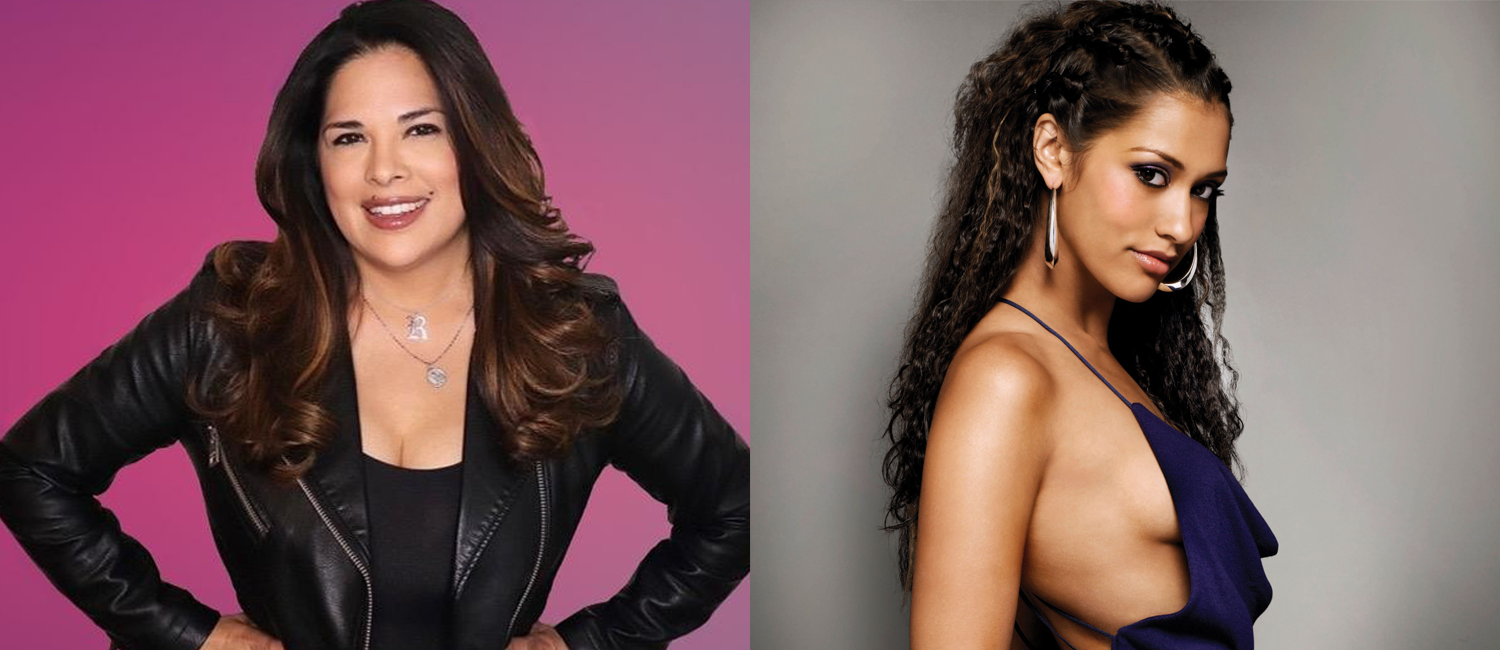
Now the real-life woman associated with one of The L Word’s most memorable Latina characters co-owns the actual festival the franchise helped turn into lesbian mythology. Sapphic history loves a callback.
Garcia is Puerto Rican and Latina, and she and Barkow have said diversity has been one of the most frequent subjects in messages from the community since the ownership announcement. Garcia has spoken specifically about bringing more diversity into The Dinah, while Barkow has emphasized welcoming BIPOC, trans and queer attendees across the community.
Their approach centers continuity and expansion. Much of the existing team is returning, while new programming is widening the ways people can experience the weekend.
And girl, about that lineup.
Da Brat is coming to The Dinah, and for Black queer women in particular, that deserves to lead the sentence. The Grammy-nominated rapper joins 2026 main headliner Hayley Kiyoko, a biracial Asian American pop star whose mother is Japanese Canadian and who has spent more than a decade being lovingly christened “Lesbian Jesus” by queer pop culture, along with British-Colombian R&B singer Sasha Keable and queer pop-rock band The Aces.
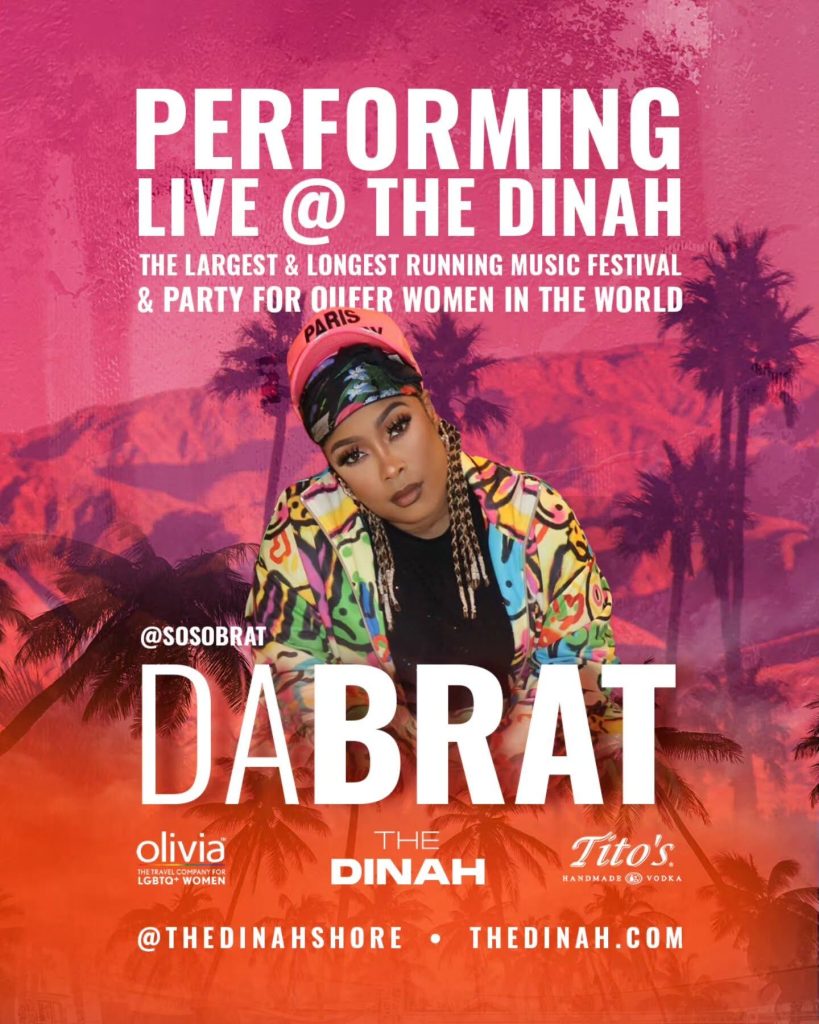
The numbers make the visual shift especially clear. Of the four acts currently featured on The Dinah’s official 2026 performers page, three — Kiyoko, Da Brat and Keable — are solo artists with Asian, Black or Latina heritage. That is 75% of the currently featured performer slate, alongside The Aces, with additional entertainment still part of the broader weekend.
That visibility carries beyond the headliners. The 2026 DJ roster includes DJ Lezlee, who was previously named to Cosmo for Latinas’ “On the Rise” list, and Mexican-born DJ Les Ortiz, alongside DJ Lancia, DJ Inspire, DJ AlexD, DJ SuzyCue, DJ A.K., DJ MO, DJ P-Nasty and DJ Tatiana. The host roster also includes Josselyn Morris, actor, influencer, and self-proclaimed “sister” of queer media fixture Amber Whittington of Amber’s Closet. Amber herself has been a familiar Dinah presence over the years, including appearances on its stages and red carpets.
For Black queer women in particular, Da Brat’s name on that lineup lands differently. Her place in hip-hop history stretches back to 1994, when Funkdafied became the first platinum album by a solo female rapper. Her career began in an era with far less public space for queer women in hip-hop, and now she is taking the stage at one of the most famous sapphic gatherings on earth.
Yes, we noticed.
The 2025 lineup had already brought Princess Nokia and Crystal Waters into the farewell celebration. The 2026 handoff builds on that momentum with representation visible in the ownership, the featured performers, and the language coming directly from the people steering the festival.
A flyer can be a welcome mat. For Black and brown lesbians who have wanted to see more of themselves in The Dinah’s public face, this year’s imagery and lineup offer plenty to recognize.
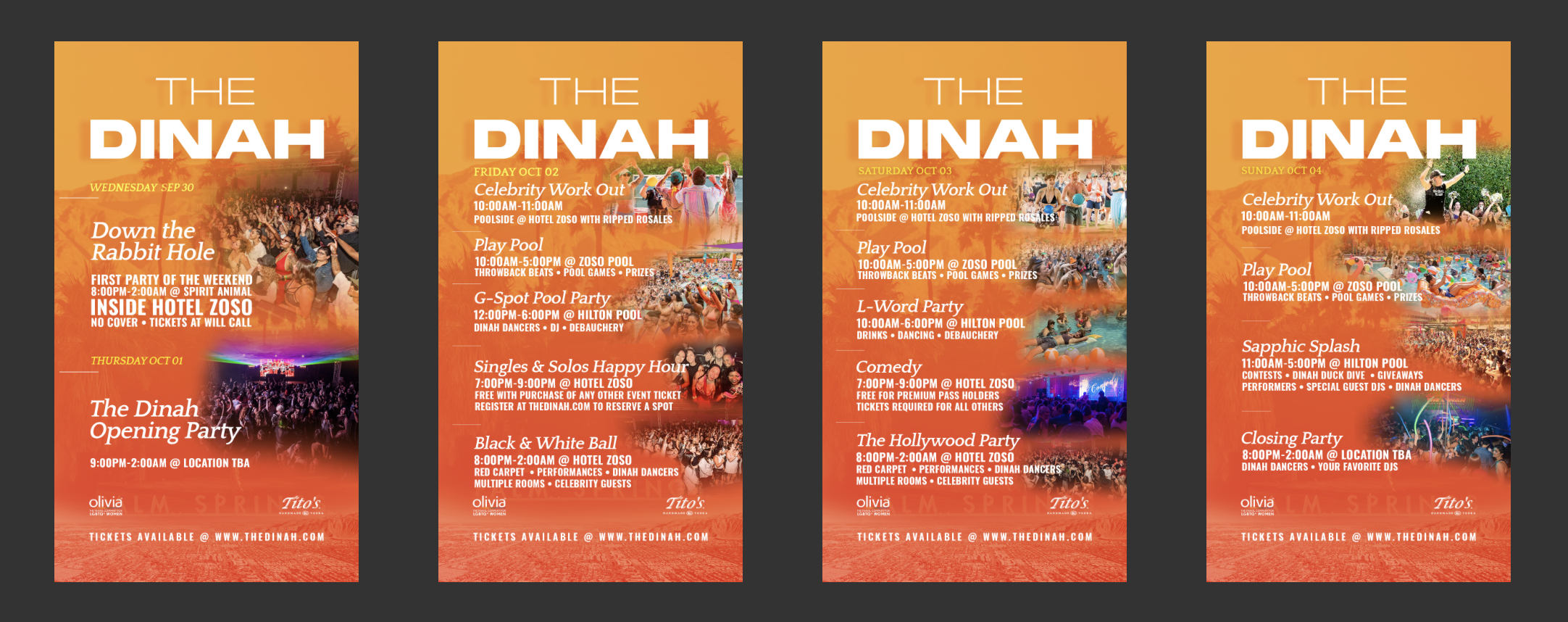
The 2026 festival runs from Sept. 30 to Oct. 4 and expands across the Hilton Palm Springs and Hotel Zoso. Alongside the legendary high-energy pool parties and nighttime events, the second hotel will offer a more relaxed pool experience with old-school music, morning stretching, games, nonalcoholic and health-inspired drinks, and room for a different pace.
There is also a Singles & Solos Social Hour for people arriving without a built-in crew, and comedy is returning to the schedule.
Inclusion also means making room for multiple versions of queer joy.
Some of us came to twerk until 2 a.m.
Some of us came to float by the pool with a nonalcoholic drink.
Some of us came to meet our future wife.
Some of us came with a strict no-U-Haul-this-weekend policy.
There appears to be room for all of these ministries.
There is something beautiful about watching a queer institution live long enough to have a generational handoff.
Hanson proved what could happen when thousands of queer women were invited to gather unapologetically in one place. Barkow and Garcia inherit that legacy in an era with even more visible expressions of queer life and an audience eager to see that fullness reflected.
The 2026 Dinah looks like expansion in action.
For Black and brown lesbians who have heard the stories but have yet to make the pilgrimage, this may be the year to wake up the group chat. Hayley is coming. Da Brat is coming. Sasha Keable is coming. The Aces are coming. Ten DJs are already listed on the official roster, and Palm Springs is preparing once again for thousands of queer women to temporarily alter the local ecosystem.
For 35 years, The Dinah has given queer women room to be enormous, across hotels, pools, stages and an entire desert city. This next era is widening the frame so even more of us can see ourselves inside it.
Yes, girl. They meant us too.
 Mykel Hilliard
Sep 23
3 mins read
Mykel Hilliard
Sep 23
3 mins read
Mykel Hilliard
Sep 21
4 mins read
Mykel Hilliard
Sep 15
3 mins read
 Gaye Magazine
Aug 27
2 mins read
Gaye Magazine
Aug 27
2 mins read

Gaye Magazine® is part of Gaye Media, Inc.© 2026 Gaye Media, Inc. All Rights Reserved.