Women’s professional baseball is back, but as the league prepares to launch its inaugural season on Aug. 1, a critical question remains: Will this new era truly honor the complex histories of the athletes who built the game, or will it reduce them to a polished marketing strategy? Decades after the All-American Girls Professional Baseball League systematically barred Black players and forced queer athletes to hide under strict midcentury decorum, the Women’s Professional Baseball League arrives with a rare opportunity to rewrite history in real time.
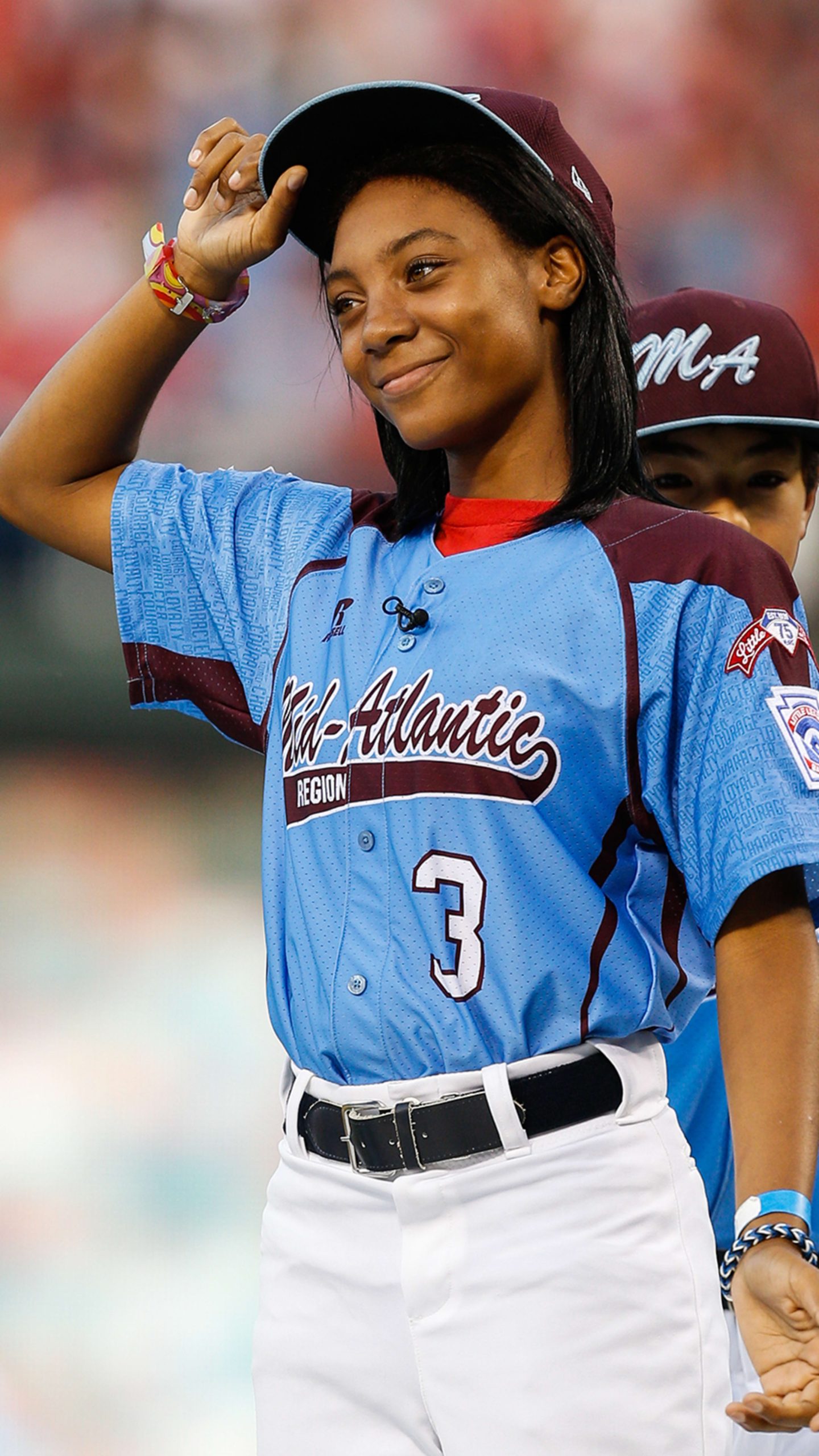
In 2012, an 11-year-old pitcher named Mo’ne Davis, who would later be showcased in the National Baseball Hall of Fame, shook hands with a 76-year-old woman named Mamie “Peanut” Johnson. Sixty years earlier, Johnson had walked into an All-American Girls Professional Baseball League tryout in Alexandria, Virginia, and been turned away without a chance to throw a pitch because she was Black. She went on to sign with the Negro Leagues’ Indianapolis Clowns in 1953 and finished her career with a 33-8 pitching record. That was a historically strong record by any standard, and particularly exceptional for a woman in the Negro Leagues. Fourteen years later, Mo’ne Davis would stand on a stage of her own.
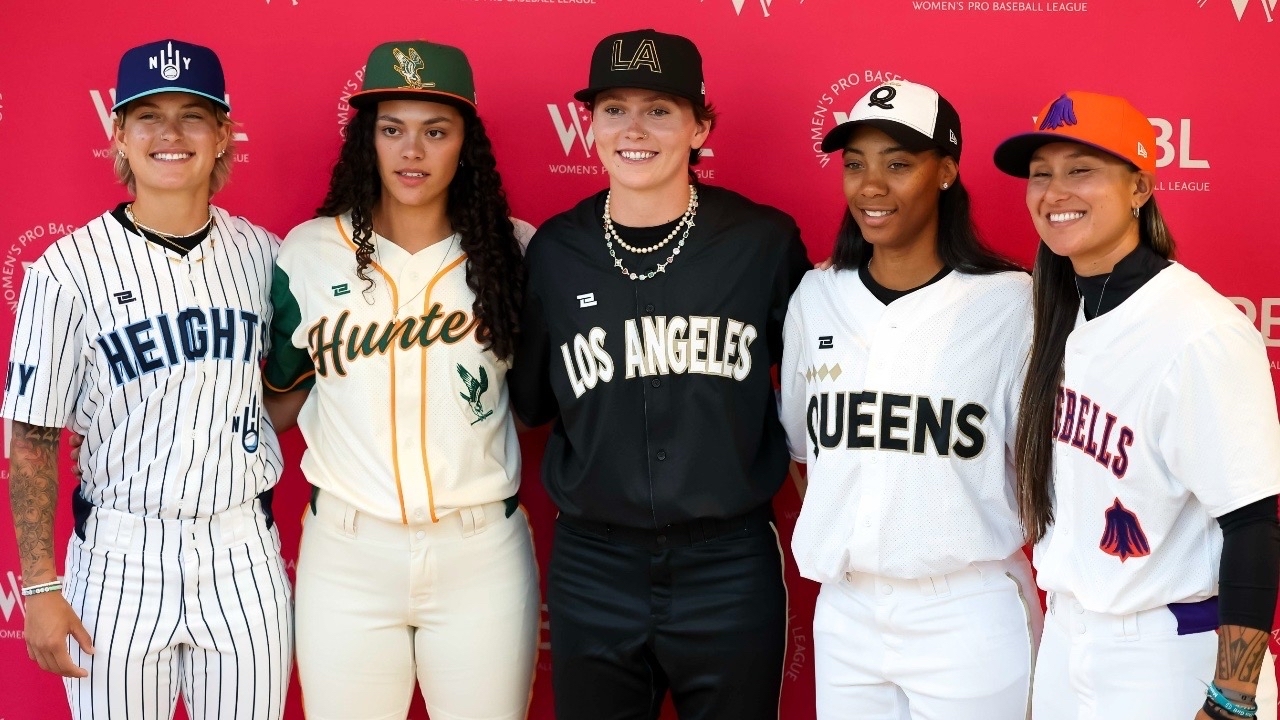
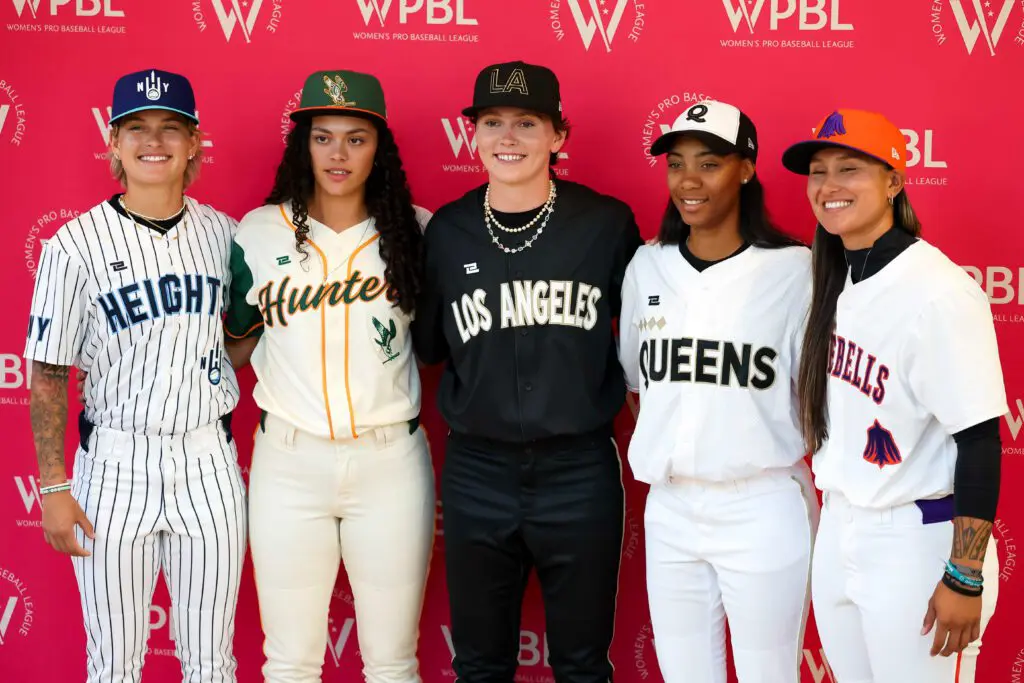
On July 8, 2026, Davis stood at a podium at the New Era Flagship Store in Manhattan to help introduce the four inaugural teams of the Women’s Pro Baseball League. The league is the first women’s professional baseball league in the United States in 72 years. When the WPBL throws its first pitch on Aug. 1 at Robin Roberts Stadium in Springfield, Illinois, its rosters, its rulebook and its front office will look nothing like the league it was built after and intended to follow.
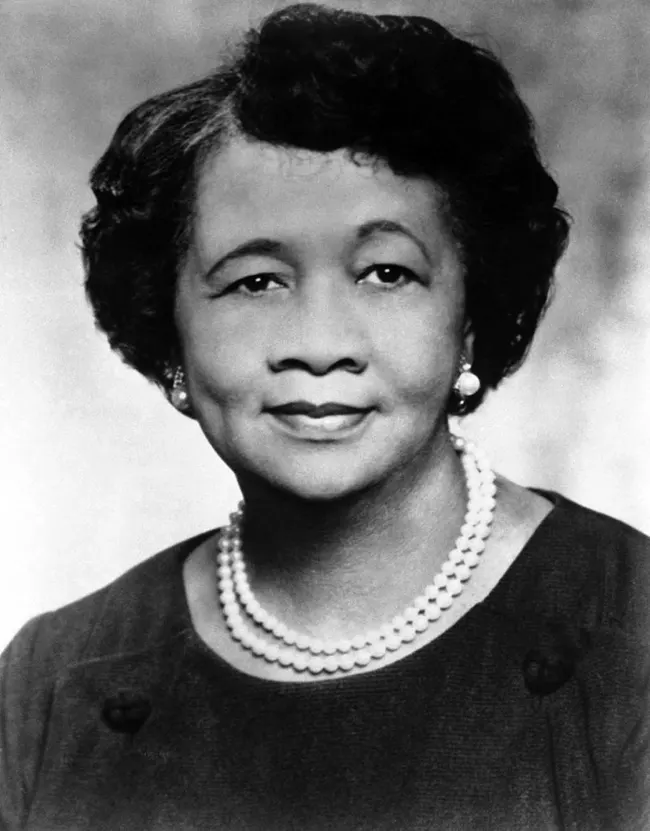
Each of the WPBL’s inaugural franchises is named after a woman who has made a historical impact. The Boston Hunters take their name from Harriot K. Hunt, the first woman to apply to Harvard Medical School and build a successful medical practice in the United States. The Los Angeles Queens are named for Lizzie Murphy, also known as the “Queen of the Diamond,” who in 1922 became the first woman to play against a Major League Baseball team. The San Francisco Firebells honor Lillie Hitchcock Coit, the eccentric benefactor and champion of the city’s volunteer firefighters. Finally, the New York Heights are named for Dorothy Irene Height, a civil rights and women’s rights leader who spent four decades as president of the National Council of Negro Women.
“The WPBL stands on the shoulders of these incredible women who fought for their place in history and on the diamond long before us,” commissioner Justine Siegal said in the league’s July 8 press release.
The All-American Girls Professional Baseball League was founded in 1943 by Chicago Cubs owner Philip K. Wrigley and lasted 11 seasons before folding in 1954. Wrigley started the league during World War II, worried that professional baseball would fade from the public eye while male stars were drafted overseas. More than 600 women played in the league. It was the same league fictionalized in Penny Marshall’s 1992 film A League of Their Own and again in Amazon Prime Video’s 2022 series of the same name.
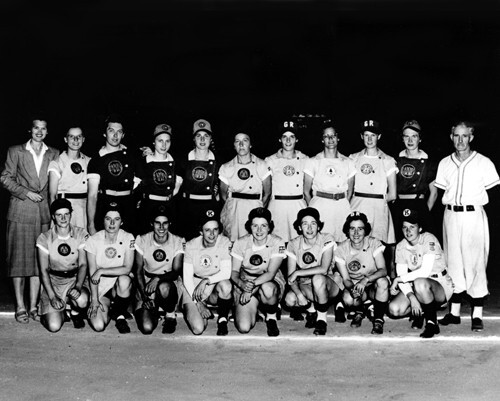
It was also a league whose defining feature, off the field, was the aggressive management of its players’ public image. Wrigley contracted Helena Rubinstein’s beauty company to run a mandatory evening charm school for players. Each was issued an 11-page guide titled A Guide for All American Girls: How to Look Better, Feel Better, Be More Popular, along with a beauty kit. Uniforms were skirts, not pants, which were impractical for sliding but aligned with the league’s “all-American” image of the female athlete. Players were required to wear lipstick on the field. The league’s cardinal rule, in the words of former player Lois Youngen, was: “Look like Betty Grable and play ball like Joe DiMaggio.”
Historians and former players now speak candidly about the underlying truth of the femininity code: Its main purpose was to counter assumptions that players were lesbians. Although the code was intended to suppress those assumptions, many players were indeed lesbians, relying on underground bars and hidden communities to live authentically during World War II. Maybelle Blair, who pitched in the league in 1948, came out publicly at age 95 at the 2022 premiere of the Amazon series and estimated that as many as two-thirds of AAGPBL players were gay. Player Terry Donahue kept her 60-year relationship with her partner, Pat Henschel, private until near the end of her life; their story was documented in the 2020 Netflix film A Secret Love.
The AAGPBL was also, throughout its entire 11-year run, segregated. It never signed a Black player. A small number of light-skinned Latina players were permitted to play by passing as white. In 1952, five years after Jackie Robinson integrated Major League Baseball, Mamie Johnson and a friend traveled to an AAGPBL tryout in Virginia and were refused the opportunity to participate. Johnson, Toni Stone and Connie Morgan would each go on to play in the Negro Leagues, where they faced barriers of their own, including harassment from male teammates, changing in umpires’ rooms and even staying in brothels on the road because hotels would not accommodate them. Their careers were brief, and their names were, until very recently, absent from most popular histories of women’s baseball.
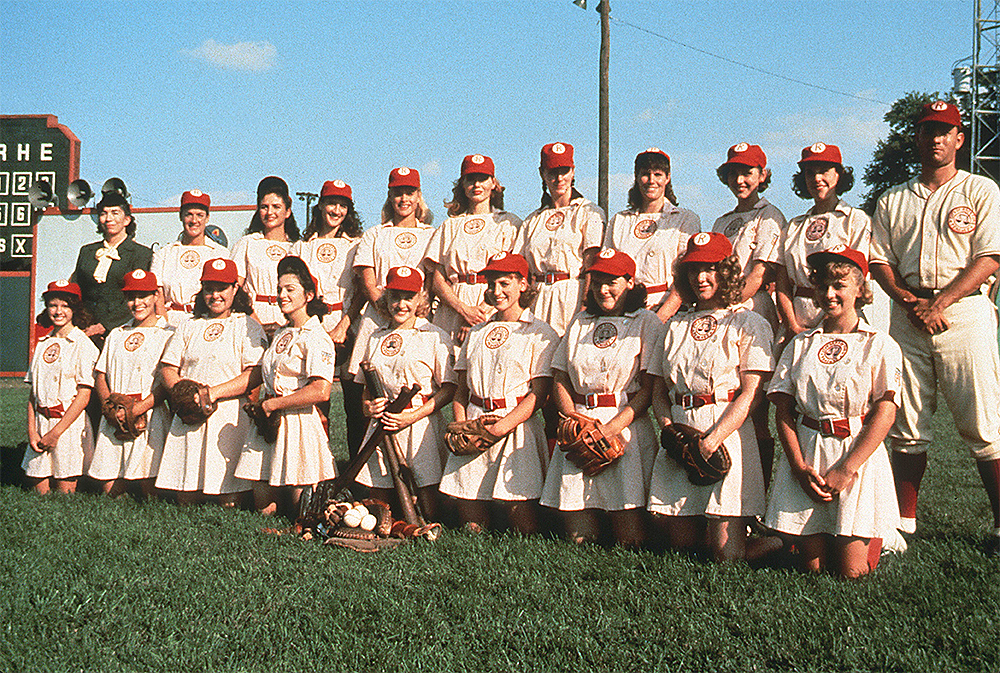
Prime Video’s A League of Their Own, developed by Abbi Jacobson and Will Graham, was a deliberate correction to the 1992 film. Whereas the movie sidestepped both the queer and racial history of the league, the series made them central to its narratives. Greta, played by D’Arcy Carden, and Carson Shaw, played by Abbi Jacobson, were closeted lovers navigating the AAGPBL’s surveillance regime in real time. Chanté Adams’ character, Max Chapman, is a Black pitcher barred from the Rockford Peaches tryouts, a direct homage to real players such as Mamie Johnson, Toni Stone and Connie Morgan, whom the league rejected.
Amazon scrapped the series in 2023 after just eight episodes, citing strategic pivots. Even so, the show clearly exposed the gap between the polished history of women’s baseball and the reality lived by the players themselves.
Which brings us back to Dorothy Height. She was born in Richmond, Virginia, in 1912, and she died in Washington, D.C., in 2010 at the age of 98. She was awarded the Presidential Medal of Freedom in 1994 and the Congressional Gold Medal in 2004. She organized voter registration in the South, ran the YWCA’s integration program, and stood beside Martin Luther King Jr. at the March on Washington, often as the only woman leader on the stage. She was called the “godmother of the women’s movement.” However, she did not play baseball.
Naming a New York team after Dorothy Height was a deliberate editorial statement. New York’s history is rooted in Black and queer resistance, stretching from the Harlem Renaissance to the frontlines of the Stonewall resistance, often acknowledged as the inciting event that would eventually become our modern-day Pride.
Height was a civil rights icon with no personal or historical ties to baseball. While the WPBL aims to project a broad, progressive lineage, it ultimately forces the burden of representation onto a figure who never played the game.
In a lineup where Height is the only Black namesake, the risk of polished PR or performative inclusion is high. Just as the original AAGPBL systematically barred Black players like Toni Stone while forcing queer athletes to hide under a strict “femininity code,” modern sports’ branding too easily replaces complex histories with safe outward marketing. Dorothy Height’s legacy lies in the material progress of Black women, not in acting as a symbolic icon for diversity in professional sports, especially a sport that historically excluded Black women.
The true measure of the WPBL will not be using a non-baseball icon to sell jerseys, but whether it actually confronts the dual histories of racial and anti-queer exclusion in women’s sports. Honoring Height’s legacy requires action that can be seen in the communities she served: investing in Black youth baseball pipelines, explicitly acknowledging historical color lines, and establishing structural protections for LGBTQ+ athletes. Without these commitments, the league risks reducing both civil rights and queer sports history to a marketing strategy.
Despite these questions, the establishment of the WPBL represents a fundamental shift in the landscape of women’s sports. For the first time in American baseball history, a professional women’s league exists with both the platform and the cultural responsibility to offer a fully inclusive environment. Where previous eras forced Black athletes to the margins of the Negro Leagues and pushed queer players into underground subcultures, the WPBL has the opportunity to build an intentional space where players can exist openly as Black, BIPOC, or queer without sacrificing their professional careers.
Furthermore, as of this writing, the WPBL has not publicly identified any of its players as queer. Given Maybelle Blair’s estimate that two-thirds of AAGPBL players were gay and the deep, continuous history of queer women anchoring baseball and softball ever since, the presence of queer athletes on current rosters is a certainty. The primary difference today is whether an athlete who comes out will face the restrictive surveillance mentality of 1943 or the genuine, institutional support that a truly modern, inclusive league should provide.
Born in 2001, Mo’ne Davis captured national attention when she became the first girl to pitch a shutout in Little League World Series history. Now at 25, her playing days as an active phenom on the mound are largely behind her, shifting her role into that of an ambassador and defining face of the WPBL’s launch. While she won’t be taking the field as a primary athlete or navigating mid-century charm schools herself, her presence marks a major generational turning point. Whether the WPBL uses her platform to build an environment that actively protects, honors, and visibly uplifts the BIPOC and queer women stepping into these roster spots remains the central question once the season begins and continues to gain traction and visibility.
Nonetheless, the diamond has always been a place where history is rewritten in real time. The WPBL opens its doors into a world shaped by the courage of those who came before and those finding their voices today. From WNBA players such as Brittney Griner, Natasha Cloud and Layshia Clarendon to trailblazers across women’s sports who have shown what it means to live and play openly as Black, BIPOC and queer women, the foundation for belonging is stronger than ever. The WPBL is not just launching a new league; it could offer a home where the next generation of players and fans can show up fully as themselves. As Aug. 1 approaches, there is reason to watch closely, support these athletes and see whether the game finally makes room for everyone who loves it.
 Mykel Hilliard
Oct 3
4 mins read
Mykel Hilliard
Oct 3
4 mins read
 Anders Hare
Jul 31
3 mins read
Anders Hare
Jul 31
3 mins read
Zuri Pryor-Graves
Jul 22
3 mins read
Zuri Pryor-Graves
Jun 24
7 mins read

Gaye Magazine® is part of Gaye Media, Inc.© 2026 Gaye Media, Inc. All Rights Reserved.