
Quotes have been edited for clarity.
Published last week, the 10 page document outlines a one-time SRY gene screening for athletes to determine eligibility for any female category at the Olympic Games or other IOC events. The only exceptions apply to athletes diagnosed with Complete Androgen Insensitivity Syndrome (CAIS) or other rare Differences of Sexual Development (DSDs), that according to the policy, do not “benefit from anabolic and/or performance enhancing effects of testosterone”. Beyond these exceptions, any athlete who tests positive for the SRY gene or declines the screening would be deemed ineligible for the female category.
According to the IOC, the policy is informed by scientific evidence and expert opinion; however, it does not fully account for athletes assigned female at birth who have certain genetic variations, including those who may test positive for the SRY gene. While the SRY gene is typically found on the XY chromosome, it is not exclusively located there. As a result, relying on SRY-based criteria for eligibility has historically raised concerns about accuracy and potential for discrimination.
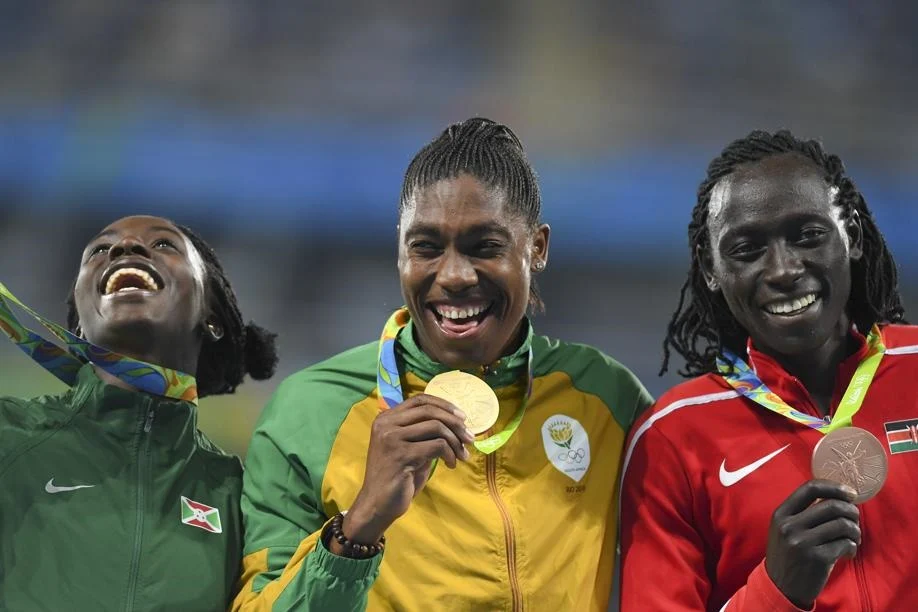
Caster Semenya claims that the IOC contacted her on the day the policy was announced, but viewed the outreach as disingenuous. In a recent interview, Caster criticized the policy arguing that it undermines the integrity of women’s sports. She also references the IOC’s failed attempt to implement SRY testing in the 1990s, which ultimately led to the practice being abandoned by the time of the 2000 Sydney Olympics.
“What this decision does is undermine women. It undermines women’s dignity. It violates women’s rights. We know historically this has failed before. In the 1990s, the IOC tried to implement it and failed, because there is no scientific evidence to prove that there’s an advantage”, said Semenya.
Scientists and sports figures also argue that the policy is reductive by design, oversimplifying sex determination by relying on the presence of a single chromosome. The IOC is essentially adopting a “one size fits all approach” that largely ignores natural genetic diversity, effectively deciding who qualifies as female. Furthermore, sex verification testing has historically been criticized as both costly and discriminatory in practice.
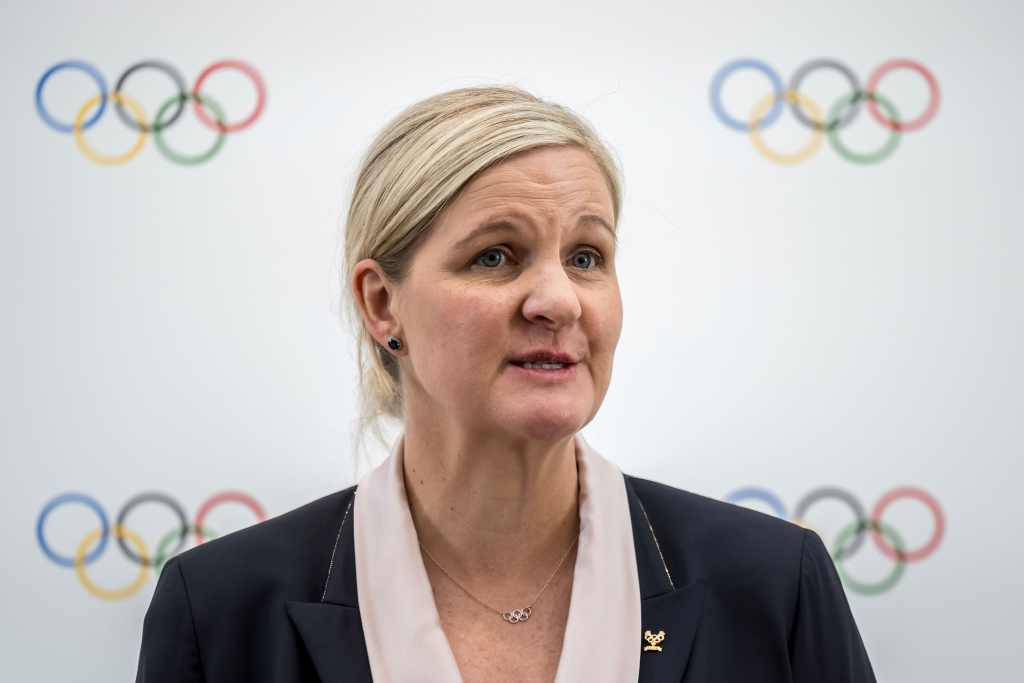
Kirsty Coventry, the most decorated Olympian from Africa and the first woman to serve as President of the IOC, has been a proponent of stricter eligibility rules. During her campaign and at the time of her election, Coventry consistently maintained her position on excluding transwomen from female categories. In her first days in office, she pledged to assemble a task force dedicated to “looking at the transgender issue and the protection of the female category.”
Coventry is set to serve as IOC President through the end of her term in 2033.
Caster Semenya criticized Kirsty Coventry’s role in advancing the policy, arguing that its enactment is hypocritical and will ultimately harm women, particularly those from the Global South.
“For her, being a woman coming from Africa, knowing how African women are…how women in the Global South are affected by that, it causes harm. If the science is clear, show us who decided, and don’t dress that as a lie, because it’s a lie. We know because we’ve seen it.”
She added, “If we were to confront Kirsty, that’s how we’re going to respond and we’ll respond strong, because it affects women.”
The controversial screening policy sends a broader message to both Olympic and non-Olympic sporting bodies: there is only one, ideal female standard. In pursuing its stated mission of ensuring fairness, the IOC may hinder athletes from competing altogether out of fear of failing eligibility screenings and being permanently barred from the female category.
Semenya vowed to remain a vocal advocate, continuing to defend women’s rights and freedoms within the sporting world.
The new IOC policy is expected to apply to the Los Angeles 2028 Olympic Games and future IOC sanctioned events, not extending to recreational or grassroots athletic programs.

 Mykel Hilliard
Oct 3
4 mins read
Mykel Hilliard
Oct 3
4 mins read

 Anders Hare
Jul 31
3 mins read
Anders Hare
Jul 31
3 mins read


Zuri Pryor-Graves
Jul 22
3 mins read

Gaye Magazine® is part of Gaye Media, Inc.© 2026 Gaye Media, Inc. All Rights Reserved.