


 SaintTreyW
Apr 4
5 mins read
SaintTreyW
Apr 4
5 mins read
In a move that advocates say turns everyday existence into a criminal act, Idaho Gov. Brad Little on Tuesday signed House Bill 752 into law, restricting bathroom access in public spaces based on sex assigned at birth and imposing criminal penalties on those who violate it.
The legislation, widely referred to as the “Bathroom Bill,” makes it a misdemeanor for individuals to “knowingly and willfully” use a restroom or changing facility that does not align with their biological sex. A second offense within five years escalates to a felony charge punishable by up to five years in prison.
The law applies to government-owned buildings and places of public accommodation, including private businesses. It takes effect July 1.
For many transgender Idahoans, the measure codifies a daily calculation between safety and survival.
“Every single day when I’m out in public, I have to decide, do I feel like going to jail today, or do I feel like being attacked?” Nikson Mathews, chair of the Idaho Democratic Queer Caucus, told lawmakers during earlier testimony.
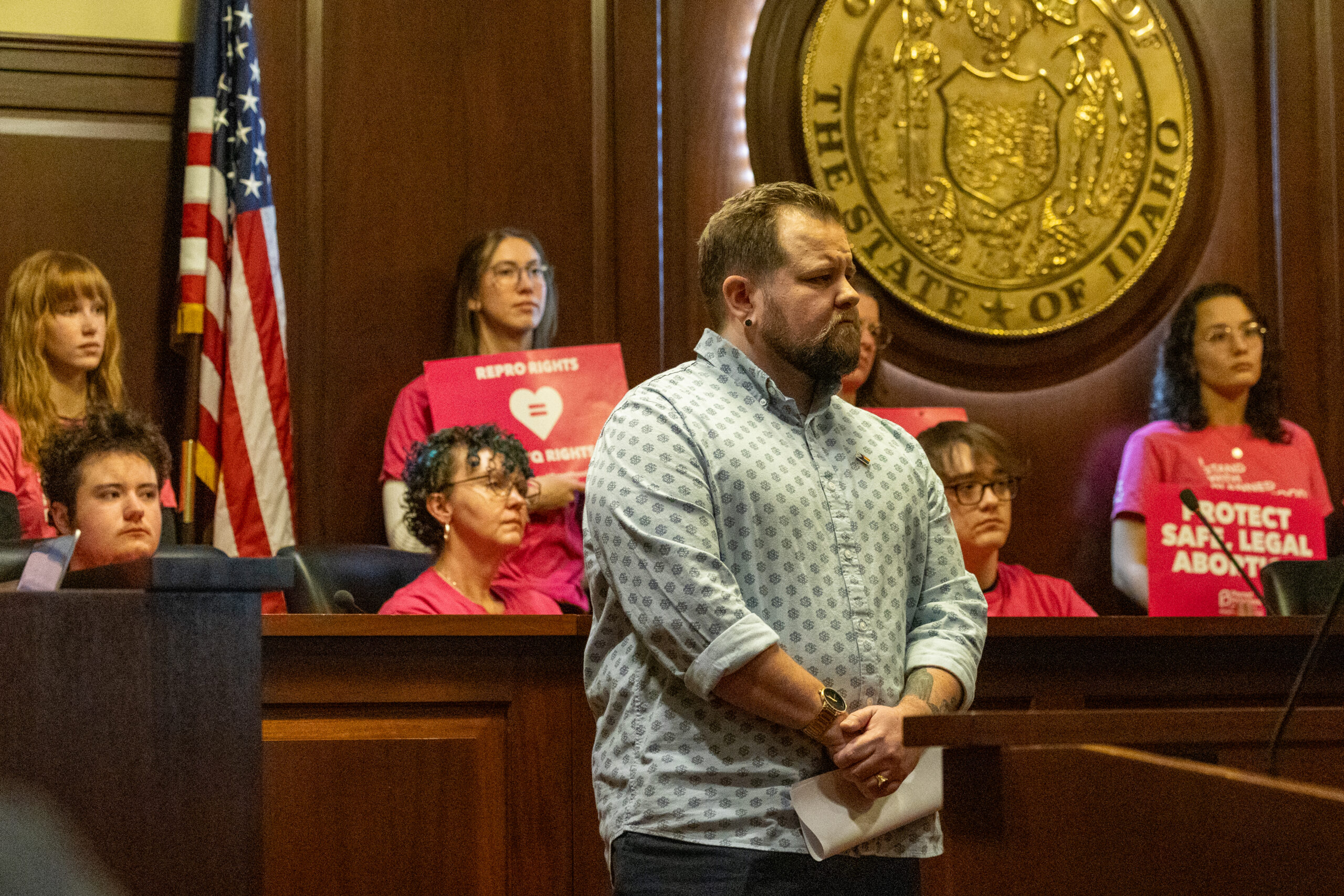
The bill passed through Idaho’s Republican-controlled Legislature with little resistance from the majority party, clearing the House 54-15 and the Senate 28-7. All Democratic lawmakers opposed the measure, joined by a small number of Republicans.
Supporters of the bill framed it as a necessary safeguard for privacy in sex-segregated spaces. Sen. Ben Toews, a Republican sponsor, argued the legislation provides a “clear, proactive tool” to protect what he described as “common sense realities” around bodily privacy.
Opponents, including civil liberties groups and LGBTQ+ advocates, have rejected that framing, calling the law both unnecessary and discriminatory.
The American Civil Liberties Union of Idaho described the measure as “one of the most extreme anti-trans bills in the country,” while Planned Parenthood Alliance Advocates of Idaho said it is “widely considered the most extreme anti-transgender bathroom ban in the nation.”

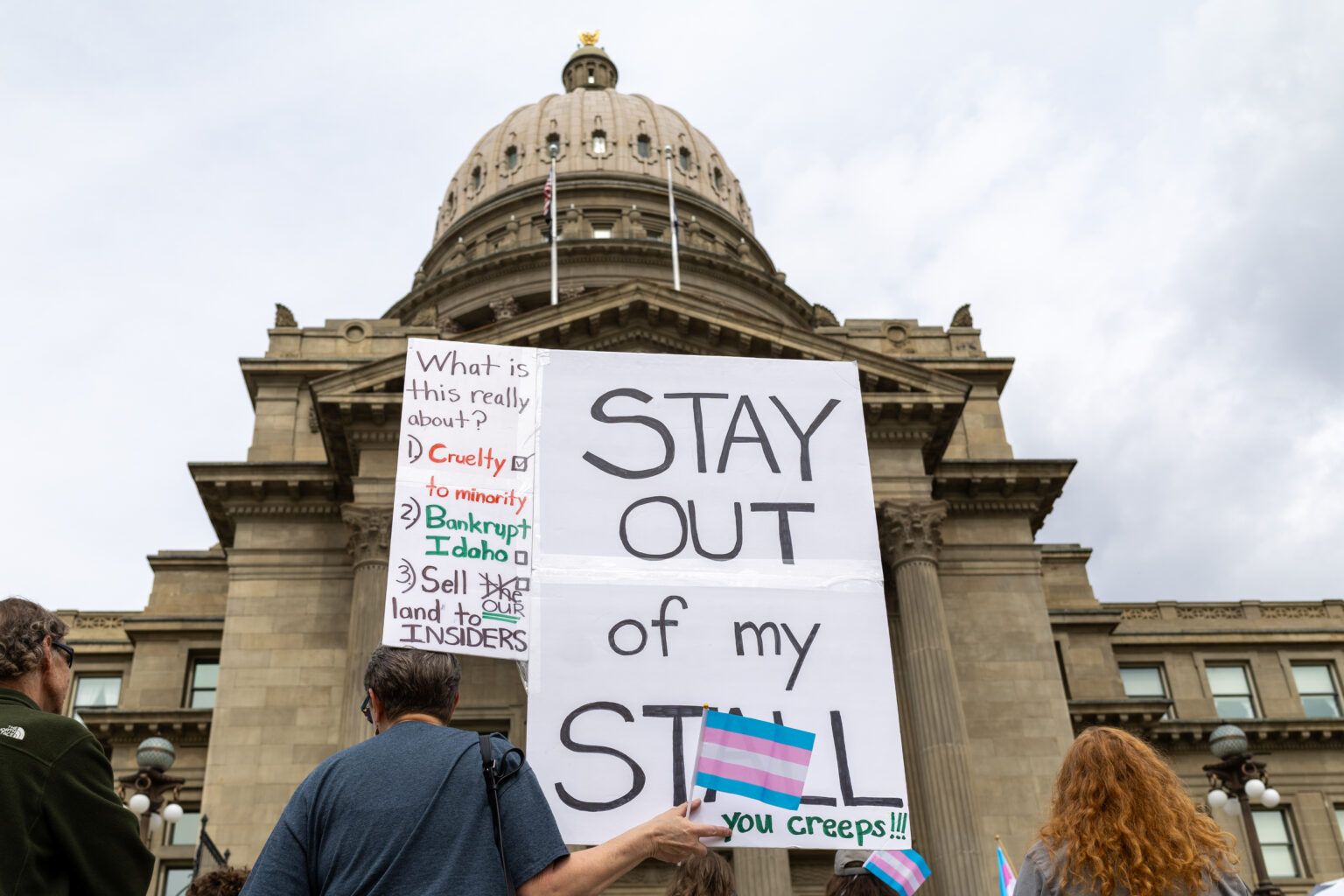
The timing of the signing added another layer of urgency and outrage. Little approved the bill on Transgender Day of Visibility, a day intended to celebrate transgender lives and raise awareness about ongoing discrimination. Outside the Idaho State Capitol in Boise, more than 100 people gathered earlier that day to mark the occasion, holding signs, waving flags, and listening to performances from local artists and speakers.
One attendee held a sign that read, “Stay out of my stall.”
The law includes several exceptions, including for individuals providing medical or law enforcement assistance, parents assisting children, and those using single-occupancy facilities when no other option is available. It also allows for use of a different restroom in cases of “dire need,” though law enforcement groups have raised concerns about how such provisions would be interpreted and enforced.
The Idaho Fraternal Order of Police warned that the law could place officers in untenable situations, requiring them to determine a person’s biological sex in ways that could be invasive or inappropriate.
“In many circumstances, there is no clear or reasonable way for officers to make that determination without engaging in questioning or investigative actions that could be viewed as invasive,” the organization’s president, Bryan Lovell, wrote in opposition.
Advocates argue that beyond enforcement challenges, the law creates conditions that increase harm rather than prevent it.
A 2025 study from the UCLA School of Law’s Williams Institute found no evidence that allowing transgender people to use bathrooms aligned with their gender identity increases safety risks for others. However, the study did find that transgender individuals denied access to appropriate facilities reported higher rates of harassment and physical assault.
Idaho now joins a small group of states, including Utah, Florida, and Kansas, that have enacted criminal penalties tied to bathroom use for transgender people, according to the Movement Advancement Project.
For critics, the bill is not an isolated measure but part of a broader legislative pattern.
In 2020, Idaho became the first state to ban transgender girls and women from participating in sports consistent with their gender identity. In 2023, lawmakers passed a law making it a felony for doctors to provide gender-affirming care to transgender youth. The following year, the state expanded restrictions to bar public funding, including Medicaid, from covering such care.
This year, legislators also advanced a bill requiring teachers and health care providers to notify parents within 72 hours if a minor seeks to socially transition, potentially exposing youth to further risk.
Meanwhile, efforts to add explicit anti-discrimination protections for LGBTQ+ residents to state law have repeatedly failed.
“Over the last several years, legislators have gone from refusing to protect us to actively targeting us,” Mathews said during a February news conference.
The cumulative effect, advocates say, is a legal landscape that narrows the conditions under which transgender people can move freely through public life.
Sen. Ron Taylor, a Democrat from Hailey, warned during debate that the bill could push families out of the state.
“Now maybe that’s what some of us want, is to chase a population that’s marginalized out of Idaho,” Taylor said. “But that’s not Idaho.”
The law’s reach extends beyond bathrooms into broader cultural and civic life. On the same day Little signed HB 752, he also approved legislation allowing the state to fine cities for flying LGBTQ+ pride flags on government property. Shortly after, Boise officials removed a pride flag that had flown outside City Hall for a decade.
For many, the sequence of events felt less like a coincidence and more like a coordinated message about who belongs in public space and under what conditions.
As July approaches, advocates are preparing for legal challenges and community responses, while transgender Idahoans are left to navigate a new reality where even the act of entering a restroom carries legal risk.
What was once a private, routine decision has been pulled into the realm of surveillance and punishment.
And in Idaho, at least for now, the line between daily life and criminality may be as thin as a bathroom door.

SaintTreyW
Oct 15
4 mins read
SaintTreyW
Oct 9
3 mins read

 Zuri Pryor-Graves
Oct 2
5 mins read
Zuri Pryor-Graves
Oct 2
5 mins read

SaintTreyW
Sep 30
7 mins read

Gaye Magazine® is part of Gaye Media, Inc.© 2026 Gaye Media, Inc. All Rights Reserved.