


 SaintTreyW
Dec 30 2025
4 mins read
SaintTreyW
Dec 30 2025
4 mins read
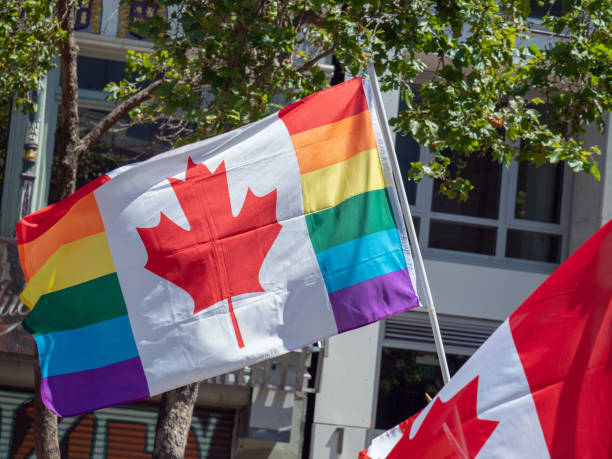
As LGBTQ rights face mounting threats across the globe, Canada is reaffirming its position as a refuge for those fleeing persecution because of who they are and whom they love.
Through a constellation of government-assisted and privately sponsored programs, Canada continues to resettle lesbian, gay, bisexual, transgender, queer, intersex and other sexually and gender-diverse refugees who face violence, criminalization and social exclusion in their home countries. It seems that the effort is not only humanitarian but urgently political at a time when protections for LGBTQ people are eroding in dozens of nations.
People persecuted because of their sexual orientation, gender identity, gender expression or sex characteristics, known collectively as SOGIESC, are typically referred to Canada through international and community-based organizations, including the United Nations Refugee Agency and the Rainbow Railroad, as well as through private sponsors and local referral groups.
LGBTQI+ refugees arrive through three primary pathways: the Government-Assisted Refugees Program, the Private Sponsorship of Refugees Program, and the Blended Visa Office-Referred program, known as BVOR.

Under the government-assisted program, refugees identified by the UNHCR, Rainbow Railroad or similar organizations receive 12 months of income and settlement support through Canada’s Resettlement Assistance Program. That support helps cover housing, basic needs and integration services during a critical first year.
Private sponsorship offers another route. Individuals and organizations across Canada, including those serving two-spirit, lesbian, gay, bisexual, transgender, queer and intersex communities, can sponsor refugees directly. Private sponsors provide a full year of income and settlement support, offering not only financial help but community connection, mentorship and advocacy.
A cornerstone of Canada’s approach is the Rainbow Refugee Assistance Partnership, a collaboration between the federal government and the Rainbow Refugee Society. The partnership was recently renewed for another five years, extending through the end of 2029.
Through this program, Canadians can sponsor up to 50 LGBTQI+ refugees each year. The government covers start-up costs and the first three months of income support, while private sponsors provide the remaining nine months and other essential assistance. Since the initiative began in 2011, more than 330 refugees have been welcomed to Canada with support from over 60 organizations nationwide.
The renewed funding and expansion of LGBTQI+ refugee resettlement programs were formally presented as part of the Prime Minister’s 2025–26 fiscal year budget, unveiled Nov. 4, 2025, signaling the government’s continued commitment amid global rollbacks of queer and trans rights.
Canada expanded this work in response to the crisis in Afghanistan. In 2021, it was among the first countries to launch a special humanitarian resettlement program for vulnerable Afghans, including LGBTQI+ people. Between 2022 and 2024, the Rainbow Refugee Assistance Partnership added 150 additional spaces specifically for Afghan LGBTQI+ refugees.

Beyond resettlement, Canada has invested in improving long-term outcomes. Through capacity-building funding under the Private Sponsorship of Refugees Program, the federal government supported the National Network for Enhancing LGBTQI+ Refugee Sponsorship project from 2022 to 2023. The initiative, managed by the coalition From Borders to Belonging, developed training, tools and resources to strengthen settlement experiences across the country.
More than 500 settlement service provider organizations receive federal funding to help newcomers integrate. Services include needs assessments, job and language training, community connections and short-term counseling. Additional supports, such as transportation, child care, disability assistance and translation services, aim to reduce barriers that disproportionately affect LGBTQI+ newcomers.
Canada also offers protection to those who reach its borders. Under the in-country asylum system, individuals facing SOGIESC-based persecution can seek refugee status. The Immigration and Refugee Board has adopted guidelines to better understand sexual orientation and gender identity claims, including how social stigma and nonconformity shape evidence and testimony.
In recent years, Canada has taken steps to reduce bureaucratic harm. In 2025, the refugee protection identity document replaced earlier paperwork and removed sex or gender identifiers entirely, addressing long-standing concerns raised by trans and nonbinary advocates.
All of this unfolds against a sobering global backdrop. From anti-LGBTQ legislation in Eastern Europe and Africa to the rollback of trans rights in parts of the United States and the United Kingdom, safety for queer and trans people is increasingly precarious. Advocates say Canada’s approach offers a counter-model, one rooted in dignity, partnership and the belief that survival should not depend on silence.
As governments worldwide narrow the meaning of freedom, Canada’s refugee programs quietly insist on a broader truth; that belonging can still be built, and that sanctuary, when practiced with care, can be an act of resistance.
SaintTreyW
Oct 15
4 mins read

SaintTreyW
Oct 9
3 mins read
 Zuri Pryor-Graves
Oct 2
5 mins read
Zuri Pryor-Graves
Oct 2
5 mins read

SaintTreyW
Sep 30
7 mins read

Gaye Magazine® is part of Gaye Media, Inc.© 2026 Gaye Media, Inc. All Rights Reserved.