


 William Dolliole-Thompson II
Oct 24
5 mins read
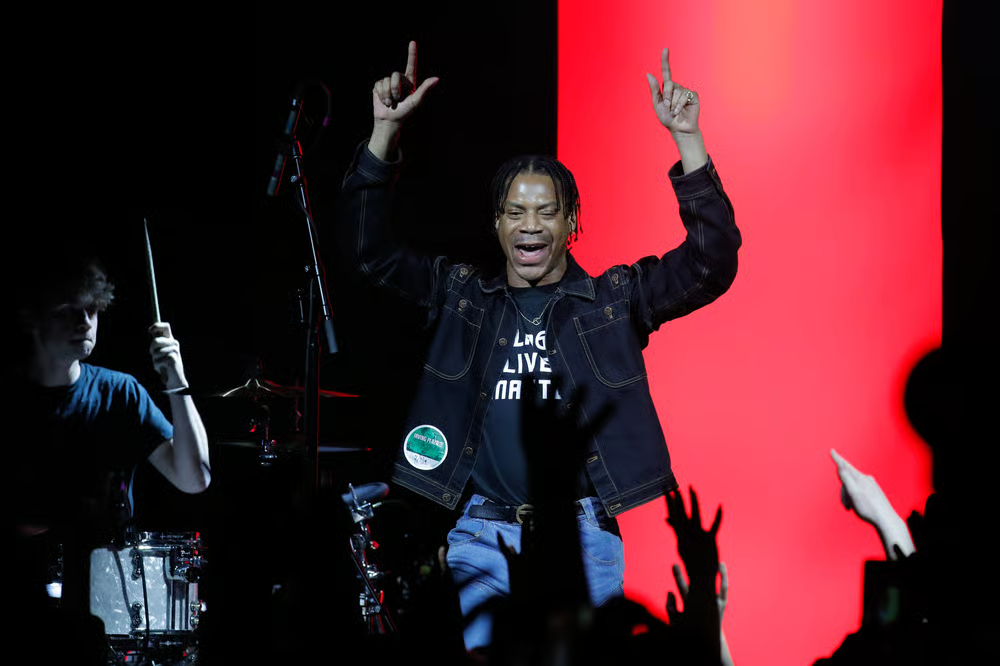
Telfar Clemens has been in fashion for two decades. And in those 20 years he has not just built a brand — he has built a case. A case for what fashion looks like when it actually means what it says. In business, a disruptor is someone who challenges the status quo by introducing something simpler, more accessible or just flat out better — and in doing so, changes the way an entire industry operates.
Telfar Clemens is exactly that. Not because he set out to disrupt anything, but because he built something so grounded in a genuine belief — that fashion should belong to everyone — that the industry had no choice but to take notice. The brand’s ethos runs on one declaration: “It’s not for you — it’s for everyone.”
And Telfar has made good on that every single time — through every drop, every activation, every decision that reminded the industry that things do not have to work the way they have always worked. Here is every moment Telfar showed up, showed out and proved exactly that.
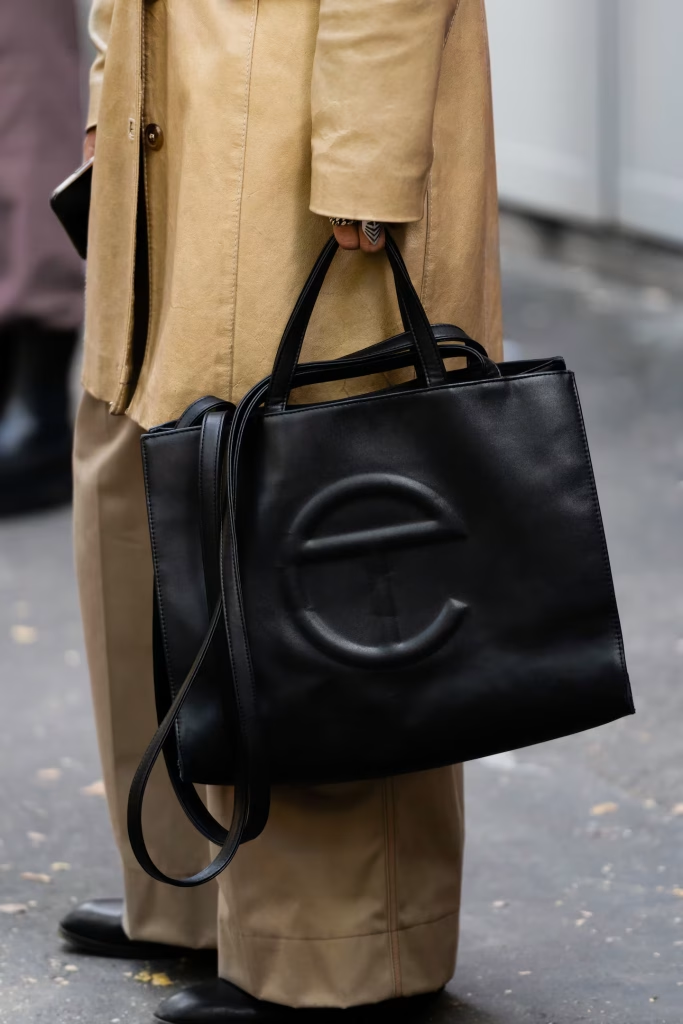
Before we get into anything else, we have to talk about the bag. The Telfar Shopping Bag launched in 2014 and became something nobody planned for — a coveted, can’t-get-it-anywhere status symbol that the streets started calling the “Bushwick Birkin,” a name that said everything.
Here was a bag going up against the Hermès Birkin, a piece that runs anywhere from $7,000 to $70,000, with an accessible price point and zero gatekeeping. People lost their minds for it. And when the bag got so popular it started feeling like a limited sneaker drop — gone before you could even get to the site — Telfar listened.
In 2020, Clemens introduced the Bag Security Program. Orders opened for a limited window and Telfar promised to make every single one. If you wanted it badly enough to wait for it, you could have it. It was a direct answer to the scarcity culture that the rest of the industry had decided was just how things worked. When it was time to retire the program three years later, Clemens did not send an email. He got on Zoom and personally surprised customers with the news, then turned their reactions into a campaign that ran across New York City. That is the kind of thing that happens when a brand actually sees its community as part of the story.
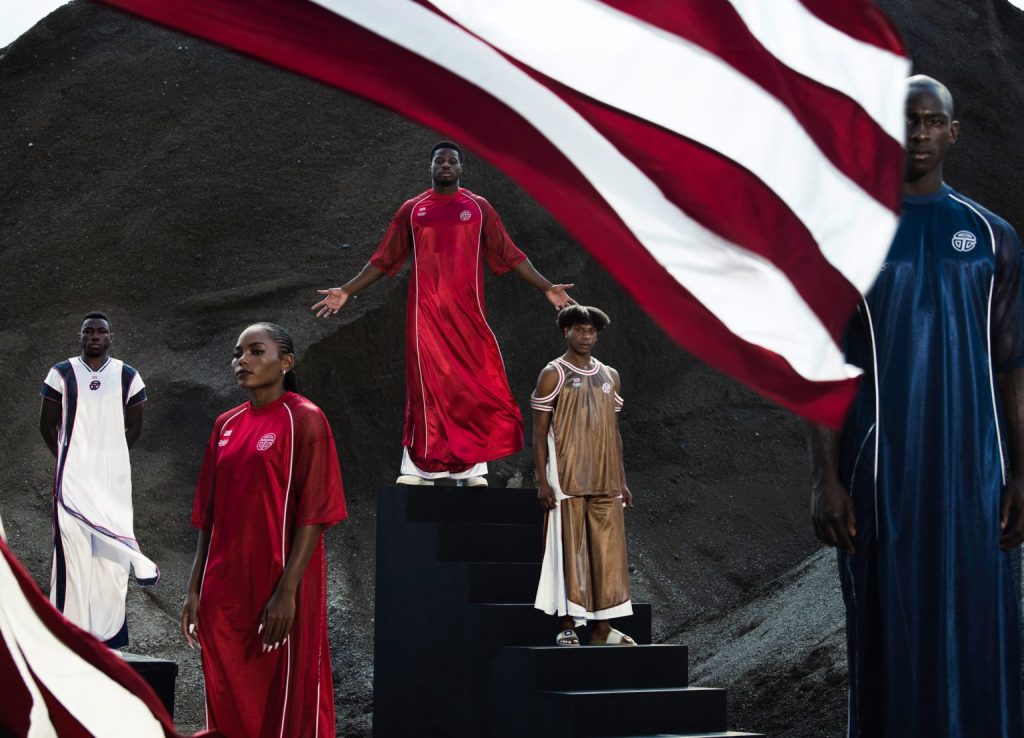
In 2021, things got bigger. Telfar was named official uniform designer for Team Liberia at the Tokyo 2020 Olympic Games a partnership that was personal before it was anything else. Clemens, a Liberian-American, designed the collection while in Africa, drawing directly from what he saw around him.
The uniforms incorporated the red, white, blue and gold of the Liberian flag, large stars nodding to the single star at its center and the traditional African lappa — a garment Telfar had actually been producing since 2009 without knowing its origin — rendered in navy jersey with engineered graphics and pockets. The brand’s own logo sat on the front. Unisex. Fully Telfar.
As the designers described it, the collection traced “a journey of recognition” in which Clemens saw the roots of his own design DNA all around him in the streets of a country whose history is deeply entwined with America’s own. It was one of the most meaningful collections he had ever put his name on — and it showed on the athletes who wore it.
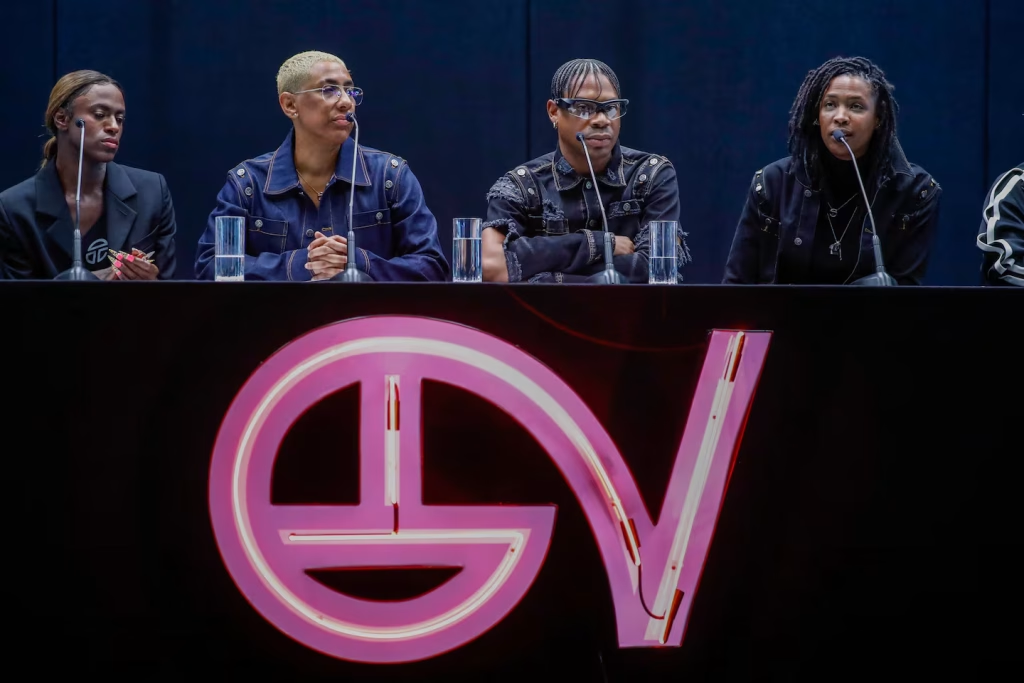
That same year TELFAR.TV launched, a 24-hour television network running original shows and videos submitted by fans and consumers, with surprise QR codes flashing onscreen giving viewers a real-time shot at buying a bag. Clemens described it simply: “It’s not a drop, it’s a drip.” No algorithm. No middleman. Just the brand talking directly to its people on its own channel on its own schedule.
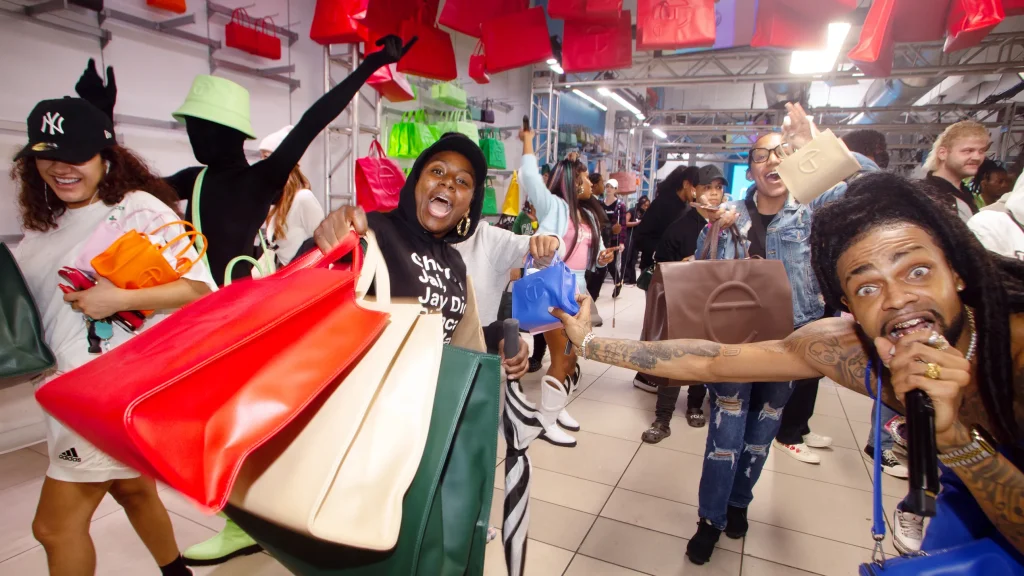
In 2022, Telfar kept going. He took over a Rainbow Apparel store in Downtown Brooklyn, filled it with more than 3,500 Shopping Bags in every color and size and people came from everywhere to get one. By the end of the day every bag was gone. What made it work was not just the bags — it was the location. Rainbow is a store built for everyday people. Telfar brought his most coveted product there on purpose. That choice said more than any press release could have.
That same year, Telfar partnered with Dish to offer the Telfar TV channel free to Dish subscribers — no extra cost, no subscription tier, no barrier. It was the same philosophy that runs through everything: if we are going to be for everyone, then everyone has to be able to access it. Not just the people who can afford the premium package. Telfar Radio followed the same logic — a free, open radio station that gave the brand another direct line to its community without anyone else controlling the dial.
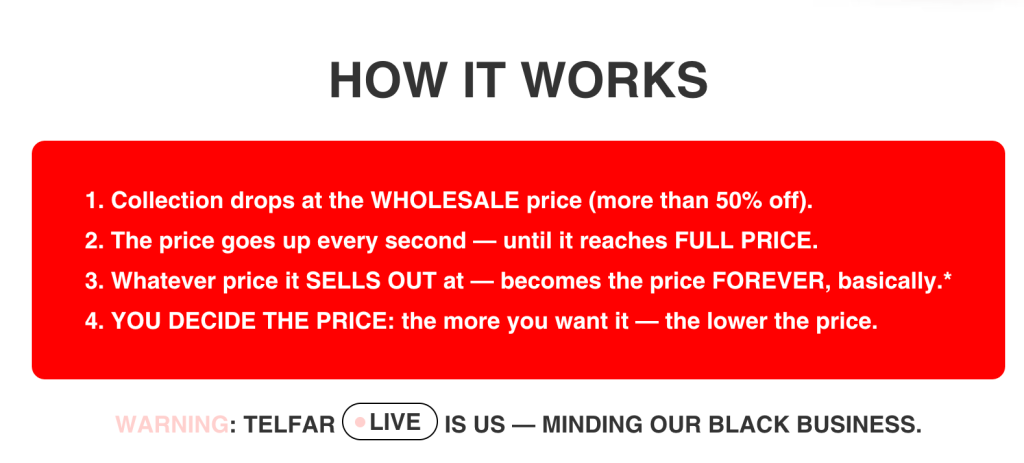
Then in 2023, Telfar flipped the entire logic of how fashion pricing works. Most brands mark down the clothes nobody buys. Telfar did the opposite. Live Price launched with pieces starting at wholesale and getting more expensive by the second until they sold out, with that final price becoming the permanent retail price. The faster everyone bought, the lower the price stayed.
Usually the brand decides what something is worth. Telfar handed that decision to the people buying it. And when Telfar wanted to show a collection, he did not wait for a slot on a fashion week calendar either. TELFAR LIVE brought the show directly to the community — streamed, open and free to watch. The front row was wherever you were.
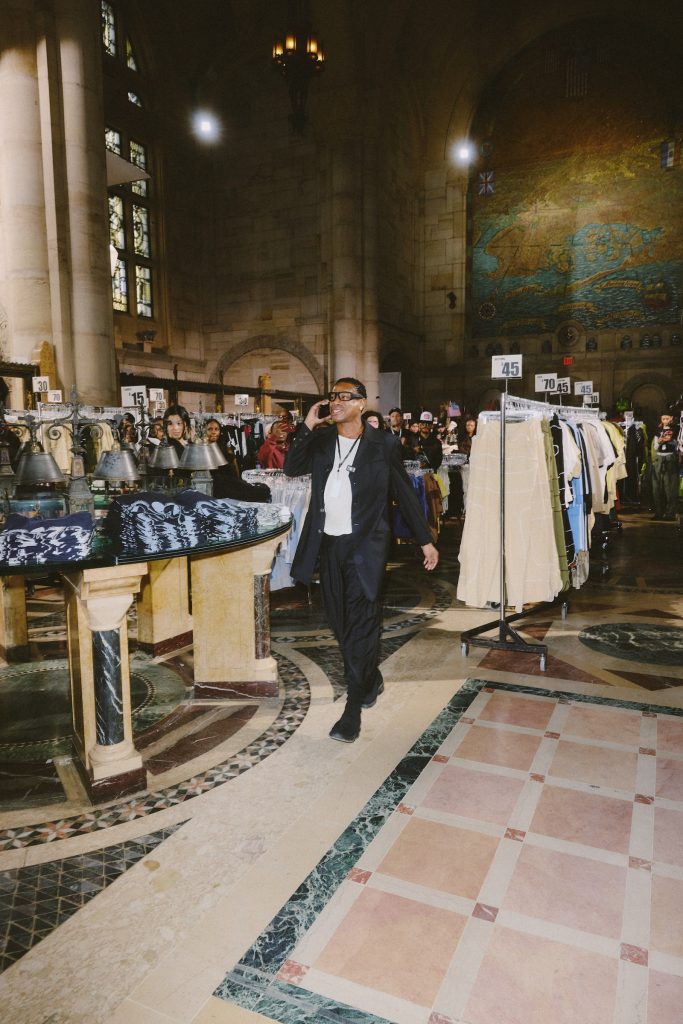
At a time when showing at Paris Fashion Week meant flying everything and everyone to France, Telfar presented his collection without leaving Brooklyn. No runway in Paris. No front row flown in from across the globe. Just Telfar, in his neighborhood, on his terms. It was a quiet reminder that the most powerful move a brand can make is deciding it does not need permission — not even from the most prestigious fashion week on the calendar. Cllosing Paris Fashion Week from Brooklyn.
Telfar Clemens has spent 20 years proving that democratic fashion is not a slogan. It is a practice. Every program, every drop, every channel, every collaboration has been another way of saying the same thing: this is for you. All of you. Not the people who can afford a Birkin. Not the people with the right connections or the right zip code. Everyone. That is what disruption looks like when it is done with intention. Not just breaking the rules — building something better in their place.
William Dolliole-Thompson II
Oct 10
3 mins read
William Dolliole-Thompson II
Oct 2
2 mins read
William Dolliole-Thompson II
Sep 26
3 mins read
William Dolliole-Thompson II
Sep 18
3 mins read

Gaye Magazine® is part of Gaye Media, Inc.© 2026 Gaye Media, Inc. All Rights Reserved.