


 SaintTreyW
Apr 22
8 mins read
SaintTreyW
Apr 22
8 mins read
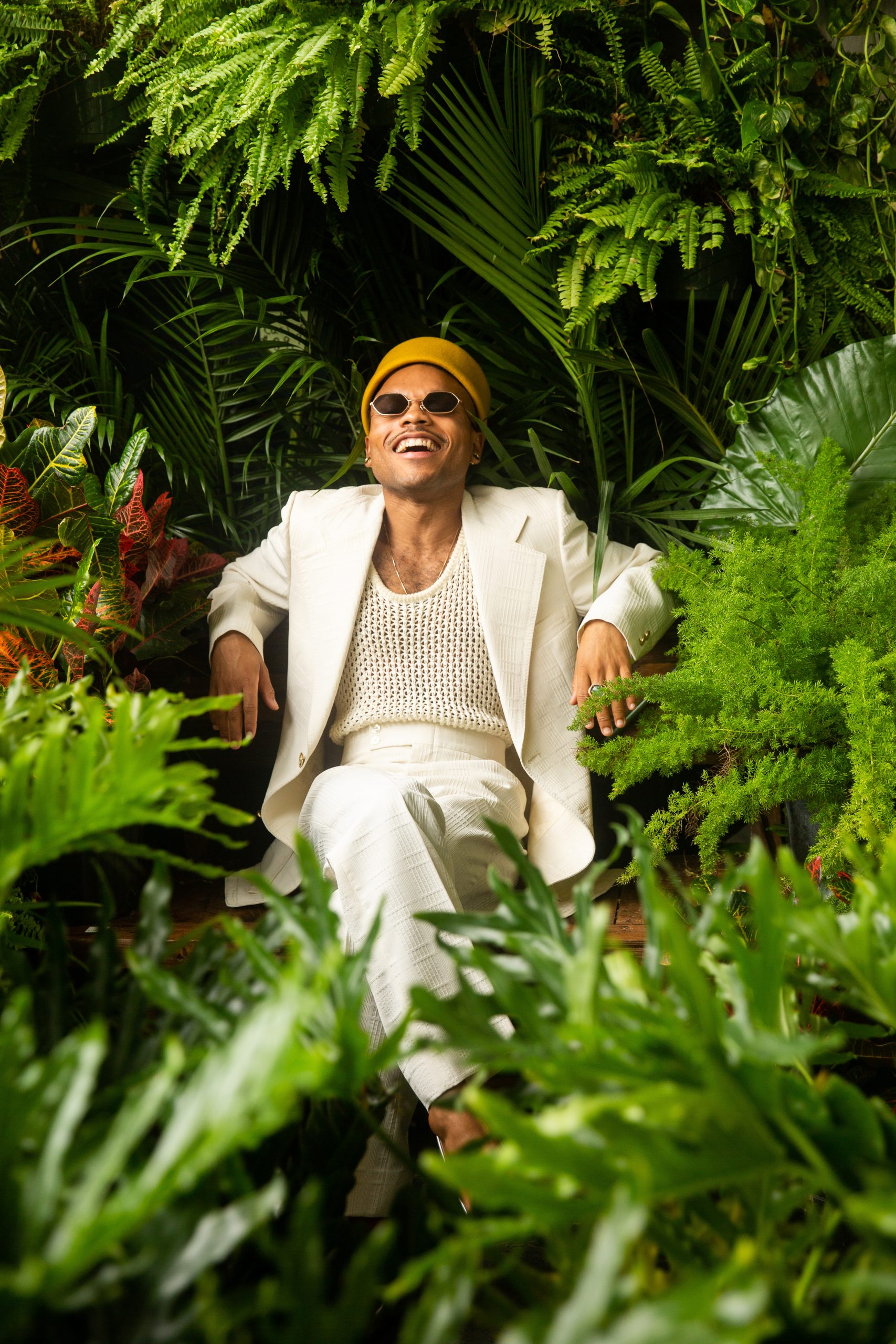
Gaye Magazine recently sat down for a joyful, wide-ranging kiki with Plant Kween, the beloved Brooklyn-based educator, advocate, and author also known as Christopher Griffin, where laughter and honesty moved side by side; what emerged from that conversation, especially around Earth Day, was a rethinking of how we understand care, history, and our place on this planet.
“We only got one Earth, and we got a lot of work to do.”
That lands less like a warning and more like an offering when Plant Kween says it. Not the kind of phrase meant to shame you into swapping plastic for canvas or to perform a version of environmentalism that feels distant from your life. Instead, it arrives as a truth that holds contradiction, one that understands that for many Black, brown, and Indigenous people, the Earth is not just something to protect, but something we have survived.
That tension sits at the heart of how Plant Kween reframes Earth Day. It is not a lifestyle brand or a wellness aesthetic reserved for the already resourced. It is rather a quiet invitation to begin again, even if the ground beneath you has never felt like yours.
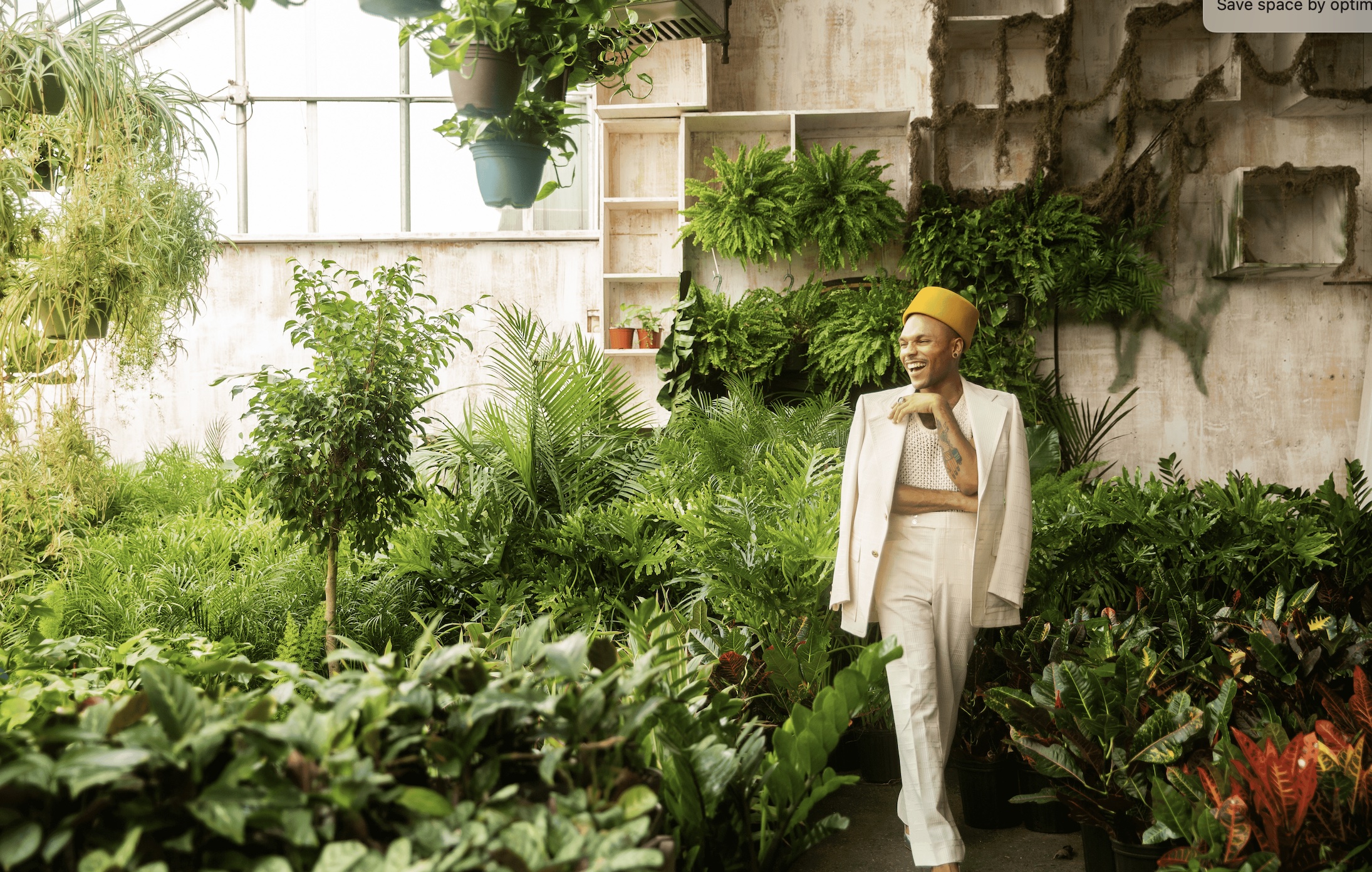
“I think as Black people, we have a very interesting, complex, and traumatic history with tending to the land,” Plant Kween said. “And unfortunately, we don’t own a lot of the land that we occupy… So our relationship to land is intricate, complicated, and rooted in a traumatic history in a lot of ways.”
That history does not disappear because a calendar tells us to celebrate the planet. The land, as Plant Kween puts it, “knows our blood, sweat, and tears.” It remembers labor without ownership, cultivation without safety, stewardship without recognition. To speak of Earth Day without acknowledging that inheritance is to offer a version of care that feels hollow, even inaccessible.
So Plant Kween begins somewhere else. They tell us to start where we are.
Before reusable bags, and policy debates, and collective action, and all of the extraneous and very performative stimuli.
Start with yourself.
“As living beings, we have to make sure our own needs are met before we can think outwardly,” Plant Kween said.
There is something quietly radical in that framing, especially in a culture that often asks marginalized people to save the world while still struggling to secure their own survival. To start with, yourself is not selfishness; it is a recalibration of what sustainability actually requires.
For some, that beginning is as simple as bringing a plant into the home. A single leafed companion that asks for water, for light, for attention.
Plant Kween’s own journey began with a marble queen pothos, one plant that grew into a home filled with more than 200. What began as curiosity became a practice of care that extended inward as much as outward.
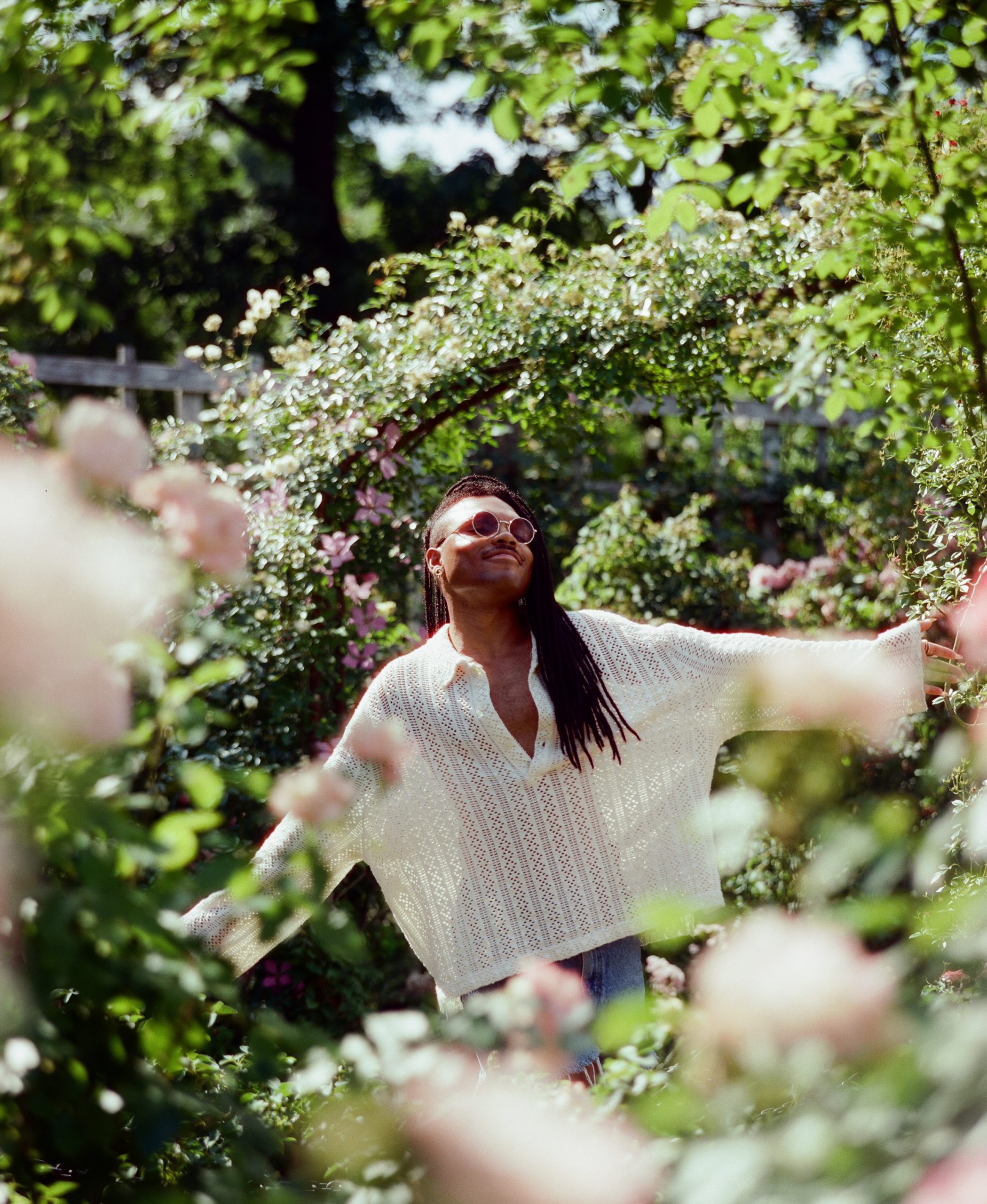
In tending to plants, there is a mirroring. You begin to notice what they need and, slowly, what you have been denying yourself.
We need hydration, and sunlight, and we need room to grow, and to cut away what is draining us.
These are not metaphors that live only in language. They become embodied through repetition, through the quiet ritual of care that unfolds in kitchens, in living rooms, on windowsills where the light falls just right.
This is Earth Day at its most intimate.
And for those who have been taught that nature is something distant, something owned by others, this act of bringing the Earth into your home becomes a kind of reclamation. A small but meaningful disruption of the idea that the natural world exists somewhere else, somewhere you must travel to or pay to access.
It begins with what you can hold.
From there, the circle widens.
“If you are able to put care outwardly into something, start small,” Plant Kween said. “What are some behaviors you can change that could be more sustainable?”
This is where Earth Day often gets reduced to a checklist or a set of prescribed actions that can feel detached from lived reality. But Plant Kween resists that flattening. There is no single way to participate, and certainly no universal script.
Maybe it is bringing your own bag to the grocery store. Maybe it is volunteering at a local park or community garden. Maybe it is planting a tree with neighbors, your hands in the same soil, learning the texture of it together.
These actions, on their surface, may seem small. However, they carry something larger when understood within a broader context of community care.
Volunteering at a garden is not just about planting seeds. It is to enter a shared space of tending, to participate in a lineage of collective survival that has long existed in Black and brown communities. In many ways, mutual aid has always been environmental. Feeding one another, growing food, sustaining neighborhoods where systems have failed.
Plant Kween encourages us that the Earth is not separate from that story, and they implore us to understand that it is embedded within it.
And here, Plant Kween offers one of the most resonant metaphors of the conversation, drawn not from human systems but from the quiet intelligence of the natural world.
“Plants are very old beings — hundreds of millions of years old,” Plant Kween said. “There are fungi that create underground network systems that allow trees to pour nutrients into a neighboring tree that may be infested.”
Beneath the surface, unseen by most, there is a constant exchange happening. Trees feed one another through vast fungal networks, sustaining life beyond what the eye can track.
It is a system built on interdependence rather than isolation.
For Plant Kween, this is not just a biological fact; it is an instruction.
“I think there are beautiful inspirations in how plants interact with each other that we as humans can learn from,” they said.
The implication is clear, even if unspoken. What would it mean to organize our communities the way forests organize themselves? To move resources toward those who need them. To recognize that survival is not an individual achievement but a shared responsibility.
In a world that often elevates competition, extraction, and hierarchy, the forest offers another model. One that has endured for millions of years without the need for dominance.
Humans, as Plant Kween reminds us, are “the newbies.”
There is humility in that recognition. And perhaps, a way forward.
The final layer of Plant Kween’s Earth Day framework moves beyond the individual and the immediate, into the systems that shape how care is distributed and denied.
It is here that the conversation turns toward land ownership, toward access to clean water, toward the structural realities that make environmental justice uneven and, at times, elusive.
“There are folks in parts of the world who still don’t have clean drinking water — that includes the U.S.,” Plant Kween said. “There are folks without homes. There’s a lot happening.”
To speak of Earth Day without speaking of these conditions is to ignore the ways in which environmental harm is not experienced equally. Communities that have been historically marginalized are often the same communities facing the most severe environmental risks, from contaminated water to a lack of green space.
And yet, even here, Plant Kween resists the urge to overwhelm.
“Everyone has to figure out the best way they can be a better steward of this planet,” they said.
There is no singular path to systemic engagement. For some, it may mean advocacy. For others, education. For others still, supporting Indigenous-led land stewardship efforts or organizing around local environmental issues.
What matters is not perfection, but participation as Plant Kween implored. And perhaps more importantly, an understanding that systemic change does not replace personal practice; it builds upon it. The same care that begins with a single plant can extend outward into policy, into collective action, into the slow work of reshaping how resources are shared.
The scale shifts, but the root remains the same.
Care.
In Plant Kween’s vision, Earth Day is not a performance of eco-consciousness for an imagined audience. It is a conversation with yourself, with your community, with the histories that shape how you move through the world.
It allows for contradiction. For those who feel deeply connected to the land and those who feel estranged from it. For those with access to green spaces and those without. For those who are just beginning and those who have been doing this work for years.
It meets people where they are, without guilt.
And in doing so, it expands the range of what environmental stewardship can look like.
It can look like tending a plant on your windowsill, showing up at a community garden, advocating for clean water in your neighborhood, or learning the histories of the land you occupy and honoring the people who have cared for it long before you.
It can also look less easily quantifiable.
It can look like joy.
Plant Kween’s presence, lush and unapologetic, is itself a kind of environmental practice
“You’re showing people possibility by existing in your truth,” they said.
That possibility extends beyond identity into the broader question of what it means to live in right relationship with the world around us. To care for something living, whether that is a plant, a community, or yourself, requires attention, patience, and a willingness to grow.
It also requires joy.
Not as an afterthought, but as a sustaining force.
In this way, Plant Kween’s Earth Day is not only about the planet. It is about the conditions that make care possible, the histories that complicate it, and the futures that depend on it.
It is about understanding that stewardship is not reserved for those with land or resources, but belongs to anyone willing to engage, however imperfectly, with the act of tending.
We only got one Earth.
And perhaps, as Plant Kween suggests, the work begins not with saving her, but with remembering how to belong to her again.

SaintTreyW
Oct 14
9 mins read

 Juhi Page
Aug 13
8 mins read
Juhi Page
Aug 13
8 mins read

 Brandon
Aug 6
8 mins read
Brandon
Aug 6
8 mins read

SaintTreyW
Aug 5
10 mins read

Gaye Magazine® is part of Gaye Media, Inc.© 2026 Gaye Media, Inc. All Rights Reserved.